What Does Boiling Tap Water Do

You know that moment when you’re at a friend’s house and they offer you a glass of tap water, and then they say, “Oh, hold on, I’ll boil it first”? I nodded along once, watchi...
You know that moment when you’re at a friend’s house and they offer you a glass of tap water, and then they say, “Oh, hold on, I’ll boil it first”? I nodded along once, watching the kettle hiss and bubble, thinking, “Right, because we’re in a chemistry lab now.” I sipped it, felt the steam hit my nose, and wondered: did I just dodge a bullet or drink the world’s plainest soup?
That little ritual—boiling tap water—is probably the oldest “hack” in the book. It’s the stuff our grandparents swore by, especially when they saw cloudy water from the faucet. But let’s be real: what does it actually do to your glass of H₂O?
First off, it’s not a magic wand for all your watery worries.
Boiling tap water is brilliant at one specific thing: killing living critters. Bacteria, viruses, and parasites (like that unpleasant-sounding Giardia) can’t handle a rolling boil for a minute or two. It’s like throwing a tiny, wet rave and then cranking the heat until everyone passes out. Goodbye, germs.
Must Read
But here’s the ironic part: if your water is contaminated with lead, pesticides, or industrial chemicals, boiling does next to nothing. In fact, it can make things worse. As water boils, some of it evaporates, so those nasty chemicals get more concentrated. Suddenly, your “purified” water is a tiny bit more toxic. Oops.
So, when should you actually reach for the kettle?
If you’re camping and the stream looks crystal clear but you know a beaver just did its business upstream—yes, boil it. If your city issues a “boil water advisory” because a pipe burst—boil it for a full minute, and don’t argue. That’s the one time your grandma’s advice is pure gold.
For daily tap water from a modern municipal system, though? You’re probably wasting the gas. Most cities treat water with chlorine or chloramine, which already kill the bugs. You’re not getting extra safety, just a slightly flat taste. (And yes, you’re making your kettle angry.)
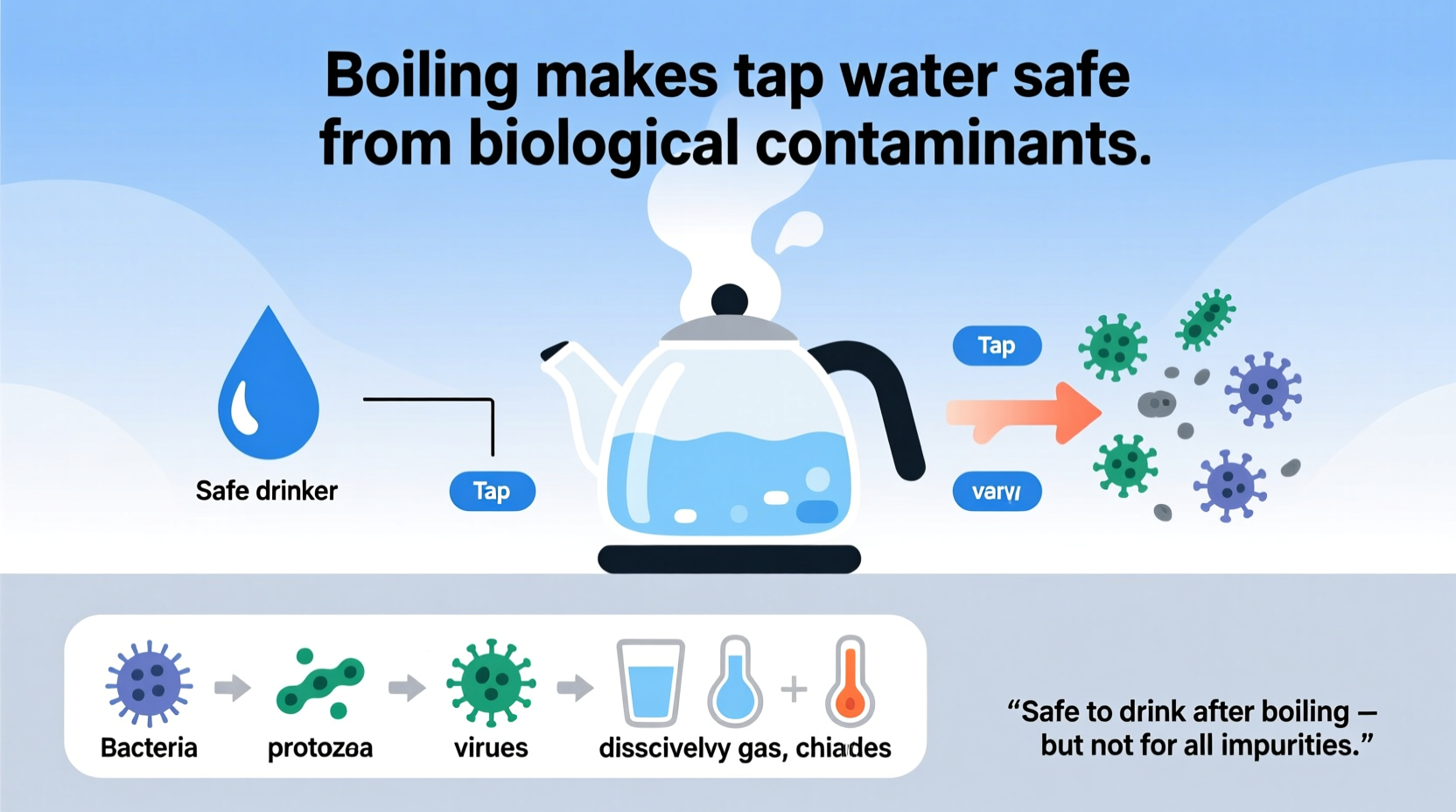 Is Tap Water Safe To Drink After Boiling And What It Removes
But wait—there’s a weird side effect: the “flat” factor.
Boiling water doesn’t just kill germs; it drives out dissolved oxygen. That’s why reboiled water tastes dull and lifeless. It’s like listening to a song with no bass. If you’re fancy and pour it into a glass, you might notice it’s less “crisp.” Your taste buds aren’t crazy—the water has changed.
Have you ever seen white flakes floating in your boiled water? That’s calcium carbonate, or in plain English: hard water minerals that condensed during boiling. They’re not dangerous (hello, extra calcium), but they make your water look like a snow globe factory reject. Charming.
Here’s the real kicker: the “safe” threshold is tricky.
Most experts say boil for one minute at sea level. Go up a mountain, and you need three minutes because water boils at a lower temperature. (Thanks, physics.) So if you’re hiking in Colorado and boiling for just 60 seconds, you’re not actually killing everything. Congratulations, you just made warm bacteria soup.
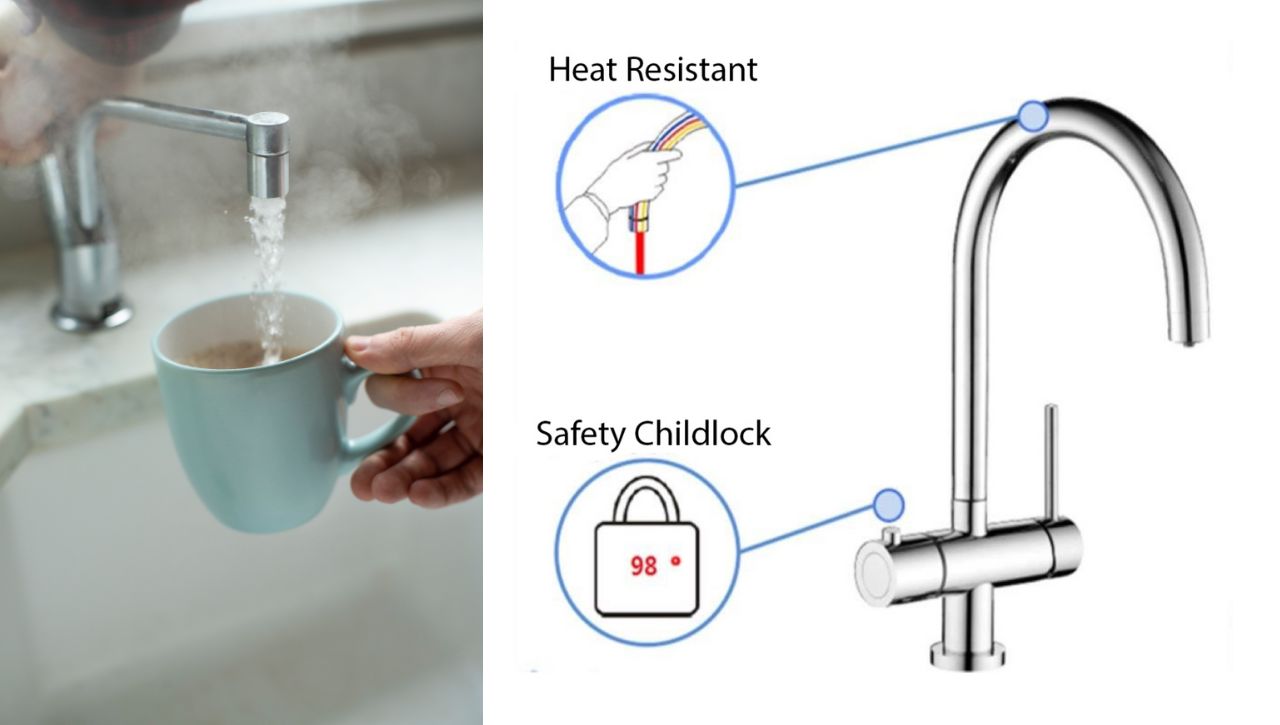
 How Does A Boiling Water Tap Work | Naked Grapefruit
And what about those people who boil their water to “remove chlorine taste”? Boiling does off-gas chlorine, yes. But you know what also works? Letting the water sit in an open pitcher for an hour. No energy wasted. You could also just buy a basic filter—but I get it, the kettle is already there, and it’s so loud.
So, bottom line: should you boil your tap water every day?
Only if you enjoy paying extra for electricity or gas, and you love drinking water that tastes like it gave up on life. For daily use in a developed country, it’s overkill. Your water is already monitored. But if you’re ever in a sketchy situation—power outage, flood, or a suspicious pipe—yes, please boil it. Your stomach will thank you.
But let’s not pretend it’s a magical purification wand. It kills bugs, maybe reduces chlorine, but it won’t fix heavy metals or chemicals. And it makes your water taste like a rainy Tuesday. So next time a friend offers you boiled tap water with a proud grin, you can nod, sip it, and think: “You did one thing right, and three things funny.” Then offer them a slice of lemon—trust me, it helps.
