Where Does A Water Softener Go

So, you bought a water softener. Or you’re thinking about it. Good for you! You’re about to banish that chalky white scale from your faucets. Your hair will feel like silk. Yo...

So, you bought a water softener. Or you’re thinking about it. Good for you! You’re about to banish that chalky white scale from your faucets. Your hair will feel like silk. Your dishes will sparkle. But now comes the big, confusing question: Where does it go?
It’s not a lamp. You can’t just put it on a nightstand. This magical box needs a home. A very specific home. Let’s go on a treasure hunt through your house.
The Great Indoors
First, think like a plumber (minus the pipe wrench wedgie). Your softener needs to treat all the water coming in. That means it sits right after the main water shut-off valve. But before the water heater. Got it?
Must Read
Where is that valve? Usually in a basement, a crawl space, or a garage. It’s the spot where water enters your home. That is the prime real estate.
Don’t have a basement? No worries. Many folks tuck it into a laundry room. Right next to the washing machine. It’s cozy there. It’s practical. It’s a party for your pipes.
The Garage: A Rocky Roommate
Garages are the wild west of water softeners. Very common. Very functional. You get to park your car next to a giant salt bucket. Classy, right?
But here’s the quirk: cold is a villain. If you live in a freezing place, a garage can be a death sentence for your softener. The water inside can freeze and crack the resin tank. Boom. Gone.
No one wants a frozen, cracked brick of salt. Not a good look. So, if your garage is unheated, build a small insulated closet around it. Or just move to Arizona. (Kidding. Sort of.)
The Crawl Space Circus
Ever crawled under your house? It smells like dirt and dead bugs. But guess what? That’s a prime softener spot. It’s out of sight, out of mind. Until you have to refill the salt.
Refilling salt becomes a sport. You’ll be on your belly. Flashlight in your teeth. Dragging a 40-pound bag of crystals through the dust. Your chiropractor will love you.
 Water Softner Diagram
If you choose this path, get a unit with a huge salt tank. Huge. You want to crawl in there as rarely as possible. Maybe once every six months. Treat yourself.
The Not-So-Secret Outdoor Life
Some people install softeners outside. Yes, outside. Right by the hose bib. It looks like a weird silver robot guarding your yard.
Outdoor units need serious weather protection. Direct sunlight is a silent killer. UV rays degrade the plastic. Rain gets in. Bugs make nests. It’s a risky move.
But if you live in a temperate climate (hello, California!), it can work. Just buy a weatherproof cover. And maybe name your robot. I call mine “Bubbles.”
The Ugly Truth About Drain Lines
Here’s the super-fun part. Your softener regenerates. That means it flushes salty, dirty water down a drain. Where does that go? Not your neighbor’s garden, I hope.
You need a dedicated drain. A floor drain is perfect. A laundry tub works. Even a standpipe will do. Never hook it to your main sewer line without an air gap. It’s law. It’s science. It’s to stop gross back-siphoning.
Imagine your toilet water mixing with your softener brine. Yeah, you don’t want that. Hire a pro if you’re lost. Your nose will thank you.
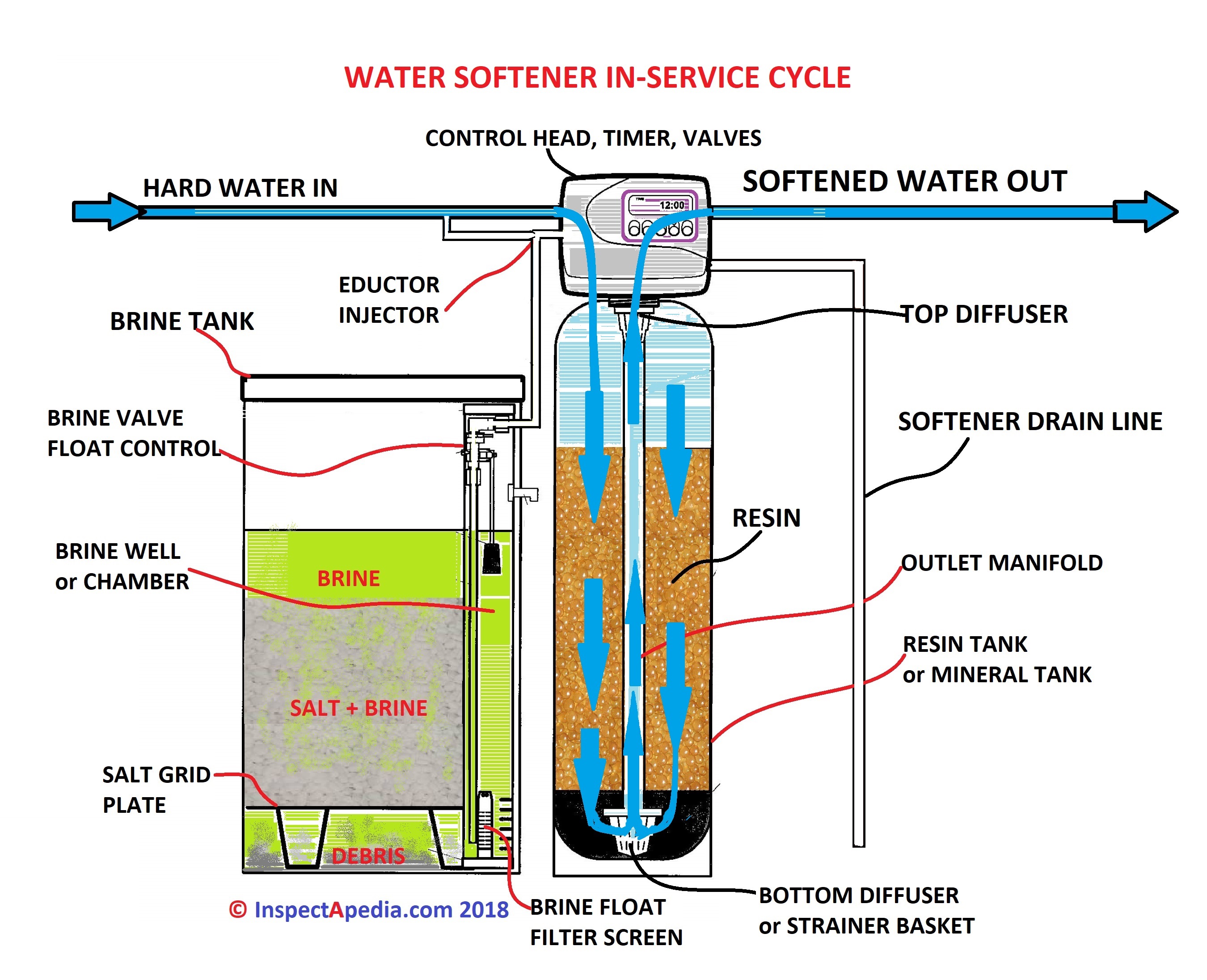 How Water Softeners Work Diagram Water Softener: Plumbing Water
The Bypass Valve Trick
Your softener comes with a bypass valve. It looks like a little handle. Twist it one way, and the water skips the softener. Twist it back, and it’s treated.
Why does this matter? Because your outdoor spigots usually don’t need soft water. Plants hate salt. Your flowers will shrivel up and die. So, you bypass the softener for the hose.
Put your softener where you can easily reach that bypass valve. Life hack: Install a separate outdoor spigot before the softener. No valve-turning needed. Your petunias will throw a parade.
The Final, Funny Truth
There is no single “perfect” spot. Every basement is different. Every garage is a mess. Plumbers love this. They get to play Tetris with your pipes.
Do not put it inside a closet next to your water heater. Why? Because if it leaks (and they do leak sometimes), your drywall gets ruined. Your floor rots. Your socks get wet. Tragedy.
Also, leave space around the tank. You need room to add salt. You need room to breathe. It’s not a fridge. You don’t shove it in a corner and forget it exists.
One last quirk: the sound. During regeneration, your softener might gurgle. It might hiss. It might sound like a dying whale. That’s normal. If it’s in your bedroom closet? Bad idea. You’ll be up all night wondering if a whale is in your walls.
So, where does a water softener go? Somewhere accessible. Somewhere dry. Somewhere semi-warm. Somewhere you can reach it with a bag of salt and a sense of humor. You’ve got this. Go find its forever home.
