How To Test Your Water At Home

You know that feeling when you fill a glass from the tap, take a sip, and think, "Hmm, that tastes a little... off?" Maybe it’s a faint whiff of pool chlorine, a metallic tang...
You know that feeling when you fill a glass from the tap, take a sip, and think, "Hmm, that tastes a little... off?" Maybe it’s a faint whiff of pool chlorine, a metallic tang, or just the vague suspicion your water isn’t as crisp as bottled stuff. You’re not alone—most of us ignore our tap water until something smells weird.
But here’s the secret: your water is telling you a story every day. Testing it at home is super easy, costs less than a pizza night, and gives you peace of mind. Let’s make this fun—think of it as a little science experiment for your kitchen sink.
Why Bother? (Besides the Weird Taste)
Imagine you’re making a pasta dinner. You boil water, add salt, and boom—the whole pot smells like a swimming pool. That happens to my friend Jenna last month. She tested her water and found chlorine levels through the roof.
Must Read
Or picture your morning coffee. You grind the perfect beans, but the brew tastes flat. Water quality changes everything—from your tea to your skin health. Even hard water can leave your hair feeling like straw.
And let’s be real: you drink this stuff. Your pets drink it. Your plants live on it. Knowing what’s in it is just smart adulting—like checking the tire pressure on your car, but tastier.
The Three-Word Test (Super Simple)
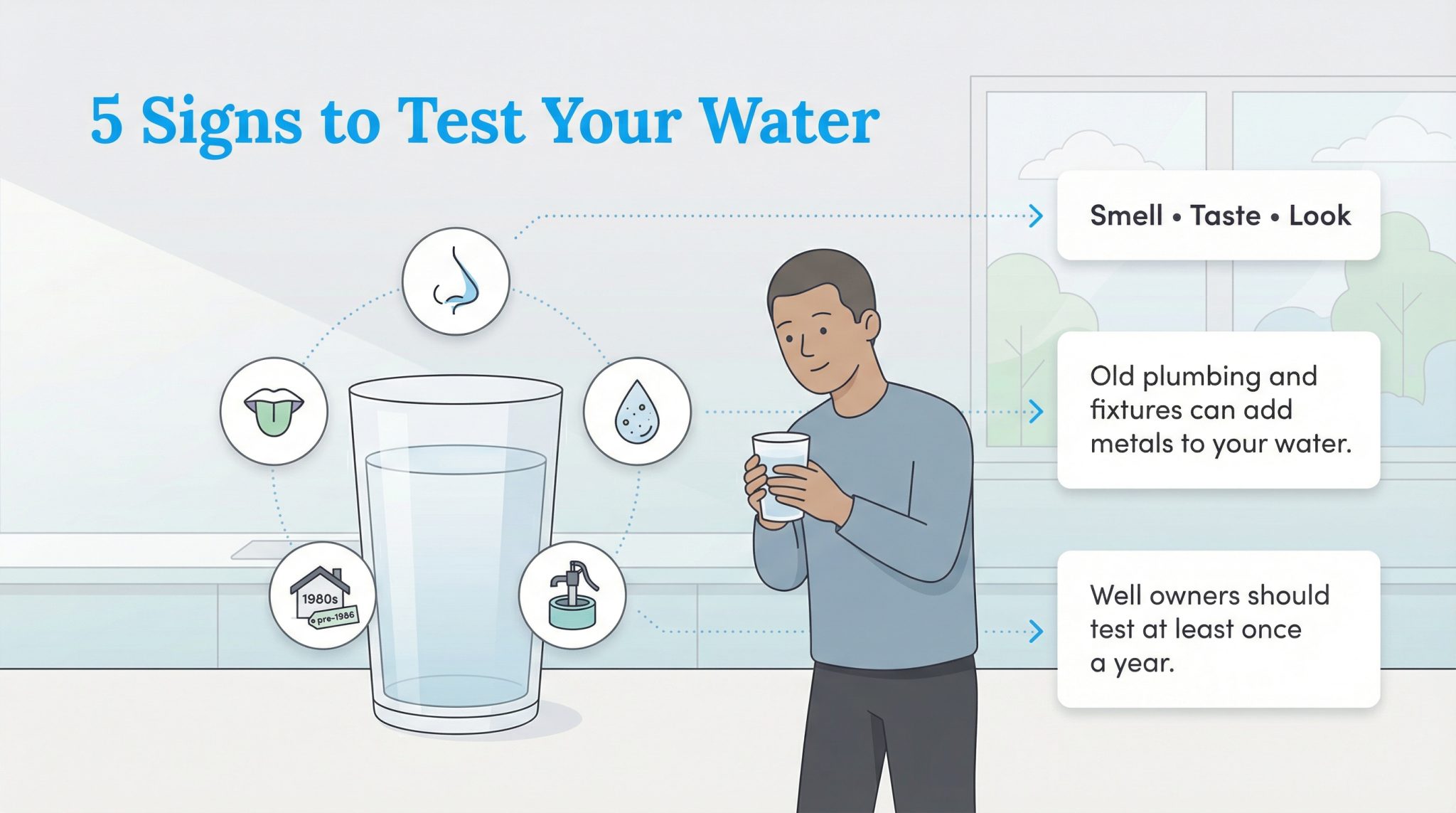
You don’t need a lab coat. Just a clean glass jar and your trusty senses. Fill it halfway and sniff it. If it smells like a public pool, that’s chlorine. If it smells like rotten eggs, that’s sulfur—common in well water.
Now look at it. Hold it up to the light. If it’s cloudy or has floaty bits, you’ve got sediment or maybe rust from old pipes. Jenna’s water looked clear, but she learned appearances can be deceiving.
Finally, taste a tiny sip. Yeah, it sounds weird, but your tongue is a cheap testing kit. A metallic taste might mean iron or copper. A salty taste? Could be high mineral content. Write down what you notice.
The “Gulp & Go” Checklist
• Smell test: Chlorine? Sulfur? Musty?
• Sight test: Cloudy? Particles? Colored?
• Taste test: Metallic? Salty? Chemical?
Level Up: DIY Test Kits
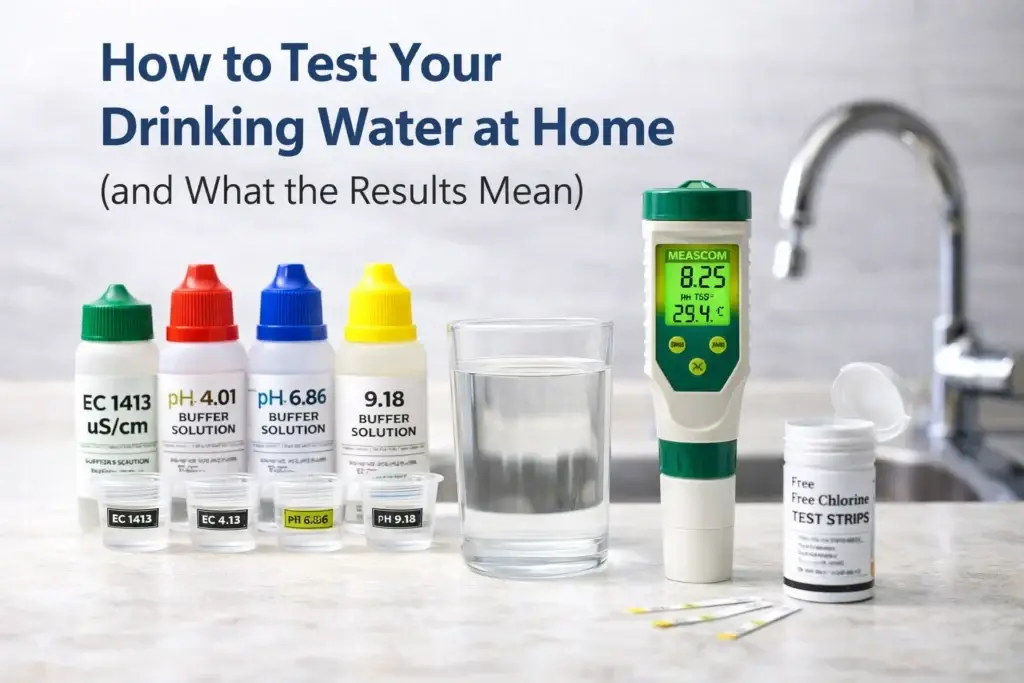
Ready to get a little more serious? Grab a home water test kit from the hardware store or online for about fifteen bucks. They usually come with little strips or droppers—like a pregnancy test for your faucet.
 How to Test Water Quality at Home: DIY Kits vs. Professional Labs
Dip the strip in your water, wait a minute, and compare the color to a chart. It checks for pH, hardness, chlorine, nitrate, and more. My neighbor Dave did this and found his water was so hard, it could probably double as a calcium supplement.
Pro tip: Test both cold and hot water. Hot water often has more stuff dissolved in it because it’s more agitated. You might be shocked how different they are.
What to Do With the Results
If your test shows high chlorine, just let your water sit in a pitcher for 15 minutes before drinking. The chlorine evaporates, like magic. No more pool-flavored lemonade.
If you find hard water (white buildup on your kettle), a simple water filter pitcher or faucet attachment will fix it. They’re cheap and make your coffee taste like coffee again.
Worst case scenario? You find high lead or bacteria. Don’t panic. Call your local water utility—they’re required to help. You have the right to know what’s in your glass.
Little Stories from the Trenches
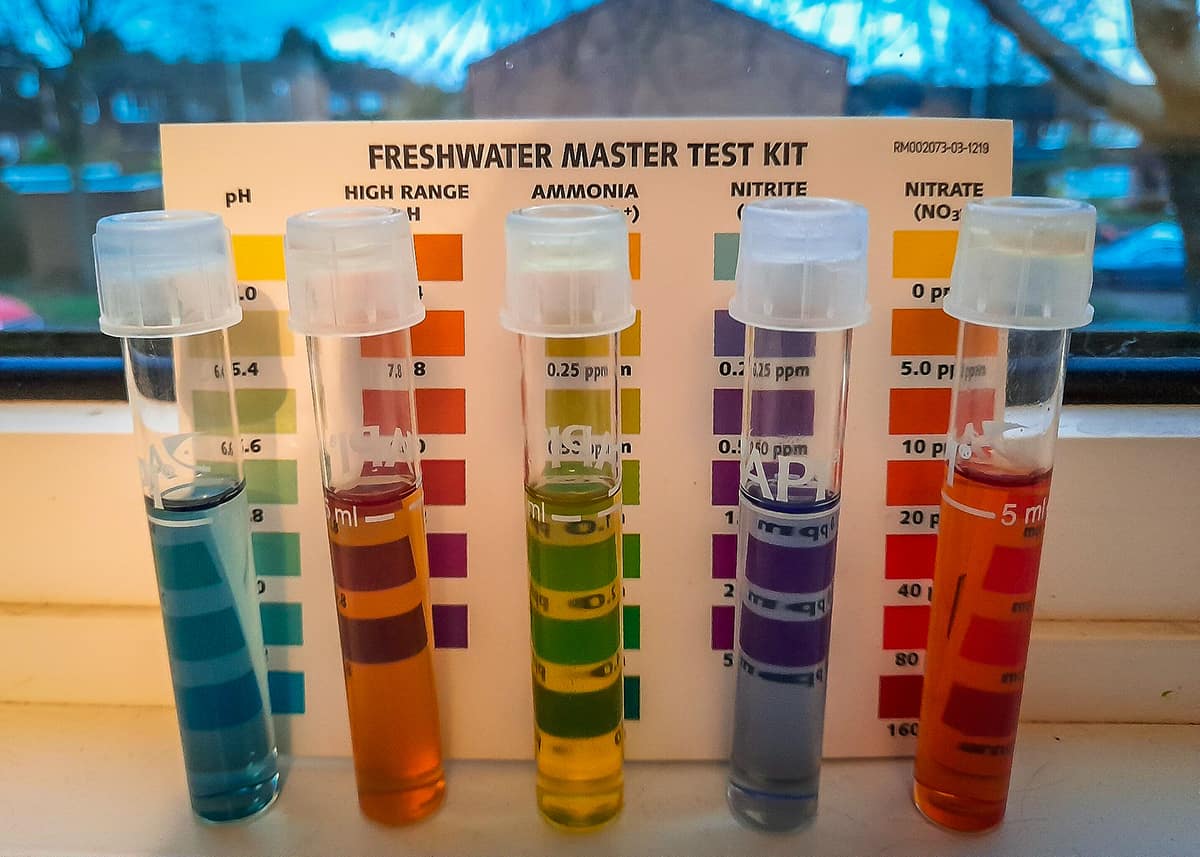
My cousin Mario thought his water was fine—until his goldfish started swimming sideways. He tested it and found ammonia from decaying leaves in his well. A simple carbon filter fixed it, and now his fish do synchronized swimming.
Then there’s my friend Lisa, who spent two years buying bottled water because her tap tasted “earthy.” One $12 test later, she discovered it was just harmless algae bacteria. A quarter-sized filter saved her hundreds of dollars.
 How to Test Drinking Water at Home (and What the Results Mean) - MEASCOM
The point? Don’t assume the worst, but don’t assume the best either. Just test it. It’s like checking your smoke alarm—takes two minutes and could save your day.
When to Test (And Retest)
Test every six months, especially if you have a well. Seasons change, groundwater shifts—your water’s personality can change like the weather. Spring melts, summer droughts, fall leaves—they all mess with it.
Also test after any plumbing work or if you move into a new house. That cute bungalow from 1952 might have hidden surprises in the pipes. An old house is like a secret box—you never know what’s sealed inside.
One final rule: don’t be shy about it. Talk to your neighbors. If your water tastes odd, theirs probably does too. You might start a little block party of water testing—with snacks, obviously.
The Fun, Final Truth
Your water is a living, moving part of your home. It’s not just H₂O; it’s a personalized story of your local environment. Testing it is like reading your own label—no marketing, no hype, just facts.
So grab a jar, take a sniff, dip a test strip. You deserve water that tastes like clarity, not confusion. And hey, if you find out your water is perfect? Congratulations! You just earned a gold star in adulting, plus bragging rights at the next potluck.
Now go test that tap. Your taste buds (and your goldfish) will thank you.
