How To Treat Coliform In Well

So, you’ve got coliform bacteria in your well. Welcome to the club nobody wants to join. It’s like finding out your drinking water is secretly hosting a tiny, invisible frat p...
So, you’ve got coliform bacteria in your well. Welcome to the club nobody wants to join. It’s like finding out your drinking water is secretly hosting a tiny, invisible frat party. And the punch? Well, let’s just say it’s not lemonade.
First, don’t panic and start chugging bottled water like it’s going extinct. Coliform itself is usually not a deadly villain—think of it more as the noisy neighbor who might invite sketchy friends over. Those friends, like E. coli or giardia, are the real troublemakers. So, we treat the coliform to evict the whole block.
Step 1: Find the breach (aka, "Where’s the hole in your system?")
Coliform doesn’t just spawn in your water. It crawls in through cracks, leaky seals, or a well cap that’s looser than a politician’s promise. Imagine your well as a fortress. If a worm can wriggle in, so can bacteria. Go outside and inspect your well cap—if it’s cracked, rusty, or missing screws, you’ve basically left the drawbridge down.
Must Read
Check the casing too. Fun fact: a surprising 40% of well contamination comes from surface water seeping down the sides. That rain puddle? It’s a bacteria taxi service straight to your glass. Plug any gaps with waterproof sealant or, for dramatic effect, imagine you’re patching a sinking boat.
The "Well Whisperer" test
Pour a little safe dye (like food coloring) around the base of your well. If it shows up in your tap water, you’ve got a direct pipeline from the dirt to your dinner. Call a pro if this happens—otherwise, you’re just staining your sink for science.
Step 2: Shock chlorination (aka, "The nuclear option for bacteria")
This is where you get to play mad scientist. Shock chlorination means flooding your well with enough bleach to make a swimming pool blush. Use unscented household bleach (no lemon-fresh or gel nonsense—bacteria don’t care about your laundry).
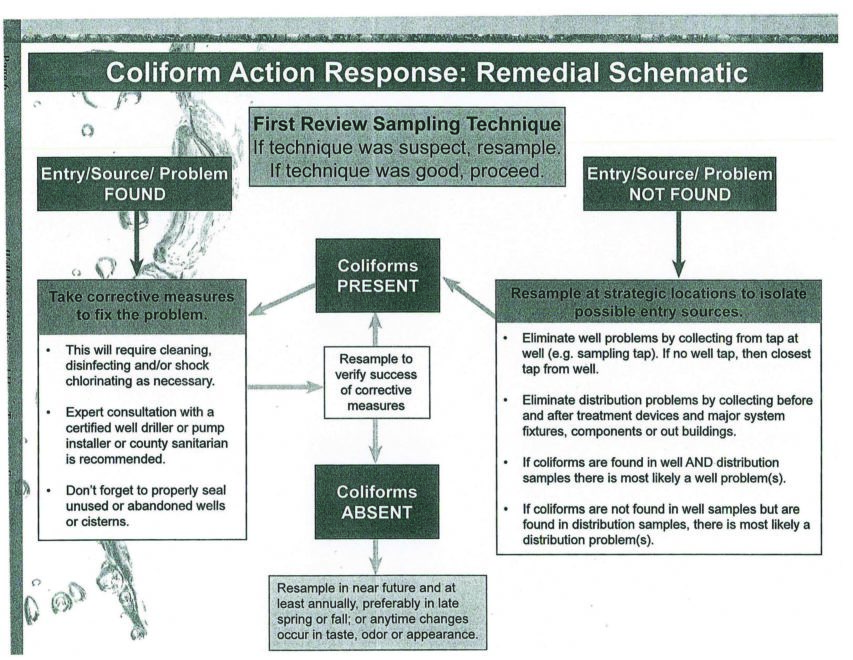 Wells - Warren County, Iowa
Pour it in (check the label for the right amount—usually 2 cups per 100 gallons of well water). Then let the bleach party for at least 12 hours. No, you cannot drink this water. Yes, it will smell like a laundromat exploded. That’s the point. Run every faucet, hose, and outdoor spigot until you smell bleach, then turn them off and wait.
Warning: Your water may try to fight back
After the chlorine bath, flush the system until the smell fades. This can take hours. I once flushed my well for three hours and still smelled like a public pool for two days. Tell your neighbors you’re “doing a deep clean.” They’ll either nod wisely or think you’ve joined a cult.
Step 3: Test, test, and test again (because bacteria are sneaky)
Two weeks after the shock treatment, send a water sample to a lab—don’t rely on home test kits. They’re about as accurate as a horoscope for your plumbing. If coliform is still there, your contamination source is chronic—maybe a failing septic system, a buried manure pile, or a neighbor’s pet cemetery. (Yes, that’s a real thing. Yikes.)
What if the bleach didn’t work?
Don’t double the bleach. That just turns your well into a toxic soup. Instead, install a continuous disinfection system—ultraviolet light or chlorination injectors. UV is like a tanning bed for water, but it only works if the water is clear first. Filters are your BFF here.
 Bacteria In Well Water
Step 4: Prevention (so you never have to do this again)
Every year, test your well. I know, it’s boring. So is getting sick from your own tap. Slap a calendar reminder and call it a date with responsibility. Also, keep your well head at least 50 feet from any animal pens, compost piles, or that charming outhouse your grandpa built.
During heavy rain, don’t ignore a weird taste or smell. Groundwater can churn up bacteria like a blender full of dirt. If you see a flood, boil your water until you test—no heroics.
Surprising fact to impress your friends
Did you know that over 23 million American households rely on private wells, but only a third test annually? That means millions of people are basically playing water roulette. You’re not one of them now. You’re the responsible one. Congratulations—you’ve earned a badge of honor and clean water.
So there you have it. Treating coliform is not rocket science—it’s just stubborn water science with a splash of bleach and a lot of patience. Now go fix that well. And maybe invest in a Brita filter for the road. Your stomach will thank you.
