What Is Backwashing A Filter

So, you’ve heard the term “backwashing a filter” and immediately pictured someone scrubbing a dirty sponge in reverse, right? Honestly, you’re not far off—but it’s way more dr...

So, you’ve heard the term “backwashing a filter” and immediately pictured someone scrubbing a dirty sponge in reverse, right? Honestly, you’re not far off—but it’s way more dramatic and involves a surprising amount of physics. Forget the fancy name; backwashing is basically giving your filter a really aggressive, high-speed, upside-down shake until it coughs up everything nasty it’s been hoarding.
Imagine your pool pump or aquarium filter as a greedy monster. It spends its life sucking in water and snatching up all the dirt, leaves, and dead skin cells floating around like tiny, gross confetti. After a while, that monster gets so stuffed it can’t breathe—water can’t push through the clogged gunk. That’s where backwashing turns the tables.
What The Heck Is Backwashing, Really?
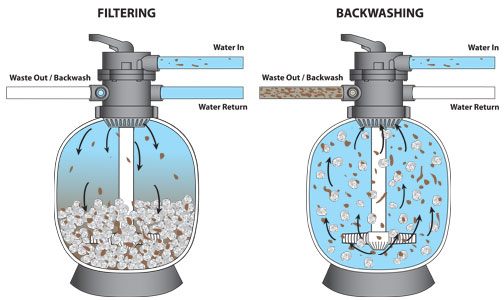
Backwashing is simply reversing the flow of water through your filter. Normally, water goes in one direction, hits the filter media (sand, diatomaceous earth, or little cartridges), and gets cleaned. When you backwash, you force water to blast backward through that media, literally exploding the trapped crap out the top and into a waste hose.
Must Read
If you’ve ever tried to unclog a vacuum cleaner by blowing into the hose, you already understand the core principle. But instead of you going red-faced and lightheaded, a backwash valve does the heavy lifting—and it’s a lot less embarrassing. Some filters even have a little glass window so you can watch the brown sludge swirl away in a satisfying, alien-looking spiral.
The Secret Life of Your Filter Media
Your filter media—sand, for example—isn’t a passive lump. Those sand grains are actually covered in microscopic jagged edges and charged like static electricity balloons. They grab particles much smaller than the spaces between them, which is a neat trick that feels like magic but is really just chemistry being a show-off.
Backwashing separates those grains by blasting them apart, tumbling them like a cosmic washing machine on spin cycle. Surprising fact: during backwash, your filter’s sand bed can expand by 30% to 50% in height! That’s like your couch suddenly puffing up to the size of a minivan because you sneezed too hard.
:max_bytes(150000):strip_icc()/How-to-backwash-a-pool-2736842_final-88310d15b42142f5b17d799d83bd0810.png) Pool Filter Rinse Vs Backwash: Essential Tips for Crystal Clear Water
Pool Filter Rinse Vs Backwash: Essential Tips for Crystal Clear Water
Weirdly enough, backwashing also rejuvenates the filter. Yes, you read that right—dirt removal actually sharpens the sand’s ability to trap more junk. It’s like cleaning a cheese grater: the more gunk you wash off the holes, the better it shreds next time. Gross, but genius.
Where You’ll Meet This Crazy Ritual
You’ll most often encounter backwashing in three places: swimming pools, aquariums, and industrial water treatment plants. For pool owners, it’s that moment you flip a lever and hear a gurgling burp from the equipment pad—followed by a stream of murky water heading to the drain. Fun fact: your pool filter doesn’t mind when you backwash; it actually sighs with relief.
In aquariums, backwashing is common in canister filters, but it’s a slower, more delicate dance. You don’t want to nuke the good bacteria (the tiny heroes keeping your fish alive), so you backwash just enough to shake loose debris. Overdo it, and you’ll turn your tank into a bacterial ghost town, forcing your Betta fish to gasp at its reflection in despair.
Big industrial filters—like the ones that clean river water for entire cities—use backwash cycles that sound like a car crash underwater. I’m talking thousands of gallons being reversed every few hours, blasting rocks and sand back into a muddy frenzy. It’s the unsung hero that keeps your tap water from tasting like pond scum after a rainstorm.
 내 맘대로 궁금증 베스트 5: 제1편 수영장 모래 여과기" : 네이버 블로그
The “Don’t Try This at Home” Warning
Here’s the kicker: backwashing isn’t something you do once and forget. If you neglect it, your filter becomes a sad, clogged brick that barely moves water. But do it too often, and you waste water and flush out the good bacteria that actually break down waste. It’s a Goldilocks situation: you have to backwash just right, usually when the pressure gauge jumps 8-10 PSI above normal.
And please, for the love of all that is holy, don’t backwash a cartridge filter unless it explicitly says you can. Some cartridges are built like delicate soufflés—blast them backward, and you’ll shred the media into confetti. Then you’re stuck buying a new cartridge and trying to explain to your spouse why the pool suddenly has floating white lint that looks disturbingly like dandruff.
A final, mind-blowing fact: the Swiss used backwash principles in the 1800s to clean public fountains—by hand-cranking a giant wheel that reversed the flow. They probably got very strong arms, and also very annoyed when the process took three hours. We’ve come a long way, but the concept? Same glorious, backward-blowing magic.
So next time you see that little lever on a pool filter, give it a nod of respect. You’re not just cleaning a filter—you’re executing a perfectly controlled, violent, backward explosion of dirt and science. And that, my friend, is both ridiculous and brilliant.
