How To Use Freezer Ice Maker

It was a sweltering July afternoon, and I was moments away from achieving the perfect lemonade. I had the fresh-squeezed juice, the sugar, a single, perfect mint sprig—everyth...

It was a sweltering July afternoon, and I was moments away from achieving the perfect lemonade. I had the fresh-squeezed juice, the sugar, a single, perfect mint sprig—everything but the ice. I yanked the freezer drawer open and found a graveyard of frost-crusted, vaguely fishy-tasting cubes that had clearly seen better days.
That’s when I saw it: the glittering, plastic promise of my freezer’s built-in ice maker. It was time to stop ignoring it out of laziness and actually learn how it works. Because cold drinks are a right, not a privilege.
The Waiting Game (Or, Patience, Young Padawan)
First things first: most modern freezer ice makers are not instant. You can’t just flip a switch and hear a satisfying thunk of ice thirty seconds later. That would be magic, and your freezer is just an appliance, not a wizard.
Must Read
Depending on your model, it can take anywhere from 90 minutes to 3 hours for the first batch. Use this time to do something productive. Or, you know, just stare into the abyss and wonder why you didn't start this yesterday.
The Crucial First Test
Don’t just trust the ice maker on day one. Eject that first batch of cubes and throw them away. I know, it feels wasteful, but trust me. The line often has dust or plastic bits from the factory.
Plus, that first batch tastes a little... off. It’s the freezer equivalent of breaking in a new pair of jeans. You have to suffer for the comfort that follows.
The Water Line: Your Invisible Hero
Your ice maker is only as good as the water you feed it. If you have a built-in line (lucky you), make sure it’s not kinked behind the refrigerator. A kinked line means slow production and weirdly skinny, hollow cubes. No one wants a hollow cube; they melt instantly and ruin your drink’s vibe.
If you have a portable countertop model (the ones you fill by hand), use filtered water. Tap water with heavy minerals makes cloudy, brittle ice that smells like a basement. You deserve better than a basement-scented beverage.
 How to use Ice Maker ¦¦ Samsung Upright Freezer - YouTube
Freezer Temperature: The Goldilocks Zone
Your freezer needs to be cold. Not “kinda chilly,” but a solid 0°F (-18°C) or colder. If your freezer is set to 10°F, the ice maker will work slower than a snail on a treadmill.
Check your thermostat. If it’s fluctuating (like when you leave the door open for ten minutes staring at leftover pizza), the ice cycle might jam. A jammed ice maker is a tragedy that starts with a tiny click and ends with you buying bagged ice at 2 AM.
The "Frozen Hand" Maneuver
Okay, so the ice is ready. How do you get it out without a cascade of cubes bouncing onto the floor? Do not just yank the bin. You will traumatize the cubes.
Here’s the pro tip: use a plastic scoop or a clean glass to gently break the clumps apart. If a few are stuck together, give the bin a light tap on the counter—never a hammer. (I know you’re tempted. Don’t be that person.)
The Overflow Problem
Is your ice maker making more ice than you can possibly use? That’s a good problem, until it isn’t. A full bin triggers the shut-off arm (that metal wire thing). If that arm is blocked or broken, the machine will keep making ice until it’s a solid, frozen mountain.
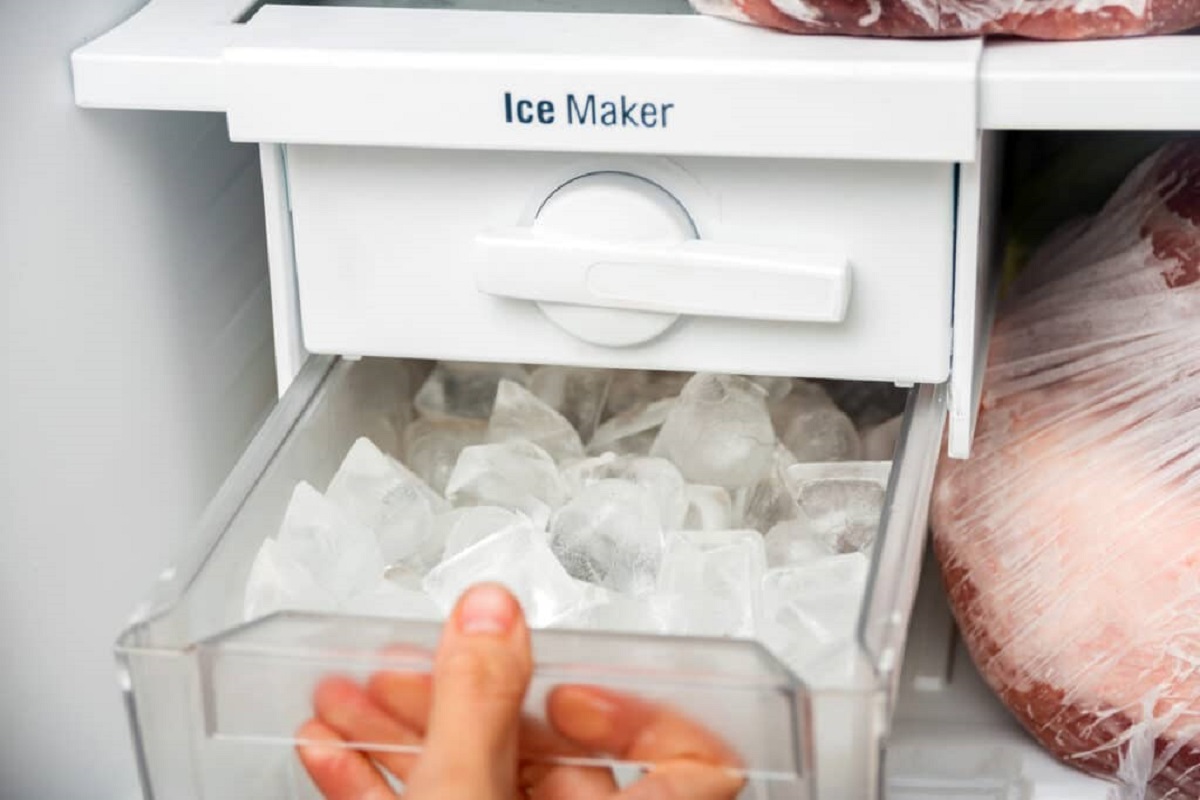 What Temperature Should Freezer Be For Ice Maker | Storables
If you see ice creeping over the sides like a glacial monster, manually lift the arm to stop production. Empty the bin, let the ice melt a bit, and start fresh. This prevents your ice from tasting like last week’s frozen peas.
Cleaning: The One Thing Everyone Forgets
Let’s be real: when was the last time you cleaned your ice maker? If you said “never,” welcome to the club. Mineral scale and mold love dark, damp places—and your ice bin is a five-star hotel for them.
Every three months, empty the bin and wash it with warm water and mild soap. Rinse it extremely well. A soapy cube is a betrayal of the highest order.
For the machine itself, run a cycle with white vinegar or a dedicated de-scaler. Yes, it’s a pain. But your future self, sipping a crystal-clear gin and tonic, will thank you.
The Final Verdict
Using a freezer ice maker is a two-step dance: patience and maintenance. Ignore either, and you end up with sad, clunky cubes that taste like regret.
Master it, though, and you become a host who can casually say, “Oh, the ice? I make it myself,” with a perfectly straight face. It’s a small, weird flex. But it’s your flex. Now go make some cold, glorious cubes.
