How To Get Rid Of Chloramine

So, you’ve just discovered your tap water is laced with chloramine. Cue the dramatic music! Don’t panic—it’s not evil, just a bit of a stubborn hitchhiker that water companies...

So, you’ve just discovered your tap water is laced with chloramine. Cue the dramatic music! Don’t panic—it’s not evil, just a bit of a stubborn hitchhiker that water companies add to keep germs away. Chloramine is basically chlorine with a bonus ammonia molecule attached, making it way harder to kick out than plain chlorine. Think of it as the clingy friend who doesn't get the hint at a party.
Why should you care? Because chloramine can mess with your fish, your brew, your houseplants, and even your skin if you’re sensitive. It doesn't just evaporate like chlorine does when you let water sit out. You actually need a strategy—a plan of attack, a water-saving heist.
Method #1: The Vitamin C Superhero (Ascorbic Acid)
Here’s the most fun and surprisingly cheap trick: Vitamin C. Yes, the same stuff in your orange juice can neutralize chloramine in seconds. It’s like magic, but real. You can buy powdered ascorbic acid online or at a homebrew shop, or even use crushed Vitamin C tablets.
Must Read
Just sprinkle a tiny bit into your water. We’re talking a pinch per gallon—think fairy dust, not a snowstorm. It works instantly, leaving your water odorless and fish-safe. Plus, it acidifies the water slightly, which plants and fish often love.
Why this rocks: no waiting, no energy, no weird aftertaste. It’s practically a cheat code for water. Just don’t chug the powder straight—let’s save that for your smoothie.
Method #2: The Boiling Battle (Spoiler: Not Great)
Okay, so boiling water works for chlorine, right? With chloramine? Not so much, friend. You’d have to boil it for hours—like, a whole Netflix season—to break it down. That’s a lot of energy and a very mad electric bill.
If you’re desperate, boiling for 20 minutes will only remove about half. The other half just laughs at your bubbles and hangs around. So unless you’re prepping for a doomsday scenario, skip this method. Your stove deserves a break.
Method #3: The Slow-Grind Camping Trick
Let the water sit out for days? That works for chlorine in a few hours, but chloramine is a marathon runner. You’d need to wait 24 to 48 hours and aerate it like crazy with a bubbler. Even then, you might only get partial removal.
 Does Kdf Remove Chloramine at Anthony Griggs blog
I’ve tried this. I ended up with an abandoned bucket on my balcony that became a mosquito spa. Not recommended. Unless you’re into passive water therapy, move on.
Method #4: The Carbon Filter Fiesta
Activated carbon—the black, crumbly stuff—is your best buddy here. But you need the right kind: a catalytic carbon filter, not the cheap granulated kind. Catalytic carbon is specially treated to grab chloramine molecules and yank them out by the roots.
You can get a countertop pitcher with a catalytic filter, or install a whole-house system. It’s like giving your water a spa day. The filter removes odors, bad taste, and that chlorine-like sting. Just remember to replace the cartridge every few months—otherwise, it becomes a science experiment.
Method #5: The Chemical Cavalry (Dechlorinators)
For fish keepers and brewers, this is the go-to. You buy a bottle of liquid dechlorinator from the pet store. It’s basically a potion. A few drops neutralize chloramine and also lock up heavy metals. Dump it in, stir, and boom—water that’s safe for your guppies or your IPA.
These products often use sodium thiosulfate or similar compounds. They’re cheap, fast, and foolproof. Just don’t overdo it—too much and you’ll get a weird sulfur smell. Follow the dosage like a recipe, not a dare.
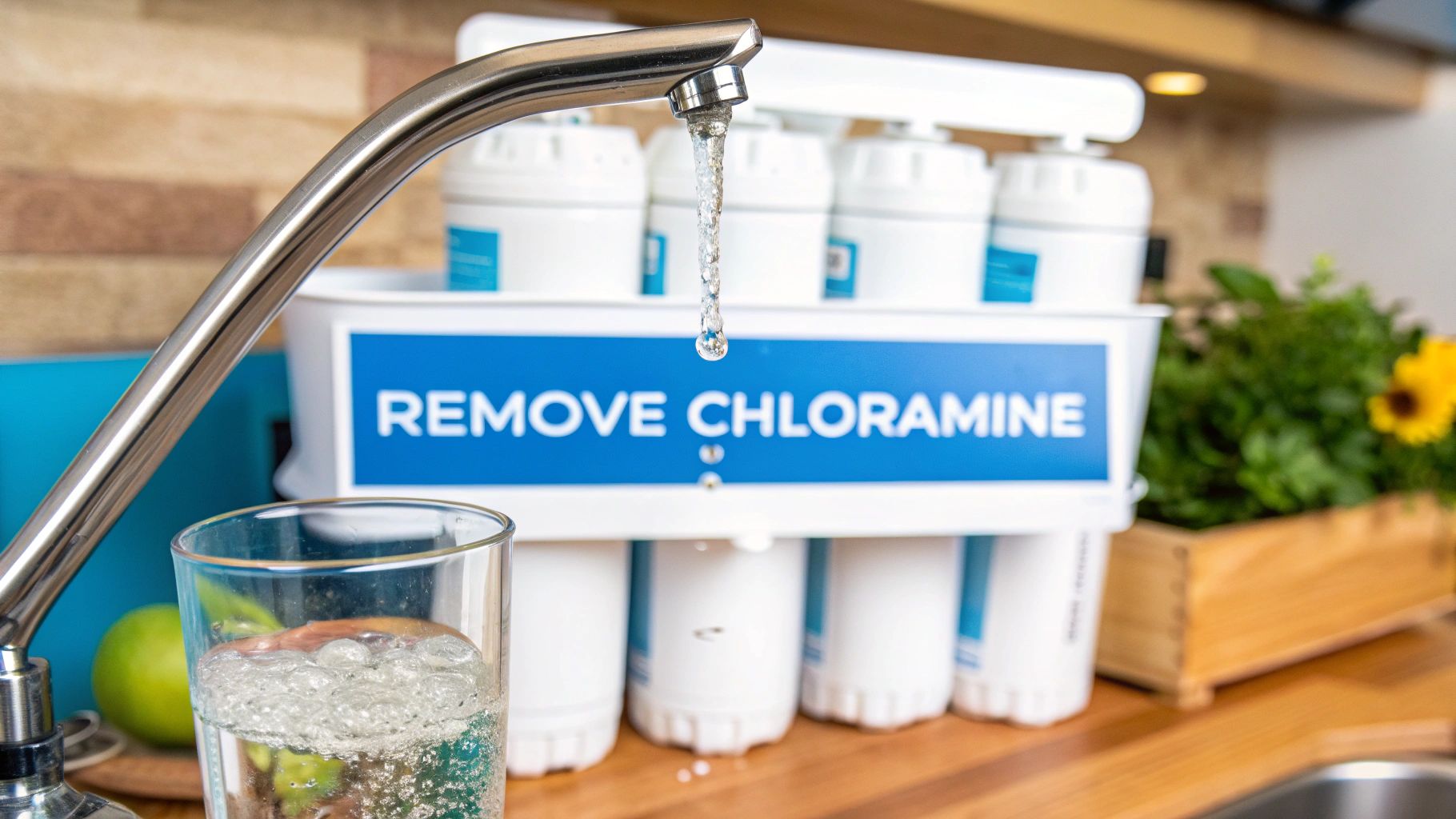 How to Remove Chloramine from Your Home Water
Method #6: The Reverse Osmosis Royalty
If you have cash to spare and want to drink like a water snob, get a reverse osmosis (RO) system. This is the nuclear option. It pushes water through a membrane so fine that even chloramine gets left behind—like a bouncer at the trendiest club.
RO systems are pricier and produce wastewater, but they give you pure H2O. Perfect if you’re making coffee, brewing kombucha, or have expensive plants. Warning: you’ll start judging all other water forever. “Ah, tap water? I don’t think so.”
One Last Goofball Tip: The Fish Tank Test
Before you drink your treated water, test it. Pet stores sell chloramine test strips. This is like a pregnancy test, but for your faucet. Dip, wait, compare colors. If it’s gone, you win! If not, add more Vitamin C or check your filter. No one wants bitter coffee or sad goldfish.
The Uplifting Conclusion (You Made It!)
Congratulations! You now have the tools to banish chloramine from your life. You’re basically a water wizard. Whether you chose the simple sprinkle of Vitamin C, the diligence of a carbon filter, or the royal route of RO, your water is now clear, clean, and happy.
And here’s the real joke: chloramine is actually really good at keeping water safe from microbes. It’s a hero turned villain for your kitchen. Thanks to you, that villain has been gently escorted out the door. So go ahead—fill a glass, take a sip, and toast your victory. Your fish, your plants, and your coffee beans will all thank you. Cheers, you magnificent nuisance-slayer!
