How To Read Your Water Meter

Let’s be honest—when was the last time you looked at your water meter? Probably never, right? It’s that little plastic box tucked away in a corner of your basement or buried u...

Let’s be honest—when was the last time you looked at your water meter? Probably never, right? It’s that little plastic box tucked away in a corner of your basement or buried under a metal lid in your front yard. But here’s the secret: that humble device is your personal portal to savings, curiosity, and even a little fun.
Why bother? Because knowledge is power (and money)
Reading your water meter isn’t just for plumbers or utility companies. It’s for you. Once you learn the basics, you can spot a leak before it becomes a disaster, track your family’s “shower Olympics,” and even lower that monthly bill. Think of it as a tiny, wet crystal ball that shows you how your household actually uses water.
First, find the beast
Your water meter is usually near the street, inside a concrete box with a metal lid. Or it might be in your basement, near the main water pipe. Grab a flashlight, a flathead screwdriver, and a bit of bravery—it might be dusty, but I promise it won’t bite.
Must Read
Lift the lid gently. If you see a spider or two, just say “hello” and get to work. Inside, you’ll see a row of numbers—that’s the odometer-style readout, just like your car’s speedometer.
Now, the magic trick: reading the numbers
Look at the black or white digits. Most meters measure water in gallons or cubic feet, and the numbers show your total usage since installation. Ignore the red dials or little spinning triangles for now—focus on the big numbers. Write down the number you see (say, 123456). That’s your starting point.
Wait a few hours—maybe overnight. Then check again. Subtract the first number from the second. That difference? Your family’s water story. Did someone take a 20-minute shower? Did the kids leave the hose running? The meter knows.
The leak detective in your pocket
Here’s where it gets really cool: turn off every tap, toilet, and appliance in your house. Go back to the meter. If the little red triangle or low-flow indicator (often a small star or gear) is still spinning, you have a leak somewhere. That spin is literally money trickling down the drain.
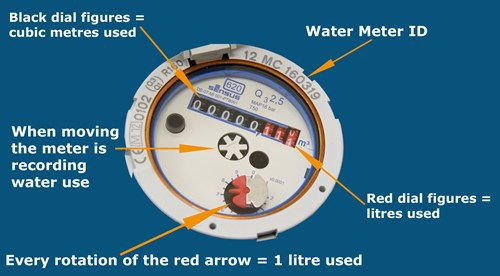 Reading your meter - Kāpiti Coast District Council
Fix a running toilet or a dripping faucet yourself—or call a plumber—and watch that triangle stop. You just became a water detective. Bonus: your utility bill will thank you with a lower number next month.
Use it like a game (yes, really)
Challenge your family to a “water meter check-in” every Sunday. Record the number, set a goal to use less than last week, and celebrate with a pizza night. Kids love spinning the dial and watching the numbers change—it’s like a video game, but with real-life rewards.
Or try a “zero-waste day”: see if you can keep the meter from moving at all for one hour. Harder than it sounds, right? But it’s a playful way to become more mindful of every drop.
What about the dials? (Don’t panic)
Some old-school meters have round dials with arrows. They look like a clock thrown into a blender. Here’s the cheat: read them from left to right, and if the needle is between two numbers, write down the smaller one. You don’t need to be a mathematician—just squint, and you’ll get it.
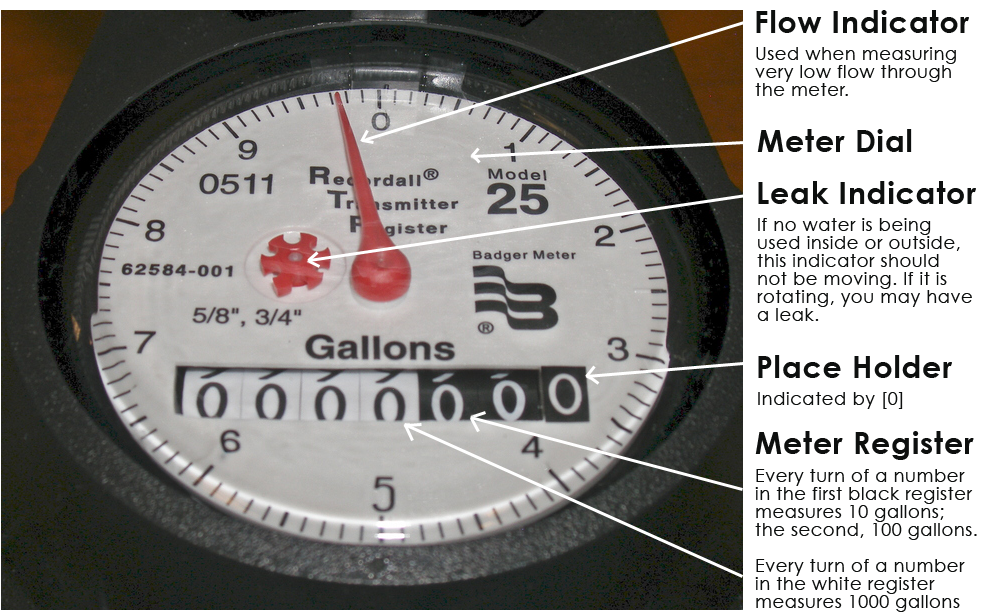 How to Read Your Water Meter - Syringa Water District
And if you see a dial with “10” or “100” on it, that’s just showing tenths or hundredths of a unit. Ignore those unless you’re a plumber or a super-nerd (no judgment if you are—I love you).
The uplifting part: you’re now a water wizard
By learning to read your water meter, you’ve taken a tiny step toward understanding one of Earth’s most precious resources. Every drop you save is a high-five to the planet. You’re not just reading numbers—you’re writing a story of stewardship, curiosity, and cleverness.
So go ahead: pop that lid, scribble down a number, and smile. You’ve just unlocked a secret tool hiding in plain sight. Now, every time you turn on the tap, you’ll know exactly what’s happening behind the walls. And that’s a superpower worth sharing.
Next up: the weather vane? The barometer? The home’s electrical panel? Who knows what other small wonders are waiting for you. Go find them—the world is full of little devices that want to teach you something. Your meter just happened to be the first.
