How To Turn Off Water Supply

Picture this: it’s a lazy Sunday morning. I’m halfway through my third cup of coffee when I hear a distinct, ominous drip-drip-drip from under the kitchen sink. I open the cab...
Picture this: it’s a lazy Sunday morning. I’m halfway through my third cup of coffee when I hear a distinct, ominous drip-drip-drip from under the kitchen sink. I open the cabinet door and—whoosh—a small geyser erupts, soaking my favorite slippers. Panic sets in. I’m circling the faucet like a confused penguin, shouting, “How do I stop this?!”
That’s the moment I realized: knowing how to turn off the water supply is a life skill we all take for granted. It’s one of those boring, adult things you never think about—until your bathroom floods at 2 AM. Trust me, you don’t want to be Googling this while ankle-deep in water.
So, let’s fix that. I’m here to give you the no-drama guide to cutting off your home’s water. No plumber jargon, just real talk. Ready? Let’s get your hands dry—and your floor happy.
Must Read
Step One: Know Your Enemy (a.k.a. The Main Shut-Off Valve)
Every house has a main water shut-off valve. It’s the big boss that kills the flow to your entire home. You need to find it before you’re in crisis mode. Go on a mini treasure hunt right now—seriously, pause reading and look.
It’s usually in the basement, crawl space, garage, or outside near the foundation. In warmer climates, it might be buried in a plastic box in your yard (they call those “curb stops”). Look for a wheel-shaped handle or a lever—like a garden hose spigot on steroids.
If you live in an apartment, check your utility closet or near the water heater. Sometimes it’s behind a panel that says “water” in tiny letters—classic landlord humor. Find it, and memorize its location. Your future stressed-out self will thank you.
How to Actually Turn It Off
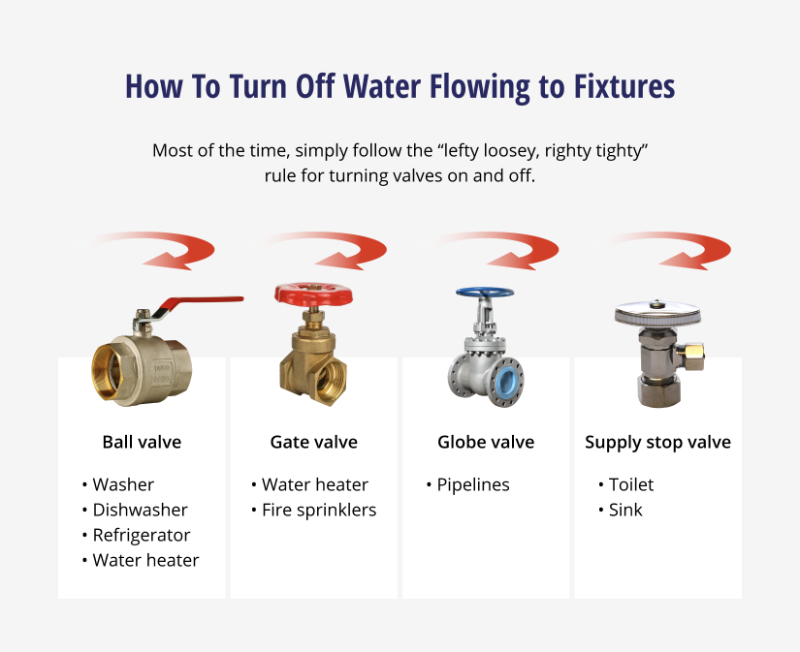
For a wheel-style valve (also called a gate valve): turn it clockwise—righty tighty. Give it a few solid cranks until it stops. Don’t Hulk-smash it; just firm, steady pressure. If it’s been untouched for years, it might be stubborn. Don’t panic, but do give it a gentle nudge with a wrench if needed.
For a lever-style valve (a quarter-turn ball valve): just rotate the handle 90 degrees until it’s perpendicular to the pipe. That positions the internal ball to block the water. Easy peasy, lemon squeezy. Lever valves are your best friends—they’re less likely to rust shut.
 3 Ways to Turn Off Your Water Supply Quick and Easy - wikiHow
After you turn it off, check by running a sink. No water? Victory dance. Still water? You turned it the wrong way or the valve is broken. That’s a “call a plumber” moment, but don’t worry—most homes have a secondary shut-off (more on that below).
Step Two: The Appliance-Level Shut-Off (Your Emergency Backup)
You don’t always need to nuke the whole house’s water supply. For a leaky toilet or a busted washing machine hose, there’s a local shut-off near the appliance. Look under your sink—there’s usually a little chrome or plastic knob on the pipe going into the wall.
For toilets, it’s that small valve on the wall behind the base. It’s shaped like a tiny football or a mini handle. Turn it clockwise and you stop the flow to just that toilet. Same for your sink, dishwasher, and ice maker—each has its own valve.
One tip: test these valves once a year. If they’re stuck, you don’t want to find out when water is raining from your ceiling. Give them a gentle twist now. If they’re seized, spray them with a bit of lubricant (WD-40 works in a pinch) and try again later.
What If You Can’t Find the Valve?
Alright, let’s address the elephant in the room. Some old homes or apartments have no individual appliance shut-offs. Rude, I know. In that case, you’re stuck with the main valve. Or—get this—your main valve is inside a locked neighbor’s unit or buried under a bush.
If that’s you, your last resort is the curb valve: a metal lid in the sidewalk or yard where the city’s water line connects to your house. You’ll need a special wrench (called a “curb key”) or a long screwdriver to turn it. Warning: this is technically the city’s property, so only use it in an absolute emergency.
 3 Ways to Turn Off Your Water Supply Quick and Easy - wikiHow
Pro tip: keep a cheap curb key in your emergency kit (a $10 tool from a hardware store). I keep mine hanging next to the fire extinguisher—because nothing says “I’ve got my life together” like being ready for a flood.
Step Three: What to Do After You’ve Turned It Off
First, breathe. You did it. Now, open a faucet on the lowest floor to drain any remaining water in the pipes (this relieves pressure and prevents bursts). Catch that water in a bucket—use it for your plants, be eco-friendly.
If you’re dealing with a burst pipe or fixture, call a plumber. If you just needed to replace a washer, go ahead and fix it. Then, when you turn the water back on (slowly and gently), check for leaks at the connection point. A small drip is normal for a minute; a constant stream means you didn’t tighten something.
And please, never leave the water off overnight during winter unless you’ve drained all pipes. Frozen pipes are a whole other nightmare I hope you never experience. (I learned that the hard way—now I sound like a grumpy grandpa.)
A Final, Slightly Ironic Reminder
Look, your water shut-off valve is like a fire extinguisher: you hope you never need it, but you’ll be genuinely humiliated if you don’t know how to use it. Take ten minutes this weekend to locate yours, turn it off and on once, and put a bright sticker on it. Your future self—drenched and panicked—will give you a high-five.
Now go enjoy your dry floors and worry-free life. You’re officially a water-shut-off ninja. Just don’t be like me and let your slippers take one for the team.
