Why Is My Sink Water Cloudy

You know that moment. You’re standing at the kitchen sink, ready to fill a glass for a late-night drink. You turn on the tap, and *poof*—out comes something that looks less li...
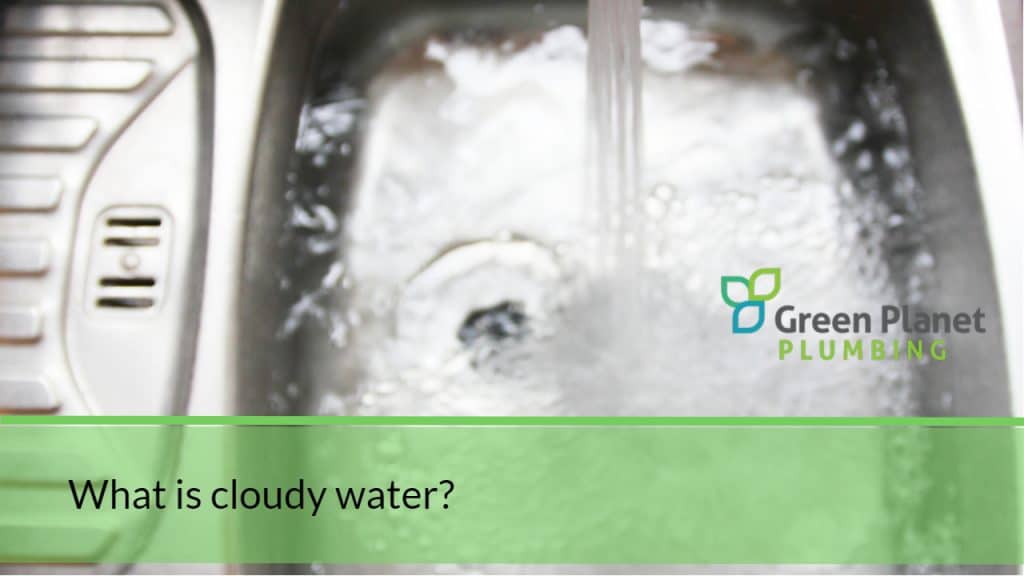
You know that moment. You’re standing at the kitchen sink, ready to fill a glass for a late-night drink. You turn on the tap, and poof—out comes something that looks less like water and more like a misplaced cloud. It’s milky, opaque, and a little bit suspicious. Before you panic and call a plumber (or start Googling “is my sink haunted”), take a deep breath. There’s a very simple, and frankly boring, explanation for this cloudy water.
The Great Air Bubble Conspiracy
Most of the time, cloudy water is just water showing off. Think of it as H2O having a tiny, fizzy tantrum. The white or milky look is actually millions of microscopic air bubbles trapped inside the water. It’s exactly like what happens when you shake a bottle of soda, but without the sticky mess or the sugar rush.
Your municipal water system is under pressure to get the water to your house. When that pressurized water comes out of your tap, the air that was dissolved in it suddenly gets all excited and forms tiny bubbles. These bubbles are so small that they scatter light, making the water appear white. It’s basically your sink water doing a cheap magic trick.
Must Read
If your water is cloudy, just fill a glass and set it on the counter. Watch it for a minute. If the cloudiness clears from the bottom up—like a slow-motion disappearing act—it’s air. The bubbles are escaping, rising to the top, and popping. No harm, no foul.
When It’s Not a Magic Show: The Cold Water Clue
This air bubble phenomenon is especially common in the winter. Have you noticed that cloudy water happens more often when it’s freezing outside? That’s because cold water can hold more dissolved gas than warm water. Think of cold water as a cozy hotel for air molecules.
When that cold water hits your warm kitchen pipes, the air gets kicked out of the hotel. It’s like a fire alarm going off—all those little air bubbles flee at once, making your glass look like a tiny snow globe. It’s your plumbing system’s way of saying, “Brrr, it’s cold in here.”
So, if you have a glass of cloudy ice water, don’t blame the tap. Blame the weather. And maybe your heater for being too aggressive.
The “Well, That’s Gross” Scenario: Sediment
Now, let’s talk about the other possibility. If you let that glass sit for 10 minutes and it stays cloudy, or you see little specks settle at the bottom, we have a different story. This isn’t air; this is sediment. It’s like your water decided to bring a few friends along for the ride.
 Why Is My Sink Water Cloudy? - Green Planet Plumbing
Sediment is usually fine sand, silt, or rust from old pipes. It looks like your water was mud wrestling before showing up at your glass. It’s not necessarily dangerous, but it’s definitely not appetizing. It’s like finding a stray Cheerio in your cereal bowl—technically harmless, but annoying and a little gross.
This usually happens after a water main break, construction work, or if you have really old galvanized steel pipes. The water company flushes the mains, and all that junk gets stirred up. It’s the plumbing equivalent of sweeping dust under the rug and then someone slamming the door.
The “Is This a Lab Experiment?” Factor
In very rare cases, cloudy water can be caused by something called “tiny particles of organic matter.” Translation: that weird stuff that lives in nature. If you’re on a well, this is more common. Your water might look like weak tea after a heavy rain.
If the cloudiness has a yellow, green, or brown tint, you’ve moved from “air bubbles” to “I should probably test this.” It’s not a crisis, but it’s time to pay attention. That colored cloudiness is like your water raising a tiny hand and saying, “Excuse me, I need attention.”
Don’t panic. A simple water test from a hardware store costs less than a fancy coffee. It’s the easiest way to tell if you’re dealing with harmless air or sediment that just wants to be left alone.
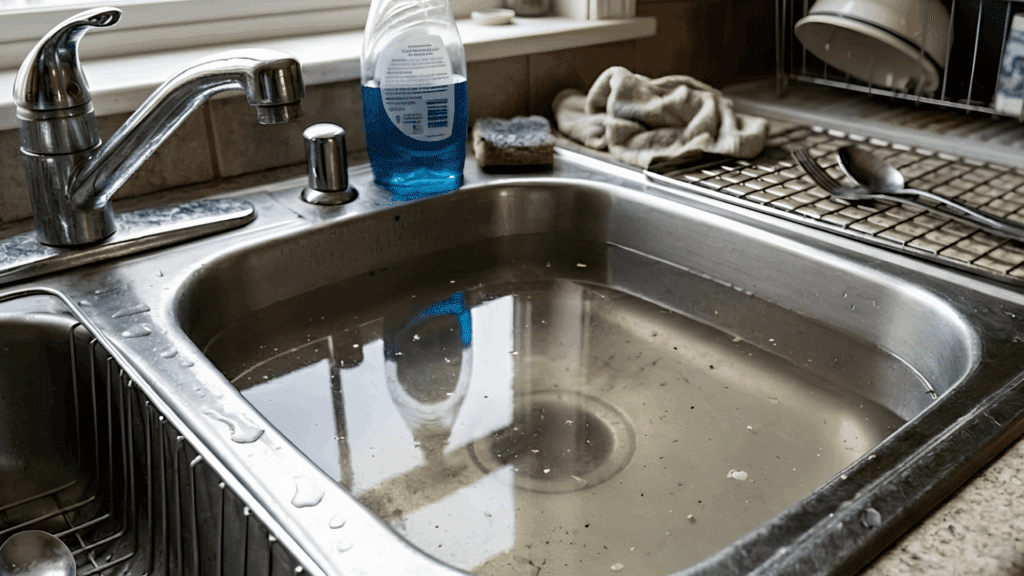 11 Effective Ways to Fix a Clogged Kitchen Sink
What You Should Actually Do (Spoiler: Almost Nothing)
For the air bubble scenario, the fix is embarrassingly easy: just let the water sit. Pour a glass, walk away, and come back in 30 seconds. It will be crystal clear. It’s the laziest fix in home maintenance history, and it works every single time.
For sediment, you have two choices. You can run your tap for a minute to clear the line, especially after a water main break. Or, you can install a simple sediment filter under your sink. It’s like putting a bouncer at the door of your plumbing system, keeping the riff-raff out.
The absolute worst thing you can do is freak out and boil the water immediately. Boiling cloudy water with sediment just makes the sediment small and cooked. Now you have cloudy, cooked soup. Gross. Don’t be that person.
The Final Pour
Next time you see cloudy water, don’t reach for a hazmat suit. Just roll your eyes and say, “Thanks, air bubbles, very dramatic.” It’s a little quirk of your home’s plumbing, like the way your toaster only works if you push the lever down twice.
Remember, you are not alone. Thousands of people across the country are staring at their cloudy sink water right now, confused and slightly offended. You are part of a great, milky-water club. Now, go drink that water once it clears—it’s probably the freshest, most aerated glass you’ll have all day.
