What Does Sulfer Smell Like

Let’s be honest for a second—when you hear the word “sulfur,” what pops into your head? Probably something gross, right? Rotten eggs. And you wouldn’t be wrong. That infamous,...

Let’s be honest for a second—when you hear the word “sulfur,” what pops into your head? Probably something gross, right? Rotten eggs. And you wouldn’t be wrong. That infamous, nose-wrinkling scent is the first thing most of us think of, and it’s totally unforgettable.
But here’s the fun part: sulfur’s smell is actually a fascinating story of chemistry, survival, and discovery. It’s not just a stink bomb—it’s a signal from nature, and once you get the backstory, it makes life a whole lot more interesting. Ready to take a deep breath? (Maybe not too deep.)
The Classic Stink: Rotten Eggs
That rotten egg smell you dread when a hard-boiled egg goes bad? That’s hydrogen sulfide (H₂S). It’s a gas that sulfur forms when it meets decaying organic matter—gross but crucial. Your nose is actually a superhero here: it can detect that scent at incredibly low levels, like one part per million. It’s your body’s way of screaming, “Danger, Will Robinson!”
Must Read
But don’t write off eggs forever. Fresh eggs have sulfur too, just in harmless, bound-up forms. The smell only wakes up when bacteria throw a party. So next time you crack an egg, thank your nose for keeping you safe from a stomachache.
Hot Springs and Volcanoes: The Earth’s Perfume
Have you ever visited a place like Yellowstone National Park? That bizarre, earthy, pungent smell near the hot springs? That’s sulfur, straight from the planet’s core. It smells like a mix of gunpowder, burnt rubber, and a pinch of the underworld—weirdly poetic, right?
This isn’t a bad smell; it’s ancient. Volcanic gases release sulfur dioxide (SO₂), which has a sharp, almost astringent odor. Geologists and adventurers love it—it means the Earth is alive, breathing, and full of energy. Imagine that: a whiff of a volcano is like smelling a heartbeat.
The Matchstick Trick
Ever struck a match? That immediate “whiff” of something crisp and chemical? That’s sulfur dioxide again. Matches have a sulfur-based tip, and the friction makes it burn. The smell is so distinctive that it’s become a symbol for warmth, fire, and even magic tricks.
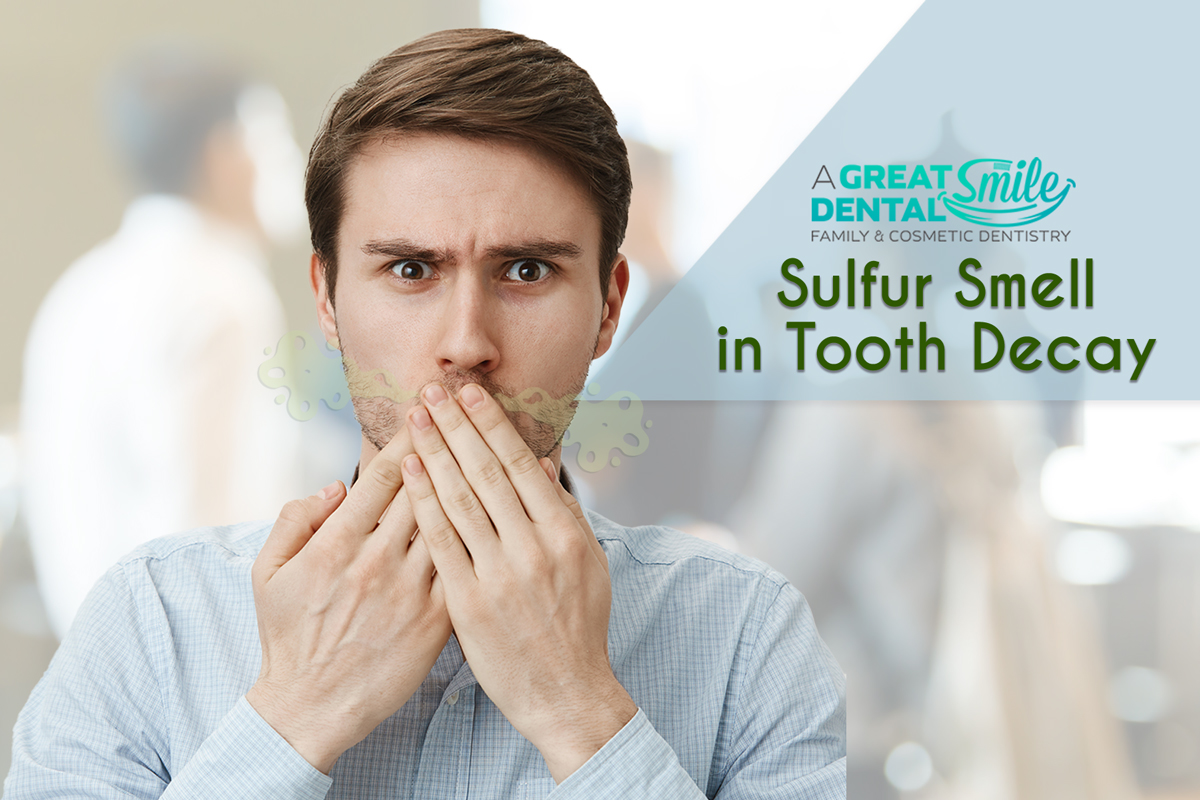 Sulfur Smell in Tooth Decay
And speaking of magic, that same sulfur compound is what gives wine a little “nose” of preserved fruit. Winemakers use it to keep your favorite bottle fresh. So next time you sip a glass of red, you’re tasting—literally—a faint echo of that volcano smell. Cheers to sulfur!
The Garden’s Secret: Garlic and Onions
Here’s a plot twist: that delicious, mouth-watering smell of garlic sizzling in a pan? That’s sulfur too. Yep, the same element that makes eggs reek also makes your marinara sauce irresistible. Onions, garlic, and kale all contain sulfur compounds that break down into complex, savory aromas.
So when you’re sautéing onions, you’re basically cooking with chemical magic. Your kitchen smells amazing because sulfur is being released—not evil, just bold. And if you cry cutting onions? That’s sulfur-based gas turning into mild sulfuric acid in your eyes. Crying over chemistry? That’s art.
Skunks: The Uninvited Guest
Let’s not forget the other famous sulfur story: the skunk. That spray is full of organic sulfur compounds called thiols. They’re designed to be repulsive—and they work. But here’s the trick: thiols are also found in roasted coffee and durian fruit. Yep, the same molecules that ruin a picnic also create some of the world’s most beloved flavors.
 How Do I Get Sulfur Smell Out Of Water – FZFJK
It’s all about concentration. A tiny whiff of a thiol is fascinating; a big blast is a disaster. Life’s like that, isn’t it? Too much of a good thing becomes a bad smell.
Why This Makes Life More Fun
Once you start recognizing sulfur’s scent in the world—eggs, matches, garlic, hot springs, even your own post-gym sweat (sorry!)—you become a secret detective of the senses. You’ll notice connections everywhere. That whiff from a distant fire? Sulfur. That pungent, rich smell after a thunderstorm? Sometimes sulfur from lightning strikes.
The world is a chemical playground, and your nose is the key to the ride. Don’t be afraid of funky smells. Embrace them. They tell you stories about geology, biology, and even your dinner.
Uplifting Finale
So next time you smell something a bit “off,” don’t just wrinkle your nose—get curious. Ask yourself, “Is that sulfur? What’s its story?” You’ll find that even the most unpleasant odors have a brilliant, beautiful reason for existing. And often, that reason is life itself.
You are a walking, smelling, exploring miracle. Go ahead—sniff the world with wonder. Even the stinky parts. They’re just nature’s way of saying, “Look closer—this is amazing.”
