How To Test Your Well Water

So, you’ve got a well. Maybe it’s out back, under a rusty lid, or hiding in a clump of wildflowers. Either way, you’re drinking the planet’s underground juice, and that’s pret...
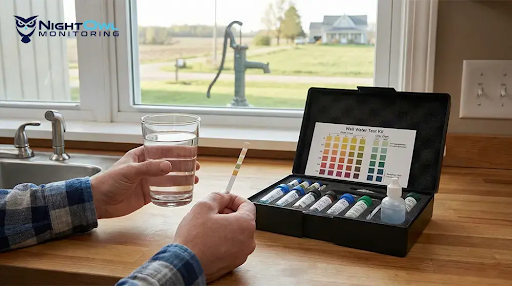
So, you’ve got a well. Maybe it’s out back, under a rusty lid, or hiding in a clump of wildflowers. Either way, you’re drinking the planet’s underground juice, and that’s pretty cool. But here’s the thing: Mother Nature doesn’t send you a monthly water quality report. Ever wonder what’s really floating around in that liquid treasure? You don’t need a science degree to find out—just a little curiosity and a simple test kit.
Why Bother Testing? (Spoiler: Your Taste Buds Can’t See Everything)
Your well water might taste like mountain spring bliss one day, and then—bam—a hint of iron or a weird eggy whiff the next. But here’s the kicker: your senses are lousy detectives. Bacteria, heavy metals, or nitrates don’t always come with a smell or color. They’re invisible party crashers.
Think of it like this: You wouldn’t trust an apple just because it looks shiny, right? Same deal with your well. Testing keeps your family safe, your pipes happy, and your coffee tasting like coffee, not a chemistry experiment. Plus, it’s oddly satisfying to flex that knowledge during small talk.
Must Read
The Gear: What You’ll Need (No Lab Coat Required)
First, decide how deep you want to dive. For a quick health check, grab a home test kit from any hardware store or online—they’re cheap, like ten bucks cheap. These usually test for bacteria, pH, nitrates, and hardness. But if you want the full gossip, a state-certified lab test is your best bet.
Lab tests are pricier—think fifty to a hundred dollars—but they profile everything from arsenic to uranium. It’s like ordering a DNA test for your water. Wild, right? The lab sends you a sterile bottle, you fill it up, and mail it off. Then you wait like it’s a reality show finale.
Step One: The Collection Picnic (A.K.A. Not Rocket Science)
Ready to collect? First, pick a faucet that’s cold and unfiltered—usually the kitchen sink or an outdoor spigot before your water softener. Remove any aerator or filter screen, because we want the real deal, straight from the earth’s basement. Let the water run for a few minutes—cold, not hot—to flush out any stale stuff.
 How to Test Your Well Water: A Complete Testing Guide – Crystal Quest
Now, here’s where you channel your inner scientist: Your hands must be clean, and don’t touch the inside of the bottle or cap. Sterile is the secret sauce. Fill the bottle to the line, screw the cap on tight, and pop it in the fridge if you’re not mailing it same day. Pro tip: Label it with the date and time, or you’ll forget what’s what by next week.
Interpreting the Results: A Cheat Sheet for Regular Humans
Your test results will come back with numbers and terms like “ppm” (parts per million). Don’t panic—it’s just a fancy way of saying how many tiny specks of a thing are in a million drops of water. For example, safe drinking water should have less than 10 ppm of nitrates, while iron levels above 0.3 ppm can stain your laundry rusty. Think of ppm like the spice level in a recipe—a little is fine, too much ruins the dish.
Bacteria results are often a simple “present” or “absent.” If coliform bacteria show up, it doesn’t mean you’re doomed—it just means something like a raccoon or a crack in your well casing let germs in. Annoying, but fixable. A shock chlorination treatment usually sorts it out, and you retest later.
 How Can I Test My Well Water For Drinking at Loretta Little blog
When to Call in the Cavalry (Like, a Pro)
If your results show high levels of lead, arsenic, or radon, or a consistent bacteria problem, don’t try to DIY it with bleach and hope. Call a well contractor or your local health department. They’ve got fancy gear and licenses. Basically, if your water makes a loud “nope” sound in your gut, get expert help.
Also, always test after a big storm, flood, or if you’ve had the well pump replaced. It’s like checking your car’s oil after a road trip—common sense. Annual testing is a good habit, too, like changing your toothbrush.
The Weirdly Satisfying Part: You’re Now a Water Wizard
Once you know what’s in your water, you can choose a filter that actually works—not just a fancy pitcher. Maybe you need a sediment filter for sand, or a reverse osmosis system for heavy metals. Suddenly, you’re not just drinking water; you’re curating your hydration experience. Pretty rad for something that used to be a mystery, right?
And here’s the bonus: You’ll never look at a glass of well water the same way again. That clear, cold sip becomes a story—a snapshot of your local geology, your well’s health, and your own little adventure. So grab a kit, get curious, and let your well spill its secrets. It’s way more interesting than you’d think.
