How Does An Ice Maker Work

Ever stood in front of your fridge, listening to that satisfying clunk as a pile of ice cubes tumbles into the bin, and thought… how does that even work? It’s one of those eve...
Ever stood in front of your fridge, listening to that satisfying clunk as a pile of ice cubes tumbles into the bin, and thought… how does that even work? It’s one of those everyday miracles we totally take for granted, right up there with the toaster knowing when to pop. Let’s pop the lid off this frosty mystery and see what’s really going on inside that magical box.
The Secret Life of a Water Molecule
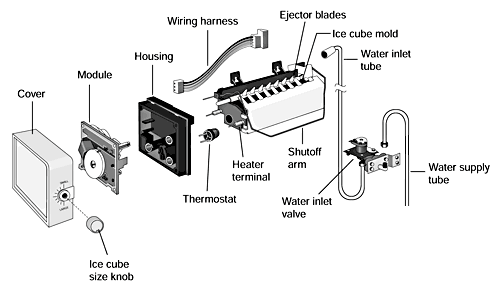
Your ice maker isn’t just freezing water—it’s a tiny, automated factory running on a perfect little cycle. Think of it like a relay race: first, water has to show up, then it gets super cold, then it gets kicked out. But the real hero? It’s a part called the thermostat or temperature sensor.
When you push that little arm on the ice bin down (or when the bin gets empty), you’re basically ringing a dinner bell. The ice maker says, “Okay, time to make cubes.” A valve opens, and a measured amount of water floods into a metal or plastic mold. Not too much, not too little—just enough to make perfect little squares.
Must Read
And here’s where it gets clever: the mold sits right next to the freezer’s evaporator coils (the super-cold pipes that keep everything frozen). The water touches the cold metal, and within minutes, it starts to freeze from the bottom up. Why from the bottom? Because cold sinks, and so does freezing—like ice forming on a pond in winter.
The Ejection Seat for Ice
Once the cubes are solid, the machine doesn’t just wait for you to chip them out. Nope. A heater coil (yes, a heater inside your freezer!) warms the mold just enough to loosen the ice. It’s like running a warm spoon over a stuck popsicle—suddenly, pop, it releases.
Then, a motorized finger (or a little arm) rotates, sweeping the cubes out of the mold and into a waiting bin. CLUNK. CLUNK. CLUNK. That sound is pure mechanical satisfaction. Some machines use a rake system; others use a grid that flips the whole tray over—like a tiny, frozen acrobat.
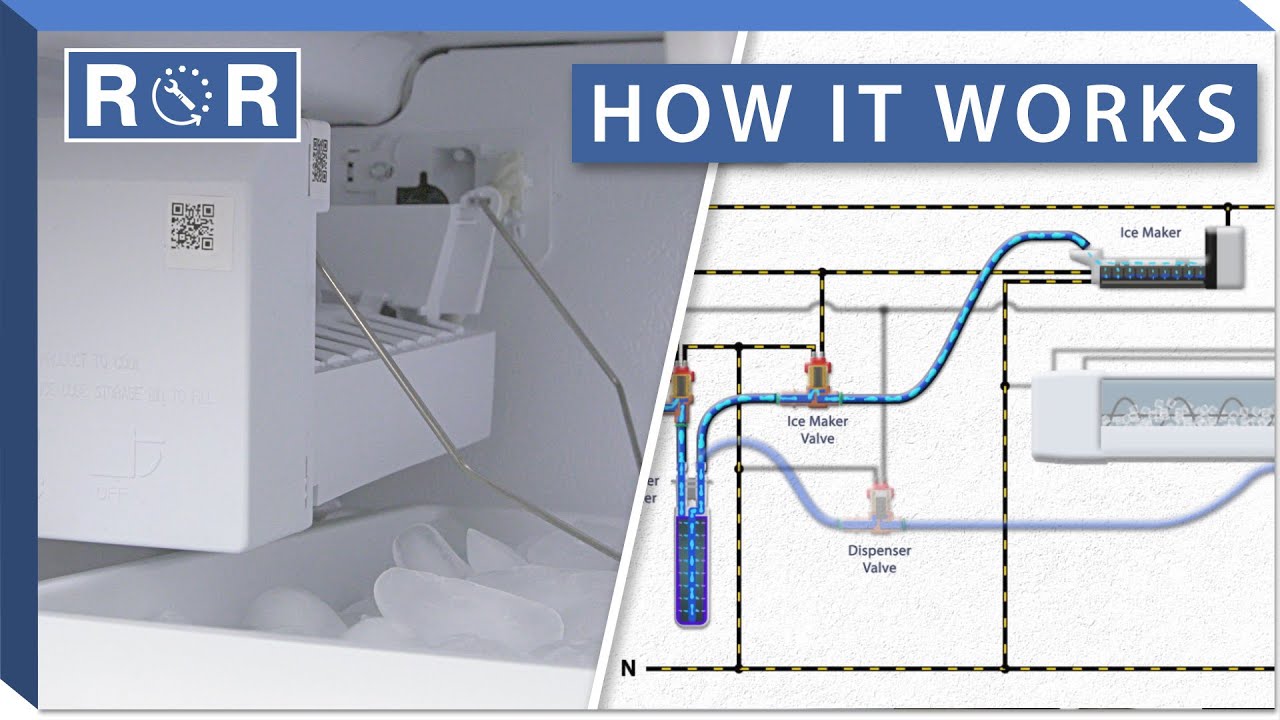 How Does The Ice Maker Work On A Lg Refrigerator at Saul Carroll blog
After the cubes are ejected, a fresh water fill happens automatically. The cycle repeats until the bin is full or until you lift that arm again. It’s literally a self-perpetuating snow globe. And the whole thing works without you lifting a finger—unless you count pushing the dispenser button.
Wait… Why Is It So Quiet?
You might notice your ice maker is almost silent except for the clunks. That’s because modern machines use a thermoelectric Peltier effect or a simple solenoid valve—no big compressor noise. It’s like the difference between a steam train and an electric car: both get you there, but one is a whole lot subtler.
Older ice makers (like the ones in vintage fridges) worked with a timer that ran even when the bin was full—wasting energy and sometimes making a sad, stuck humming sound. Newer models have a smart sensor that says, “We’re good, take a break.” Efficiency feels good, doesn’t it?
The Coolest Part: It’s Not Magic, It’s Physics
At its core, an ice maker is just exploiting a simple fact: water expands when it freezes. The metal mold is designed to let that expansion push the cubes up just a tiny bit, making them easier to release. It’s the same principle that cracks rocks in winter—but here, it’s controlled and helpful.
 Understanding How an Ice Maker Works: Schematic Diagram
And that heater I mentioned? It runs for only a few seconds—just enough to melt a microscopic layer of ice against the mold. That’s the secret to the quick release. Without it, you’d have a solid block of ice stuck to the tray, and you’d be whacking it with a spoon. Nobody has time for that.
So next time you hear that lovely clatter of cubes, remember: you’re listening to a tiny, frosty assembly line running on timing, temperature, and gravity. It’s a bit like a robotic chef that only makes one dish—but it makes that dish perfectly, every time. And honestly? That’s pretty cool.
One More Thing: The Ice Shape Debate
Ever notice how some ice makers make crescent-shaped cubes while others make little nuggets or even spheres? That’s not random—it’s design. Crescent cubes are easier to eject and don’t stick together as much. Nugget ice is softer and chewier (like Sonic ice), because it’s made by compressing flaked ice. The shape changes the experience. Which one are you?
In the end, your ice maker is a humble hero. It doesn’t brag, it doesn’t complain—it just waits, fills, freezes, heats, and ejects, over and over. And all it asks for is a little water and a little patience. Pretty neat for a box of frozen water, right?
