How To Work Water Softener

Okay, let’s be real for a second. If you’ve just moved into a house with a water softener—or you’ve been ignoring the one in your basement—you might feel like you’re staring a...
Okay, let’s be real for a second. If you’ve just moved into a house with a water softener—or you’ve been ignoring the one in your basement—you might feel like you’re staring at a sci-fi control panel. Relax. It’s not a spaceship. It’s just a bucket of magic rocks that makes your hair feel amazing. Let’s learn how to work it without losing your mind.
First Things First: What Is This Thing Doing?
Your water softener is basically a brute-force filter for hard water. Hard water is full of calcium and magnesium, which turn your shower glass cloudy and your hair into straw. The softener swaps those minerals for sodium (yes, salt). Think of it as a friendly bodyguard: it kicks the heavy minerals out and sends in a salty substitute. Your dishes will thank you.
The Control Panel: Don’t Panic
Most modern softeners have a little digital screen with buttons like “Regenerate,” “Manual,” and “Time.” Ignore most of them until you know what you’re doing. The only buttons you actually need to touch are “Menu” or “Set” for programming the clock. If you hit the wrong button? Unplug it for ten seconds. That’s the universal “oops” reset for appliances. Works every time.
Must Read
Step 1: Add Salt (It’s Not a Diet Thing)
Open the big lid on top of the brine tank—that’s the tall plastic tube usually next to the main unit. Pour in salt pellets. Don’t use table salt (it’s too fine and will turn into a brick). Use “water softener salt” from the hardware store, which looks like white gravel. Pro tip: Don’t fill it to the very top. Leave about six inches of room so the salt can dissolve properly. Your softener will guzzle salt like a thirsty camel, so check it every month.
Salt Bags Are Heavy. Here’s a Hack
Carrying a 40-pound bag of salt is basically a workout. Slide it up the stairs instead of lifting it. Or buy two smaller bags. If you drop a bag and salt goes everywhere, just sweep it up and pretend you meant to exfoliate your floor. We’ve all been there.
Step 2: Set the Clock (It’s 2024, Not 1994)
Press the “Set” or “Clock” button on the control panel. Use the up/down arrows to enter the correct time. This matters because the softener uses a timer to decide when to flush itself (called “regeneration”). If the clock is wrong, it might regenerate at 3 PM while you’re taking a lunch break shower. That’s a cold-shower disaster. Set it for 2:00 AM, when everyone is asleep and the water pipes are quiet.
Step 3: Bypass Mode vs. Normal Mode
Look for a lever or a knob near the water inlet pipes. It usually has three positions: “Service,” “Bypass,” and “Backwash.” For daily use, keep it on “Service.” That means the water flows through the softener. Flip it to “Bypass” if you ever need to fix the unit or if you’re watering your garden (because plants don’t need salty water—they get pouty). Seriously, my ferns stage a protest.
 Water Softener How They Work | How Does a Water Softener Work? Parts
The Magic: How Regeneration Works
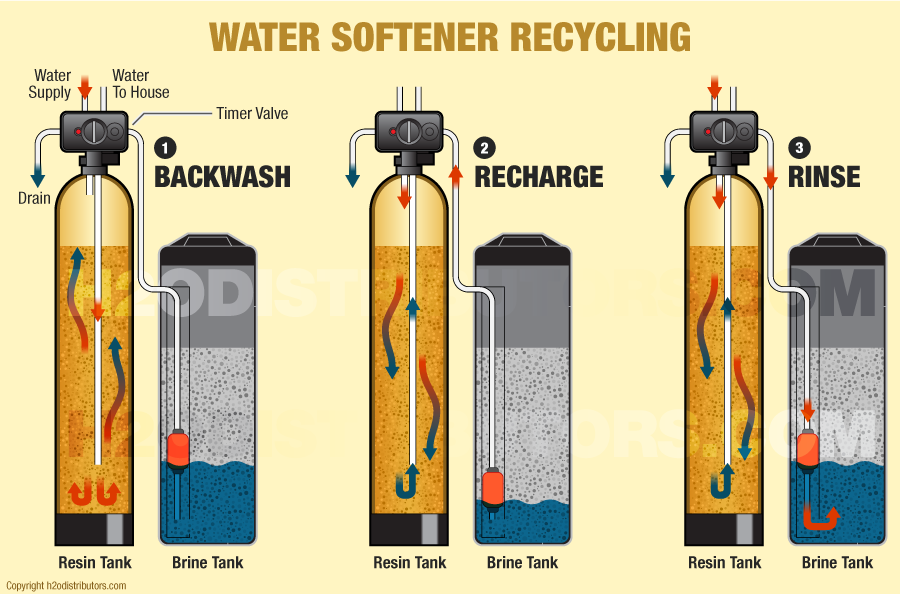
Your softener has a secret superpower: it cleans itself every few days. This is called regeneration. The machine pulls salty brine from the tank, flushes it through the resin beads (the magic rocks), and washes the hard minerals down the drain. You don’t have to do a thing. Just make sure there’s enough salt in the tank before a regeneration cycle hits. Otherwise, the machine will whine at you with a flashing red light. And nobody likes a whining appliance.
When It Regenerates, You Might Hear a Gurgle
That’s normal. It sounds like a coffee maker having a bad dream. Don’t panic. If water dribbles from the drain hose, that’s also normal. If water comes out of your kitchen sink faucet and tastes salty for one minute after regeneration, run the tap for 30 seconds. Problem solved. Your taste buds will forgive you.
Troubleshooting: When Things Go Wrong
Problem: The water is still hard. You’ll know because soap won’t lather and your skin feels like chalk. Check the salt level. If it’s low, add more. If it’s full but the water is still hard, the resin beads might be gunked up. Buy a resin cleaner from the hardware store, pour it in, and run a manual regeneration cycle. It’s like a spa day for your softener.
Problem: The salt is clumping together. That’s called “mushing” or “bridging.” Use a wooden spoon or a broom handle to break up the crusty salt. Don’t use a metal tool—you might scratch the tank. If the bridge is too hard, turn off the unit, empty the tank, and start fresh. Consider it a therapy session for your water system.
 How Water Softeners Work | Benefits, Diagram & More
Problem: The display says “Error.” Unplug it for 10 seconds, plug it back in. If the error comes back, call a plumber. You are not a wizard, and that’s okay.
The One Thing Nobody Tells You
Water softeners make your water feel slippery. That’s the lack of minerals. You’ll rinse off in the shower, and your skin will feel like a dolphin’s back. You might think you didn’t rinse enough. You did. It’s just soft water being its silky, wonderful self. Embrace it. Also, you’ll use less soap—like, half as much. Your laundry detergent bottle will last forever. Your wallet will send a thank-you card.
Maintenance Calendar (The Easiest One You’ll Ever Use)
Monthly: Check the salt level. Add a bag if it’s below half. Every 3 months: Clean the brine tank’s salt bridge (if any). Once a year: Run a regeneration cycle with a resin cleaner. That’s it. No oil changes, no spark plugs. Just salt and a little love.
A Final, Friendly Warning
Do NOT put salt in the other tank. The main unit with the control panel holds resin beads, not salt. If you pour salt into the wrong hole, you’ll have a bad day. Label the tanks with a marker if you forget. Or just remember: salt goes into the tall, boring plastic one. Resin stays dry in the fancy one. Your future self will high-five you.
The Uplifting Conclusion (You Made It!)
You are now the captain of your water softener. That hulking machine is no longer a mystery—it’s your sous chef for clean dishes, shiny hair, and softer towels. Every time you see a spotless glass or feel your skin not itchy, give yourself a little nod. You did that. And the best part? This thing will run quietly for years if you just feed it salt and a little attention. So go ahead, fill that brine tank, set that clock, and enjoy the silkiest water of your life. You’ve earned it. And yes, you can now show off to your neighbors. Just don’t be smug about it—let your fabulous hair do the talking.
