How To Stop Pipes Freezing

You know that feeling when you wake up on a freezing morning, wrap yourself in a blanket, and shuffle to the kitchen for coffee? Only to turn on the tap and get… nothing. Just...

You know that feeling when you wake up on a freezing morning, wrap yourself in a blanket, and shuffle to the kitchen for coffee? Only to turn on the tap and get… nothing. Just a sad little cough of air. That, my friend, is a frozen pipe, and it’s the plumbing equivalent of your house getting a grumpy cold.
Why should you care? Because a frozen pipe isn’t just inconvenient—it’s a ticking time bomb. When water freezes, it expands, and that expansion can split your pipe like a cheap balloon at a birthday party. Then, when the ice melts, you get a flood in your living room. Not fun.
The good news? Stopping it is easier than convincing your cat to sit on your lap. Really. You just need a little foresight and a few comfy layers—for your house, not for you (though you should stay warm too).
Must Read
Insulate your home like it’s planning a vacation to the Arctic
Think of your pipes as shy relatives who hate the cold. They need a cozy coat. Pipe insulation foam is cheap and looks like a pool noodle, which makes it instantly more fun to handle. Slip it onto pipes in your basement, attic, or crawl spaces—those are the spots that turn into ice boxes.
If you can’t find foam, old towels, rags, or even a cut-up sweatshirt work in a pinch. Sarah from down the street once used an old pair of fuzzy socks on her outdoor spigot. She said it looked ridiculous, but it worked. Ridiculous beats ruined floorboards every time.
Don’t forget pipes inside cabinets, especially under the kitchen or bathroom sink. Open those cabinet doors to let heated air circulate. It’s like letting your pipes breathe warm, friendly air instead of leaving them in a dark fridge.
The drip trick: your new best friend
Here’s the simplest hack in the book: let your faucet drip overnight when temperatures drop below freezing. A trickle of moving water is much harder to freeze than still water. It’s like jogging in place compared to standing still in a blizzard.
Does it waste a lot of water? Not really. A slow drip is about a cup of water an hour—less than the water you waste waiting for your shower to warm up. And it’s way cheaper than hiring a plumber to fix a burst pipe on a holiday weekend.
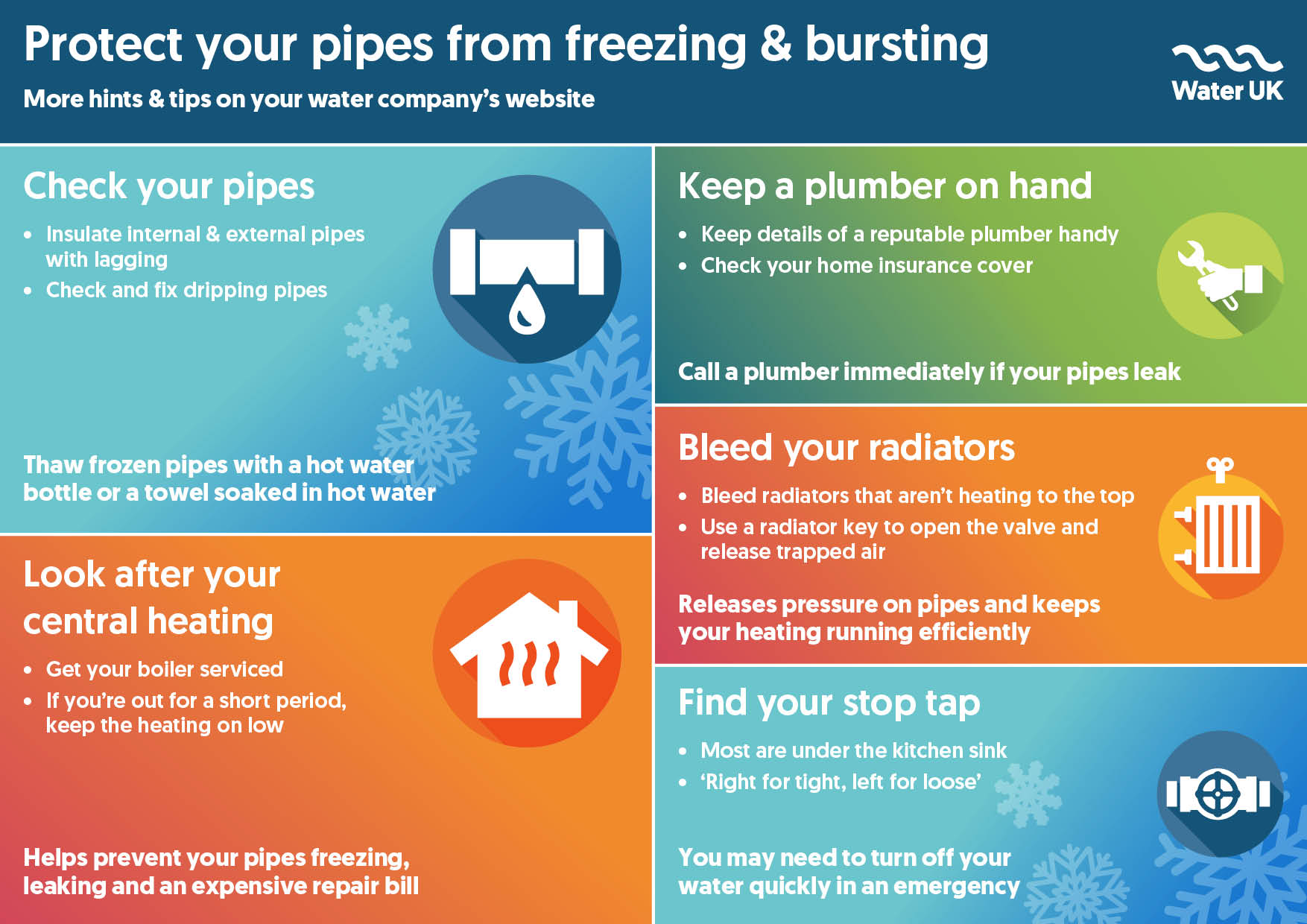 Households and businesses urged to protect pipes from freezing and
Pick the tap that’s farthest from where the water enters your house. That’s the one that feels the cold first. Let it drip overnight, and you’ll sleep easier knowing your pipes are doing a slow, safe dance.
Keep the house warm (even when you’re not home)
I know, I know—heating an empty house feels like throwing money out the window. But keeping the thermostat at 55°F (12°C) minimum is cheaper than a flood repair. Think of it as a tiny insurance premium you pay to avoid a lake in your hallway.
Set your thermostat to stay at that temperature, even if you’re skiing in Colorado for a week. Your pipes don’t care about your vacation vibes—they just need a little warmth. And if your furnace dies? Call a friend to check on your house, like you’d ask someone to water your plants.
Also, close the garage door. Garage pipes freeze fast. If your water lines run through there—like for a washing machine—park the car, shut the door, and give those pipes a fighting chance.
Seal the sneaky cold spots
Sometimes cold air sneaks in through tiny cracks you never notice. Check around your dryer vent, outdoor faucets, and where phone cables enter the house. Caulk or spray foam those gaps like you’re frosting a cake—neatly and generously.
 Preventing Frozen Pipes: A How-To Guide - DwellHack
If you have a garden hose attached to an outdoor spigot, disconnect it. A connected hose traps water in the pipe, and that water freezes first. Detach it, drain it, and toss it in the shed. Your spigot will thank you by not exploding.
Even a rolled-up towel stuffed against a drafty door can help. It’s not fancy, but it’s effective. Think of it as a scarf for your house—no one sees it, but it does the job.
What if you already hear gurgling or see frost?
Don’t panic. Act fast, like you’re catching a falling glass. Turn up the heat immediately and open the cabinet doors under the sink. A hairdryer (on low heat) applied to the pipe can work wonders—just never use a blowtorch.
Keep the faucet open as you warm the pipe. The trickle of melting water helps speed up the thaw. It’s like coaxing a frozen lock with a bit of lighter fluid—gentle and patient.
If you can’t find the frozen spot or water doesn’t start flowing after 30 minutes, call a plumber. Better safe than soggy. You’ll feel like a pro for trying, and a little help when things get icy is just smart.
So there you go—a warm house, some pool-noodle insulation, and a dripping faucet. You can do this. Your pipes are counting on you, and they’re terrible at asking for help.
