How Much Does 5 Gal Weigh

Ever found yourself staring at a big, blue 5-gallon water jug and wondering, "How much does that thing actually weigh?" You’re not alone. It’s one of those random questions th...

Ever found yourself staring at a big, blue 5-gallon water jug and wondering, "How much does that thing actually weigh?" You’re not alone. It’s one of those random questions that pops up when you’re lugging one to your car, or maybe filling up a bucket for a DIY project. Let’s break it down together, nice and easy.
The Simple, Heavy Truth
At its core, 5 gallons of water weighs about 41.7 pounds. That’s roughly the same as a medium-sized dog or a large bag of cement. Pretty substantial, right? But here’s the kicker: that number can change depending on what you’re filling the bucket with.
Water is the baseline, but think about gasoline, milk, or even sand. Each one packs a different punch on the scale. A gallon of water weighs 8.34 pounds, but a gallon of gasoline is only about 6.3 pounds. Why the difference? It’s all about density—how tightly packed the molecules are. Cool, huh?
Must Read
The "Wait, That's Lighter?" Factor
So if you’re hauling gasoline, that 5-gallon can weighs around 31.5 pounds. That’s over ten pounds lighter than water! That’s why a full gas can feels surprisingly manageable. But don’t get too comfortable—if you’re toting honey, things get sticky and heavy. Five gallons of honey can tip the scales at nearly 60 pounds. That’s like lifting a small child.
Ever lifted a 5-gallon bucket of paint? That’s a whole different story. Paint is thicker and denser than water, so you’re looking at 50 to 55 pounds. Suddenly, painting a room sounds like a mini workout, doesn’t it?
Fun Comparisons to Wrap Your Head Around
Let’s make this real with some everyday comparisons. Five gallons of water weighs about the same as:
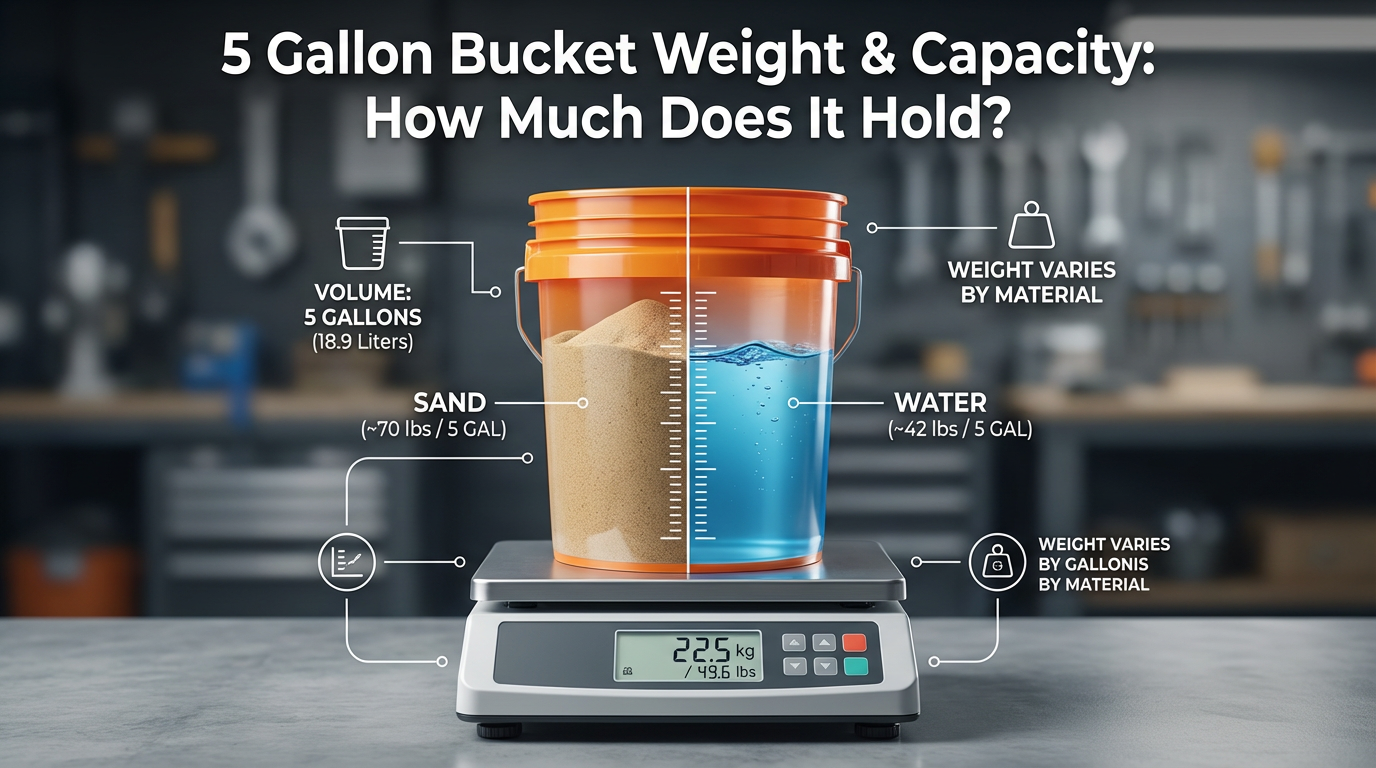 5 Gallon Bucket Weight Capacity: How Much Can It Hold? | PailHQ
- A full-size car tire.
- Seven or eight standard bowling balls.
- A toddler who’s been eating their veggies.
Now imagine carrying that toddler around for a mile. That’s exactly what you’re doing when you haul a full water jug from the store. It’s a solid arm day, my friend.
Why This Actually Matters
You might be thinking, "Okay, cool fact. But do I ever need to know this?" Absolutely. If you’re setting up a fish tank, you’ll want to know your floor can handle the weight. A 20-gallon tank, with water and gravel, can easily weigh over 200 pounds. That’s like having a couple of large adults standing on your floorboards.
Same goes for gardening. If you’re filling a 5-gallon bucket with soil, it weighs about 40 to 45 pounds when dry. Wet soil? Easily 55 pounds. Trying to move a row of those across your yard is a full-body experience. No shame in using a dolly.
 How Much Does a 5 Gallon Jug of Water Weigh?
The Temperature Twist
Here’s a neat party trick: water’s weight changes with temperature. Cold water is slightly denser than warm water. So a 5-gallon jug of ice-cold water is just a tiny bit heavier than one at room temperature. We’re talking ounces, not pounds, but it’s still a fun thought. Science is weird and wonderful.
And if you’re thinking about saltwater, like at the beach, it’s about 0.2 pounds heavier per gallon than freshwater. Five gallons of ocean water weighs around 42.8 pounds. That extra weight is all the dissolved minerals and salt. So next time you float in the sea, remember—you’re being pushed up by a liquid that’s basically a tiny bit chunkier.
The "Why Should I Care?" Moment
Honestly, you don’t have to care. But knowing how much things weigh makes you feel a little more in control of the world. When you lift that bucket at the hardware store, you’ll nod knowingly. When a friend struggles with a water jug, you’ll say, "Yeah, that’s about 42 pounds." You’ll look like a genius.
So next time you see a 5-gallon container, give it a mental salute. It’s not just a bucket—it’s a lesson in density, a test of your biceps, and a reminder that a simple question like "How much does 5 gal weigh?" can lead to a whole rabbit hole of cool facts. And that, my friend, is the best kind of curiosity.
