What Is A Deionized Water

Picture this: you’re standing in a science lab, and some smug guy in a lab coat points at a beaker of water. “That,” he says, “is deionized water. It’s so pure, it’s basically...

Picture this: you’re standing in a science lab, and some smug guy in a lab coat points at a beaker of water. “That,” he says, “is deionized water. It’s so pure, it’s basically water that’s been to therapy and resolved all its issues.” And you nod, pretending you know what that means. But inside, you’re thinking, “Isn’t all water just… wet? What’s next, dehydrated water?”
Well, let me spill the tea—or rather, the not-tea. Deionized water is regular H2O that’s had all its charged particles (ions) violently evicted. Think of it as a water bouncer: “Sorry, calcium, you’re not on the list. Sodium? Out. Magnesium? Hit the bricks.” It’s the VIP lounge of water, and only pure, neutral H2O gets in.
Why would anyone need such a finicky liquid? Because regular tap water is a party full of tiny hitchhikers. Every sip you take is loaded with minerals like calcium, magnesium, and even trace amounts of iron. They’re harmless for your morning coffee, but for a semiconductor factory or a car battery? Those ions are like gremlins in the machinery—they short-circuit everything.
Must Read
Here’s the wild part: deionized water is so lonely for ions that it’ll actually steal them from whatever it touches. Got a metal pipe? This water will gnaw at it like a hungry piranha. Leave it in a glass bottle for too long, and it’ll leach silica right out of the glass. It’s basically the narcissistic ex of water—so pure it can’t hold onto a relationship with anything.
Now, let’s talk about how they make this stuff. It’s not a fancy filter or a magic wand. They use ion-exchange resins, which are basically tiny plastic beads covered in magnets for charged particles. The water flows through, and the beads grab the ions like they’re playing a game of “you’re it.” The result? Water so clean it would make a glacier jealous.
But hold up: don’t drink the stuff. I know, I know—it sounds like the ultimate health hack. “Pure water, zero impurities, right?” Wrong. Deionized water is a terrible thirst-quencher because it has no taste. And if you chug a gallon of it, your body’s cells will go into a panic, trying to balance all those missing minerals. It’s like eating a salt-free potato chip—technically food, but a sad, flavorless experience.
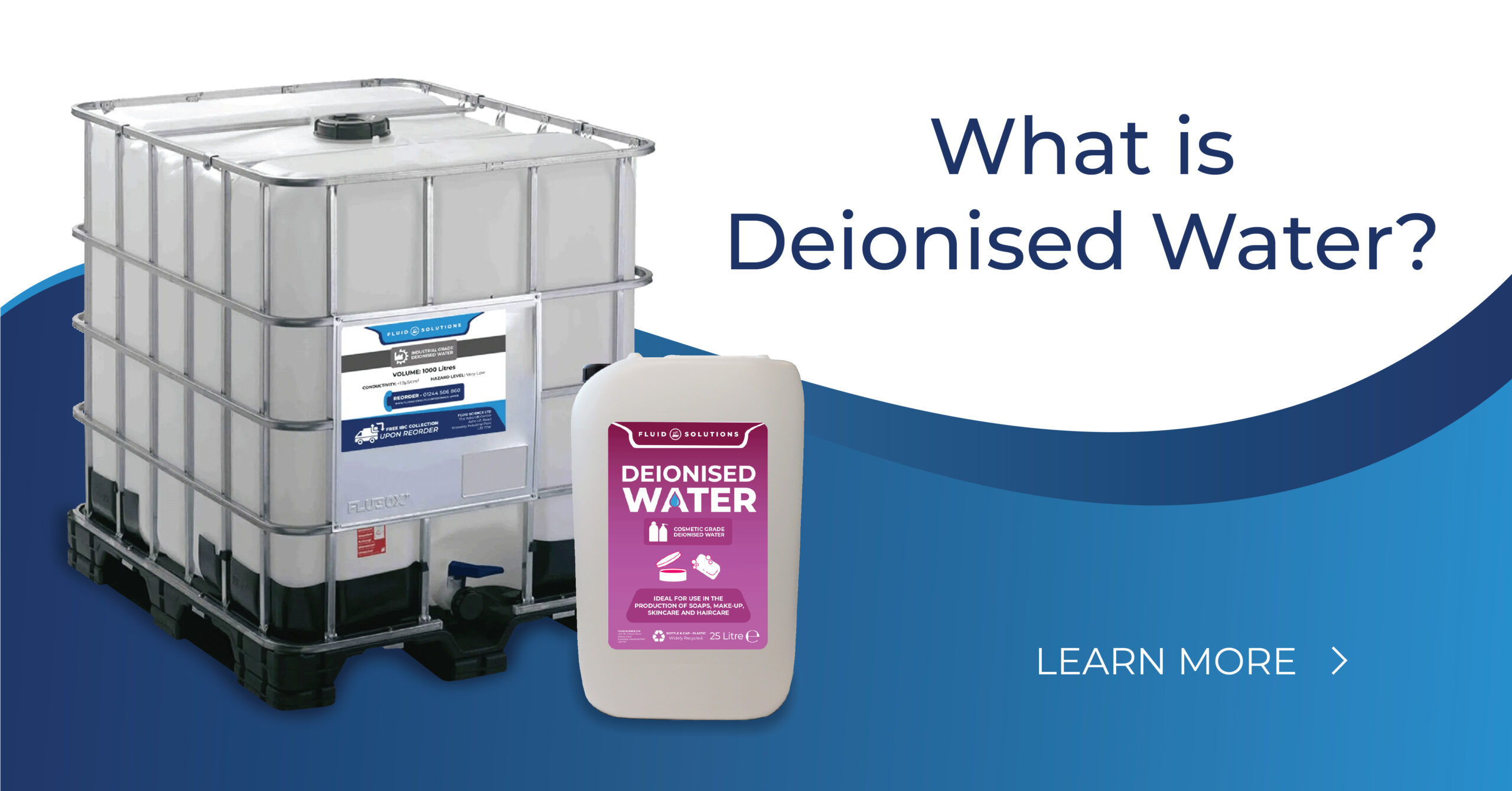 What is Deionised / DI Water? - Fluid Science - One For All
Ironically, deionized water is not actually sterile. It’s still full of bacteria and viruses. Think of it as a clean apartment with no furniture but a lot of uninvited squatters. For germ-free water, you need a different process (distillation or UV light). So don’t go injecting this stuff into your veins—though yes, it is used in some medical procedures, but with extreme caution.
The True Heroes of Deionized Water
Where does this superhero water actually work? You can thank it for your car battery lasting more than a week. Regular tap water would corrode the battery plates faster than a toddler’s attention span. Deionized water? It keeps the chemistry stable, so your car starts even on cold mornings. Also, it’s used in making microchips—the brain of your phone. One speck of calcium during chip-making, and your phone would crash if you looked at it wrong.
Ever wonder why your steam iron doesn’t explode with white flakes? Thank deionized water. Those mineral deposits from tap water would clog the steam holes, and you’d get little white salt showers on your shirt. Not a great look for date night. And yes, the car wash place uses it too—so you don’t get water spots that look like a dalmatian’s spots on your paint job.
 Commercial & Industrial Deionized Water System Manufacturer | NEWater
Wait, Isn’t This Just Distilled Water?
At this point, you’re probably thinking, “Is this just distilled water with a fancy degree?” Not exactly. Distilled water is made by boiling water and collecting the steam—like making rain in a lab. It removes most stuff, but it doesn’t kick out every ion. Deionization is like the sequel—more aggressive, more thorough. Distillation is the gentle yoga of purification; deionization is crossfit for water molecules.
The result? Deionized water can be a million times more pure than distilled water. But it has a shelf life. Leave it open to air, and it’ll start gobbling up carbon dioxide from the atmosphere, turning into weak carbonic acid. Yes, water so pure it’s desperate for a hug from any gas molecule. It’s the ultimate introvert that still wants attention.
The Final Splash
So the next time you see “deionized water” on a bottle, remember: It’s water that’s had a personality transplant. It’s molecularly clean, socially awkward, and dangerously hungry for ions. It’s the reason your phone works, your car starts, and your fancy shirt isn’t stained. And honestly, isn’t that worth a laugh? Cheers to the purest weirdo in the water family—just don’t drink it unless you want a boring glass of nothingness.
And if anyone asks, tell them deionized water is the water equivalent of that friend who never borrows money, but also can’t keep a plant alive. It’s technically perfect, but a little too perfect for real life. Now go find some tap water, full of delicious ions, and give it a toast.
