How To Shut The Water Off

Let’s be honest: water has a mind of its own. One second it’s gently filling your kettle, the next it’s staging a surprise flood under your kitchen sink. That’s why knowing ho...
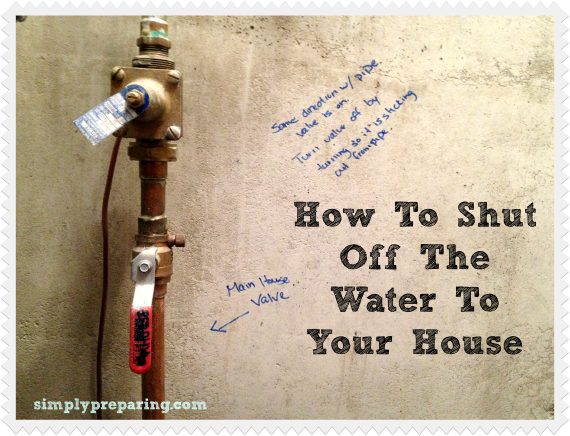
Let’s be honest: water has a mind of its own. One second it’s gently filling your kettle, the next it’s staging a surprise flood under your kitchen sink. That’s why knowing how to shut the water off is like knowing where the emergency brake is on a runaway grocery cart.
You don’t think about it until you really need it. Then you’re suddenly hip-deep in a crisis, wearing your “nice” pants, and your cat is looking at you like you planned this.
The Main Event: Your Home’s Big Red Button
First, find your main water shut-off valve. It’s usually near the street, in the basement, or hiding behind a utility closet door like a shy teenager. If your house were a video game, this is the “pause button.”
Must Read
Look for a wheel-shaped handle or a straight lever. If it’s a wheel, think of it like opening a stubborn jar of pickles—turn clockwise to close. If it’s a lever, pull it perpendicular to the pipe, like flipping a light switch off.
Here’s the funny part: every home has one, but nobody knows where it is. I once watched my neighbor frantically rip apart their laundry room while the water gushed. They found it behind a painting of a sad clown. Don’t be that person.
The Bathroom Gambit
Bathrooms are the drama queens of the house. When a toilet runs, it’s a polite trickle. But when a supply line bursts, it’s an indoor slip-and-slide. Every bathroom fixture—sink, toilet, and tub—has its own little shut-off valve.
These valves are usually under the sink or behind the toilet. They’re dinky, brass knobs that look like they belong on a tiny robot. Turn them clockwise with your fingers—no tools needed unless you’re Hulk-strong and want to snap them off. If it feels stuck, don’t force it. Just use the main valve instead, because a broken knob is a new kind of headache.
:max_bytes(150000):strip_icc()/where-to-shut-off-the-water-2718723-hero-98400ef1c43741ce8719818bfe804466.jpg) Turn Off Water
Turn Off Water
I learned this the hard way during a midnight toilet fiasco. I twisted too hard, the knob cracked, and I had to explain to my wife why we were using buckets for an hour. She was not amused. She was, however, dripping with sarcasm.
The Kitchen: Where Chaos Meets Cuisine
Your kitchen sink has its own valve too, usually tucked behind the cabinet under a pile of cleaning supplies. You know that moment when you’re washing a mountain of dishes and the sprayer hose starts writhing like a snake? That’s when you need this valve.
There will be two valves: one for hot water (left) and one for cold (right). For emergencies, shut them both. If only one pipe is leaking, just close that side. It’s like putting a napkin over only half a spill—it mostly works.
One time, I was hosting a dinner party and the faucet hose detached mid-sip of wine. The water sprayed my guests, my dip, and my dignity. I lunged under the sink, fumbled for the valve, and twisted it like I was wringing a towel. By the time I surfaced, everyone was laughing, and the dip was a soup. Good times.
The Sump Pump and Outdoor Spigots
If you have a basement, you might also have a sump pump valve. That thing is your underground bodyguard. If it fails, you get a swimming pool where your couch should be. Shut it off the same way—clockwise.
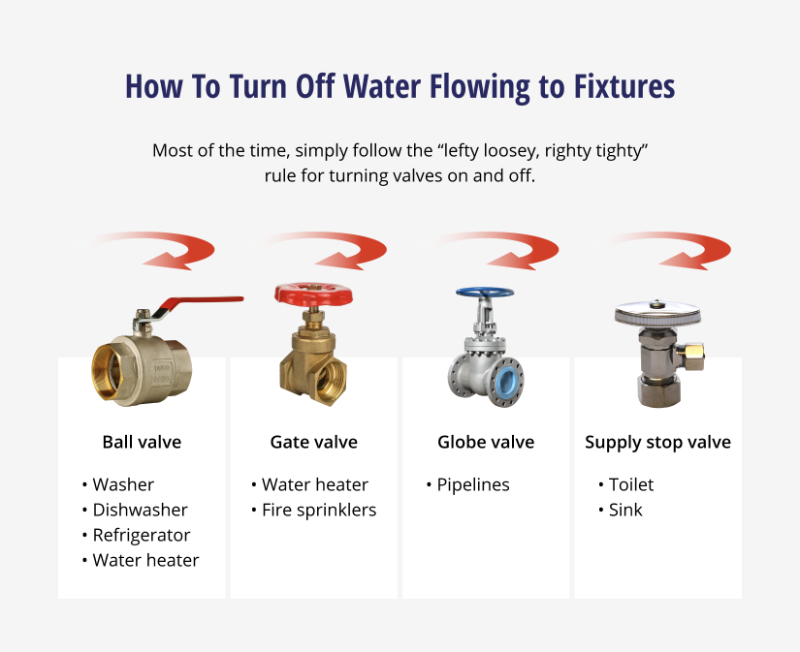 How To Find & Turn Off a Main Water Shut-off Valve
For outdoor spigots (the hose bibs), there’s usually a separate valve inside the house, often in the crawl space or basement. Before winter, shut it off and drain the hose. If you don’t, your pipes can freeze and explode like a cartoon water balloon. My dad forgot once. The resulting iceberg in his yard made him the talk of the block.
When All Else Fails: Call Your Inner Cowboy
If you can’t find any valve, or if the valve is rusted to oblivion, then call a plumber. But in a true flood emergency, you can also locate the water meter—usually in a box at the curb. Inside is another shut-off valve. Use a wrench or a sturdy pair of pliers, and turn it off.
Warning: this is a public valve, meaning the city owns it. Do it only in a true crisis—like if your house is turning into a pond and your toaster is floating. Otherwise, the water company might send you a grumpy letter.
The bottom line? Practice now, not during a flood. Go find your valves today. Touch them. Turn them a quarter turn just to make sure they move. Label them with a sharpie if you’re fancy. Your future self—dry and calm—will thank you.
And remember: water is a great servant but a terrible master. Next time you hear a drip gone rogue, you won’t panic. You’ll just smile, walk to your secret valve, and whisper, “Not today, H₂O.”
