How Much Is Bevi Machine

So there I was, standing in a swanky co-working space in Austin, staring at a machine that looked like it belonged in a sci-fi film. A friend had just filled her bottle with w...

So there I was, standing in a swanky co-working space in Austin, staring at a machine that looked like it belonged in a sci-fi film. A friend had just filled her bottle with what she called “sparkling cucumber mint water,” and she was practically glowing. I asked her, “How much does that thing even cost?” She shrugged and said, “I have no idea, but my company pays for it.” And that, my friend, is the million-dollar question—or the $4,000 question, more accurately.
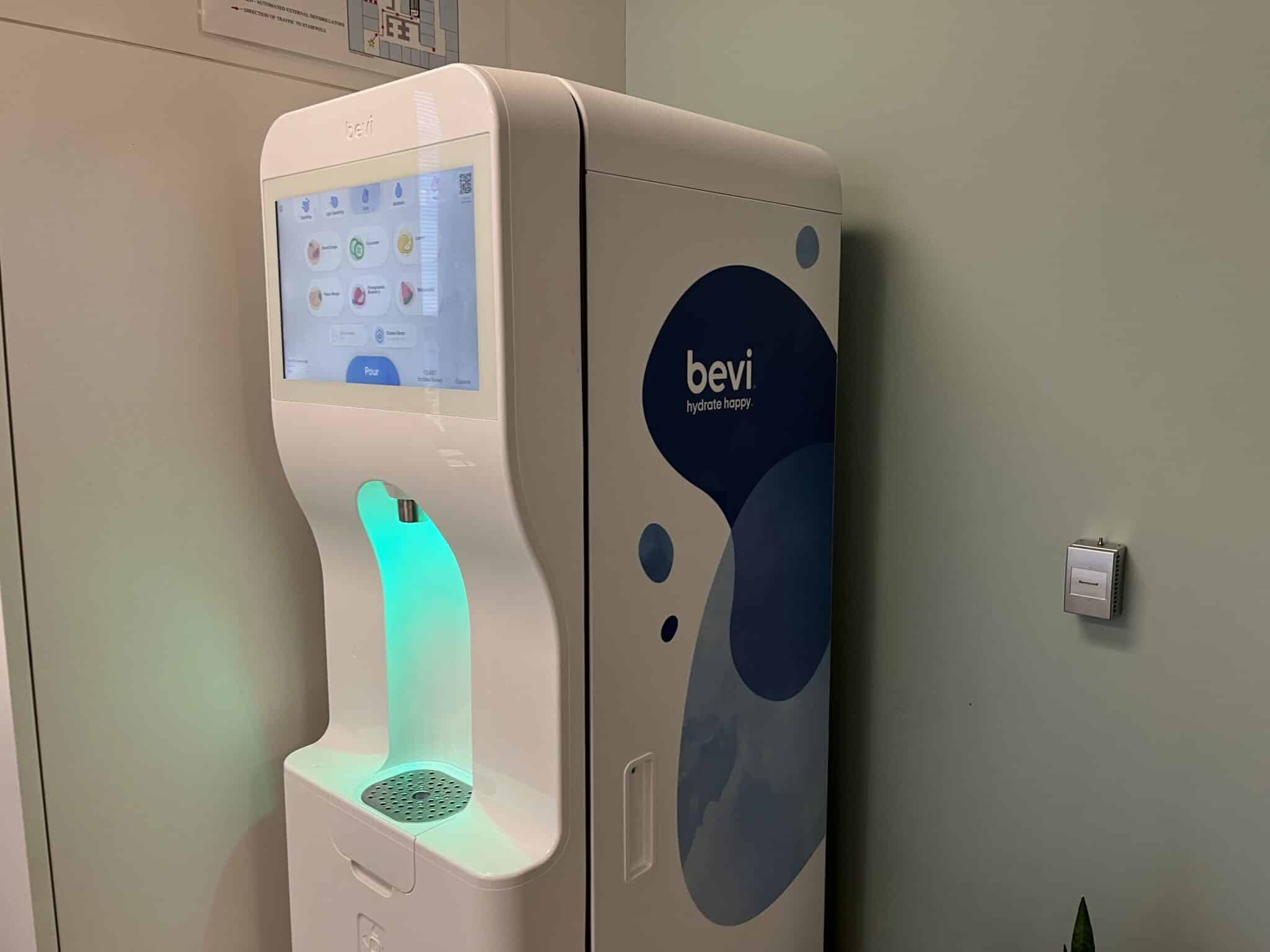
The Bevi machine—that sleek, touchscreen dispenser that lets you mix your own flavored, sparkling, or still water—isn’t something you’d typically buy for your kitchen counter. Let’s just say it’s more of a corporate flex than a kitchen appliance. The base model for Bevi’s “Bevi 2” unit starts at around $3,995 for a lease-to-own option, but if you’re looking to buy it outright, you’re looking at roughly $4,500 to $5,500, depending on the configuration. (Yes, that’s more than your last used car cost—I know.)
Why the price tag actually makes sense (sort of)
Before you scoff, consider what you’re getting: a machine that connects to your water line, filters it, carbonates it, and chills it, plus a digital interface that lets you choose from hundreds of flavor combinations. It’s essentially a mini soda fountain with a brain—and a price tag to match. The real kicker? The flavors are zero-calorie, zero-sugar, and vitamin-infused, which is why offices love them. “But I can just buy a SodaStream for $100,” you’re probably thinking. True—but a SodaStream won’t also give you electrolyte-infused mango basil water, will it? (No, it won’t.)
Must Read
Bevi targets the commercial market: offices, gyms, hotels, and universities. They don’t even sell directly to consumers. So if you’re a home user, you’re out of luck unless you find a secondhand unit on eBay—and good luck with that. A used Bevi machine can still fetch $2,000 to $3,000, because businesses upgrade and people are desperate for that fancy water. But here’s the irony: Bevi actually claims their machines save companies money on bottled water, eliminating plastic waste. So in theory, a $4,000 machine pays for itself if it replaces 10,000 plastic bottles. Math checks out, but your wallet still cries a little.
Is there a cheaper alternative? Of course, but…
If you’re just a curious human with a hydration obsession, you’re better off with a $199 SodaStream or a $50 countertop water filter. But Bevi isn’t about functionality—it’s about experience. I once visited an office that had a Bevi machine, and the employees literally gossiped about “the new mango kiwi flavor” like it was a new Netflix series. The machine becomes a social hub. Can your Brita filter do that? (It cannot.) That’s the intangible value Bevi sells: the cool factor, the convenience, and the “wow, we’ve made it” vibe for a workplace.
Bevi also offers a subscription model, which is what most businesses actually use. You pay a monthly fee—roughly $150 to $250 per month—that includes the machine, maintenance, flavor cartridges, and filters. Over three years, that’s about $5,400 to $9,000. It’s a lot, but it’s also an operating expense, not a capital purchase. Plus, if the machine breaks, Bevi sends a technician. You don’t have to call your brother-in-law who “knows a guy.”
 Corporate Social Responsibility - Sully-Miller Contracting Co.
The hidden cost: Flavors and CO₂
Here’s the part Bevi doesn’t advertise at cocktail parties: the flavor cartridges and CO₂ tanks are consumables, and they’re not cheap. A standard flavor cartridge lasts for about 40 to 60 liters of water and costs $20 to $30 to replace. The CO₂ tank exchange runs $30 to $50 per tank, depending on your region. If your office has a heavy-hitting hydration culture (looking at you, Silicon Valley), those costs add up to $200 to $400 per month on top of the machine lease. Suddenly, that $4,000 machine feels like a gateway drug to a $12,000 annual habit. (But hey, no plastic bottles, right?)
I should also mention that Bevi machines require professional installation, which adds $300 to $500 to your initial cost. They need a dedicated water line and a power outlet, so you can’t just plop it in the breakroom next to the microwave. And if your office moves? The relocation fee is another $200. It’s a high-maintenance relationship, but the machine does look pretty while draining your budget.
Who actually buys these things?
According to Bevi’s website, their customers include Google, WeWork, and Marriott hotels. So, you know, people with more money than God. But I’ve also seen them in smaller tech startups and trendy yoga studios—places that want to project health, innovation, and sustainability. If you’re a company owner trying to attract millennial employees, a Bevi machine might be cheaper than a ping-pong table and kombucha on tap. It’s a status symbol for the wellness-obsessed.
 How Much Does A Bevi Machine Cost at Edward Gratwick blog
But for the average person? Let’s be real: You probably don’t need one. I once joked to my friend that a Bevi machine is like a luxury handbag—you don’t buy it for utility, you buy it to say you have one. She laughed, then poured herself another glass of orange vanilla sparkling water. (Touché.)
So, how much is a Bevi machine? The short answer is: a lot. The longer answer is: it’s an investment in office culture, sustainability theatre, and the undying quest for the perfect seltzer. If you’re rich, buy one. If you’re not, just keep refilling your Nalgene bottle and pretend that’s enough. Because honestly? Your tap water is fine. But it won’t make you look as cool as the person hovering near the Bevi machine.
Now, if you’ll excuse me, I’m going to go drink a cucumber mint sparkling water from my fridge. It’s just tap water with a slice of cucumber, but the Bevi dream lives on in my imagination. And that’s free.
