How To Test Ph In A Pool

So, you’ve got a pool. You’ve already survived the terrifying moment when you first opened the cover and discovered a family of raccoons using it as a jacuzzi. Now comes the r...
So, you’ve got a pool. You’ve already survived the terrifying moment when you first opened the cover and discovered a family of raccoons using it as a jacuzzi. Now comes the real horror show: balancing the chemistry. Don’t worry, you don’t need a PhD in alchemy. You just need to test the pH.
Think of pH as your pool’s mood ring. If it’s too grumpy, your water turns into acid soup that eats swimsuits and makes your eyes feel like you’ve been crying onions. If it’s too happy, you get chalky scale that turns your filter into a sad, calcium-encrusted rock. The sweet spot? Between 7.2 and 7.8.
Step One: Get Your Testing Gear
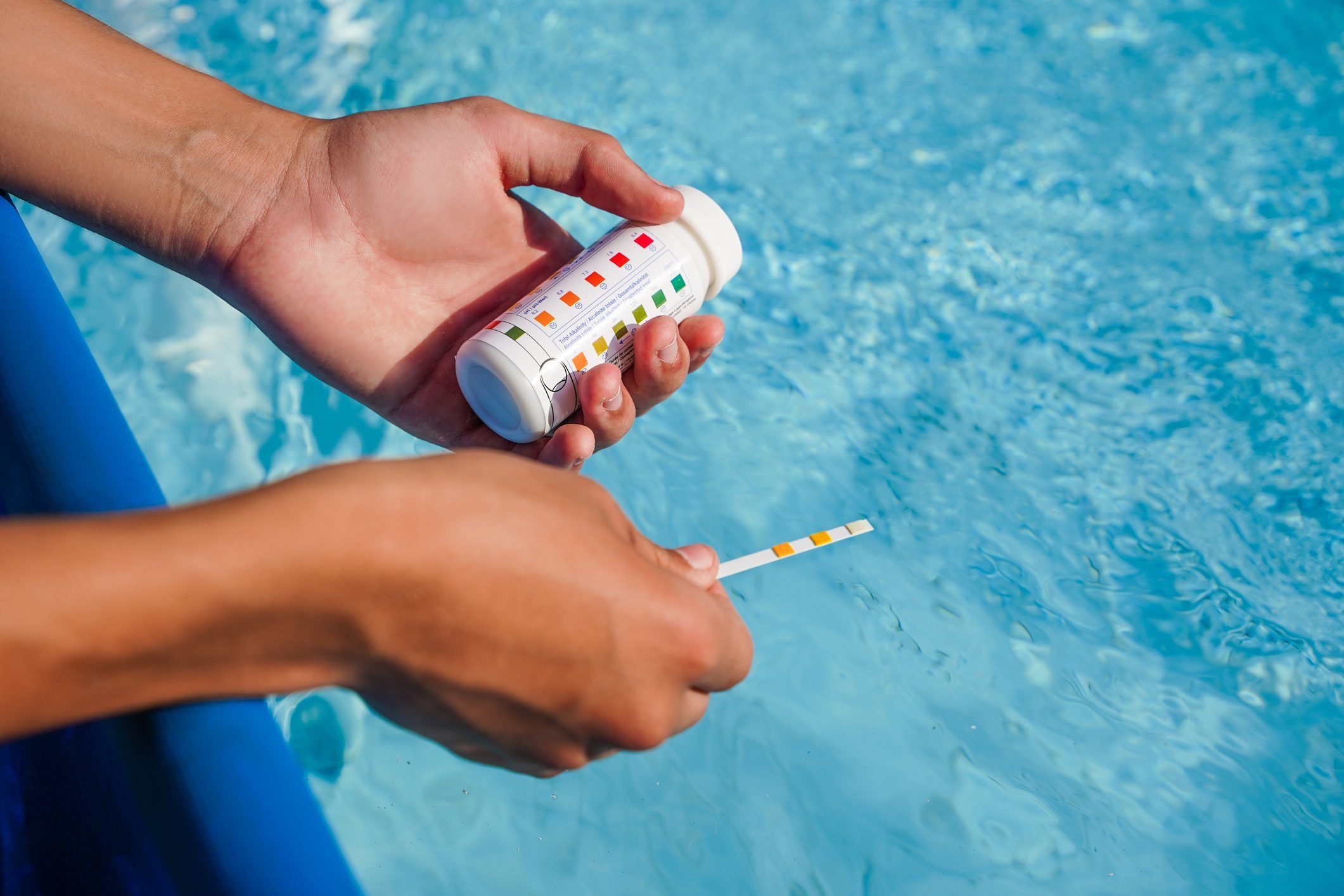
You have three options, and each comes with its own brand of chaos. The first is test strips—little plastic wands of science. You dip them in, wait a few seconds, and then compare the color to a chart that looks like a toddler’s art project. Pro tip: don’t test the water while you’re still standing in it. The strip will read your sweaty foot and your pool will think it’s suddenly a bathtub.
Must Read
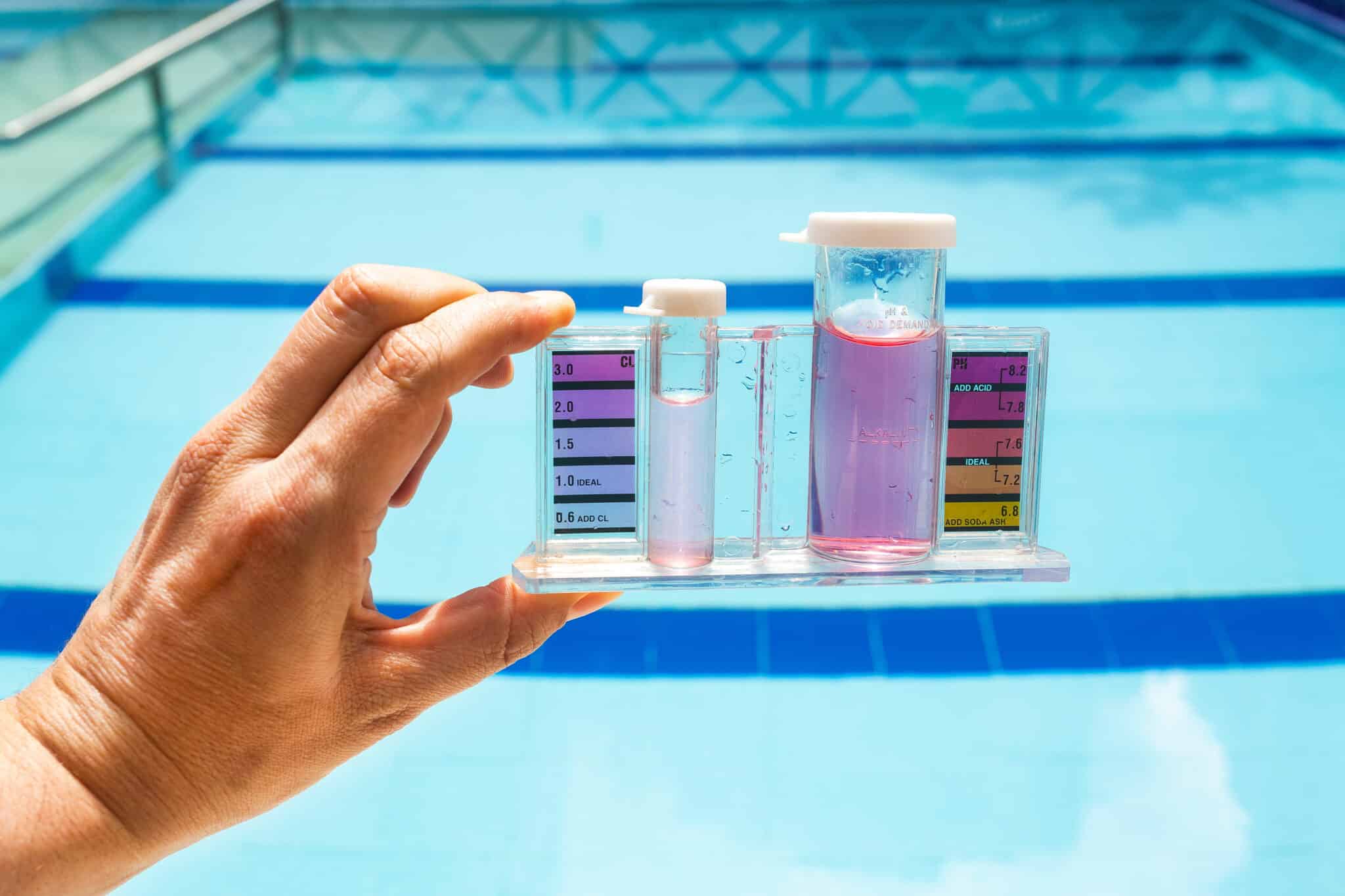
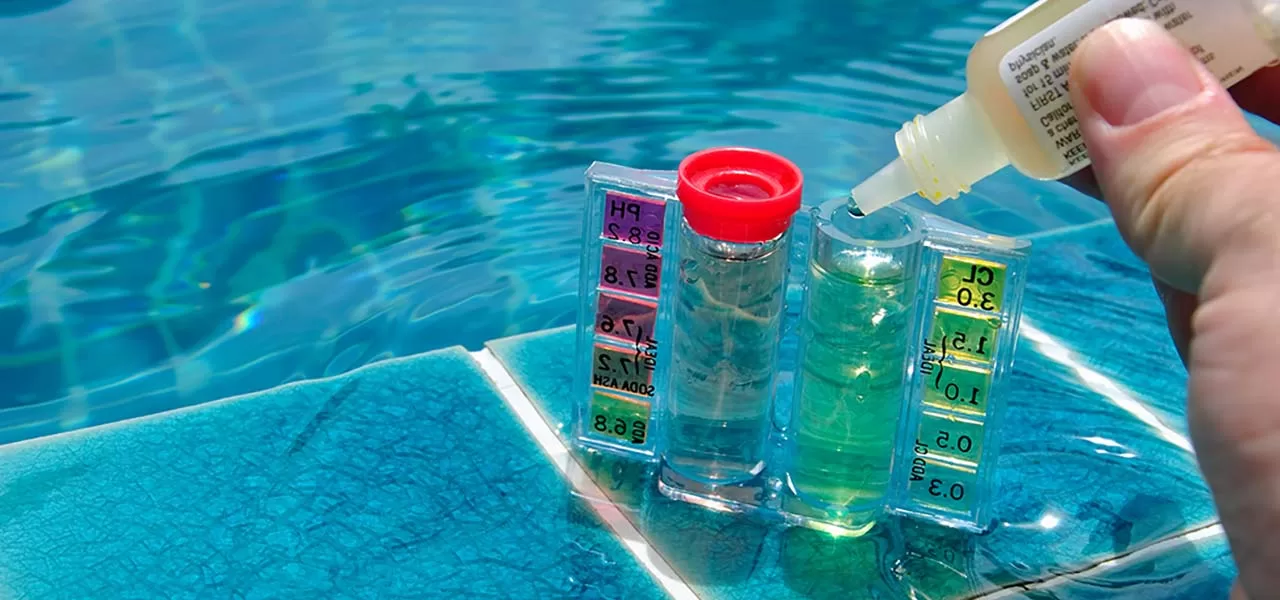
The second option is the liquid test kit. This is for people who enjoy feeling like a mad scientist. You fill a vial, add drops of a magic red liquid, and watch the water change color. If it turns bright pink, your pool is happy. If it stays clear, your pool is sad and acidic. The final option is a digital tester, which is basically a fancy thermometer for nerds. It’s accurate, but you’ll lose it behind the pump filter for three weeks.
The “Splash-and-Dash” Method
Here’s the most important part: always test water from elbow depth. Don’t just grab a cup from the surface. The surface is where bugs die and sunscreen floats. You want a sample from the middle, where actual swimming happens. Walk to the deep end, squat like a frog, and plunge the cup in. Yes, you’ll look ridiculous. Embrace it.
I once tested my pool using a cup I found floating in the skimmer. It had a dead leaf inside. The test strip turned a color that doesn’t exist in nature—some kind of chemical scream. Don’t be me.
Reading the Results (The Hard Part)
Okay, you’ve dipped your strip. Now you’re staring at four different colored squares and panicking. That’s normal. The pH square is usually the second one. It will be yellow, green, or purple. Yellow means your pool is too acidic. Purple means you’ve accidentally made the ocean. Green is good.
 Beginner's Guide to Pool Water Testing
Here’s a surprising fact: your pool water is basically a weak acid or base, and the difference between a pH of 7.0 and 8.0 is literally ten times more alkaline. That means moving from “okay” to “yikes” is a tenfold chemical explosion. No wonder your swimsuit turned tie-dye.
If the pH is too low (under 7.2), you need soda ash or a pH increaser. If it’s too high (over 7.8), you need muriatic acid. Yes, that’s the same stuff used to etch concrete. Don’t drink it. Don’t let your cat drink it. Just pour it in slowly near the return jets while the pump runs.
The Bleach Bomb Surprise
Here’s where it gets hilarious: chlorine is a savage beast. If your pH is too high, chlorine becomes almost useless. It’s like hiring a security guard who’s asleep. Your pool could grow a beard of algae and the chlorine won’t even sneeze. Always fix pH first, then shock. Otherwise, you’re just pouring money into a watery black hole.
And for the love of all that is blue, never mix chemicals. I once saw a guy pour acid and chlorine into the same bucket. It created a gas cloud that smelled like a science experiment from hell. His pool turned green from pure embarrassment.
 Ph Level Pool Tester at Conrad Martinez blog
How Often Should You Test?
At least twice a week. More if you just had a pool party where fourteen kids ate Cheetos in the water. Test after heavy rain, too. Rain is actually slightly acidic, and it will wreck your pH like a bad house guest who complains about the temperature.
I test every Sunday morning with coffee in hand. It’s like church, but you’re worshipping a plastic deity called “balanced water.” You can even talk to it. “Good morning, pH. Please stay between 7.4 and 7.6 today.” It won’t listen, but it’s the thought that counts.
The Final Dip
Testing your pool pH isn’t rocket science—it’s splash science. You’ll make mistakes. You’ll turn the water purple once. You’ll accidentally drop the test strip in the grass and convince yourself “that’s close enough.” It’s all part of the summer circus.
Remember: a well-balanced pool is a happy pool. And a happy pool means your neighbors stop pretending they don’t see you floating on a raft, sipping a drink with a little umbrella. So grab that test kit, channel your inner lab coat, and go de-chlorinate that chaos. Your eyes (and your swimsuit) will thank you.
