How To Test Ph Levels

So, you want to test pH levels? Excellent choice. Maybe your hydrangeas are looking sad, or your homemade kombucha smells…angry. Or maybe you’re just really, really into the s...
So, you want to test pH levels? Excellent choice. Maybe your hydrangeas are looking sad, or your homemade kombucha smells…angry. Or maybe you’re just really, really into the science of dirt and water right now. I see you. Grab your coffee – or tea, I don’t judge – and let’s make this ridiculously simple.
The Big What: What Even Is pH?
pH is just a snobby way of saying “how angry is this liquid?” Zero is pure acid volcano (don’t touch that), and 14 is basically drain cleaner. Seven is the chill zone—pure water, just vibing. The scale is logarithmic, which is a fancy way of saying a jump from 6 to 5 is ten times more acidic. Mind-blowing, right?
Everything in your life has a pH. Your skin, your garden soil, even your tap water. And if things are out of balance, plants throw tantrums, spa water tastes weird, and your pickles might explode. Testing it keeps the chaos at bay.
Must Read
Method 1: The Classic Litmus Paper (Cheap & Cheerful)
This is the easiest path, even if your attention span is shorter than a TikTok video. You buy a little roll or strips of paper. They look like tiny, unassuming bookmarks of science.
Dip one in whatever you’re testing – soil mixed with water, your spit (yes, really), or that mysterious puddle in the driveway. Then you watch the paper change color. It’s like a mood ring for chemistry. Red means acid, blue or green means alkaline. Hold it up to the little chart that comes with the kit.
The catch? They aren’t super precise. You get a rough idea – “Yep, that’s sour” or “Wow, that’s basic.” Perfect for quick checks. If you need cult-level accuracy, keep reading.
Method 2: The Dropper Kit (Mad Scientist Vibe)
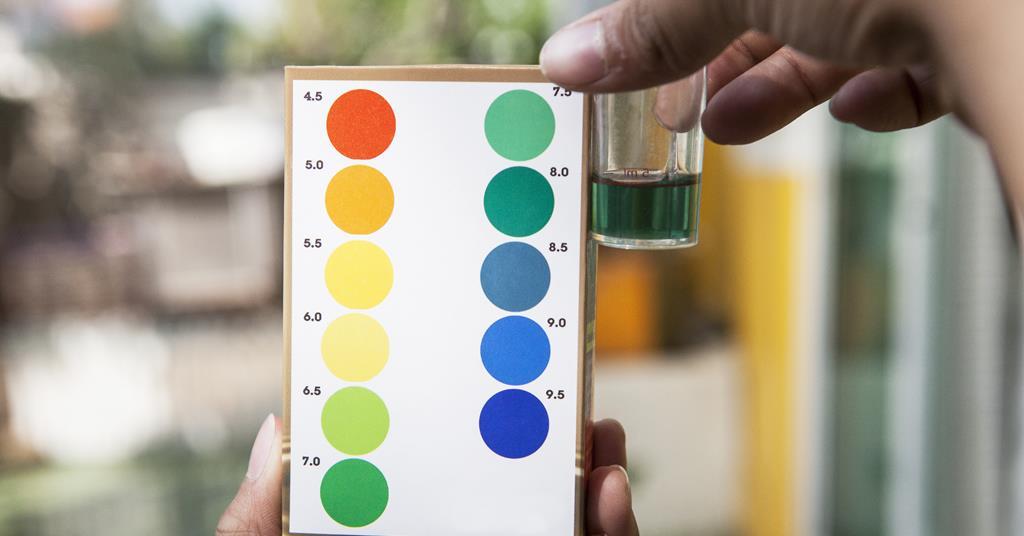
This feels more official. You get a little vial of liquid and a bottle of magic juice (the indicator). Add some of your sample to the vial, then add a few drops of the indicator, swirl dramatically, and watch the color change happen right before your eyes.
You feel like a wizard. A humble, ph-testing wizard. The color intensity tells you the number. “Ooh, this is a dark orange! That’s around a 4. My tomatoes are going to hate this.” It’s a tiny bit more accurate than strips, and infinitely cooler to show your friends.
 How To Test Ph Level In Water: Easy Steps For Accurate Results - RO System
Just don’t get the indicator liquid on your good shirt. It stains. Trust me on this one. My favorite hoodie now has a “science accident” patch.
Method 3: The Digital Meter (For Serious Obsessives)
This is the crème de la crème of pH testing. You buy a little electronic probe – they start around twenty bucks and go up to “did I just spend rent money on this?” You stick the probe in your sample.
And then? Boom. A number appears. No guessing colors, no squinting at charts, no “is that yellow or chartreuse?” arguments. It gives you a decimal point. You’ll know your tap water is 7.4, not just “kinda neutral.” It’s the Ferrari of pH tools.
The downside? You have to calibrate the thing every time you use it. That means buying little packets of powder or liquid (called buffer solutions) to “teach” the meter what 7.0 and 4.0 look like. It’s a chore, but for perfect data, it’s worth the hassle.
How to Test Soil (Because Plants are Drama Queens)
Testing your garden soil is a whole different beast. You can’t just jam the meter into dry dirt. That’s like asking a fish to climb a tree. You need to make soil soup. Take a scoop of dirt, mix it with an equal part distilled water (tap water has its own pH, dummy!), and stir like you’re making a mud pie.
 How To Test The Ph at Kyle Adamson blog
Let it sit for ten minutes. Then dip your strip or probe into the liquid on top. The cloudy sediment is just drama. The water tells the truth. If it’s below 6, your plants are screaming for lime. Above 7.5? They’re in a mineral coma.
For the fanciest dirt test, you can buy a kit that tests not just pH, but nitrogen, phosphorus, and potassium. It’s like a blood panel for your backyard. But for most of us, a simple pH check prevents 90% of plant murders.
The Big Secret: When to NOT Trust Yourself
You’ll get a weird reading sometimes. Maybe your coffee tastes bitter and the strip says it’s a 5, which is fine. But your tap water suddenly looks purple. Don’t panic. Check that the strips aren’t expired. Yes, they expire. Like milk, but less smelly. Check that your digital meter was calibrated last week, not last year.
If you’re testing something crucial – like water for pet frogs or your own mouth – test it twice with two different methods. Because you are a chaotic human, and chaos loves to mess with you. One test is a guess. Two tests is a fact.
The Takeaway? Just Do It.
Look, you don’t need a lab coat for this. You need ten bucks and a little curiosity. Testing pH is the ultimate party trick (seriously, next potluck, test the salsa). It’s the difference between guessing and knowing. It’s the difference between a sad, yellow lawn and a green one that makes your neighbor jealous.
So buy some strips. Find a puddle. Test your coffee. Test your own tears. (It’s probably around 7.0, but weirdly poetic.) You have the power now. Use it wisely, you beautiful, slightly nerdy genius.
