What Is Tds In Water

So, you’ve probably seen the letters TDS on a water filter box or maybe on a gadget your over-caffeinated friend bought online. And you thought, “Is that a new form of tax? A...
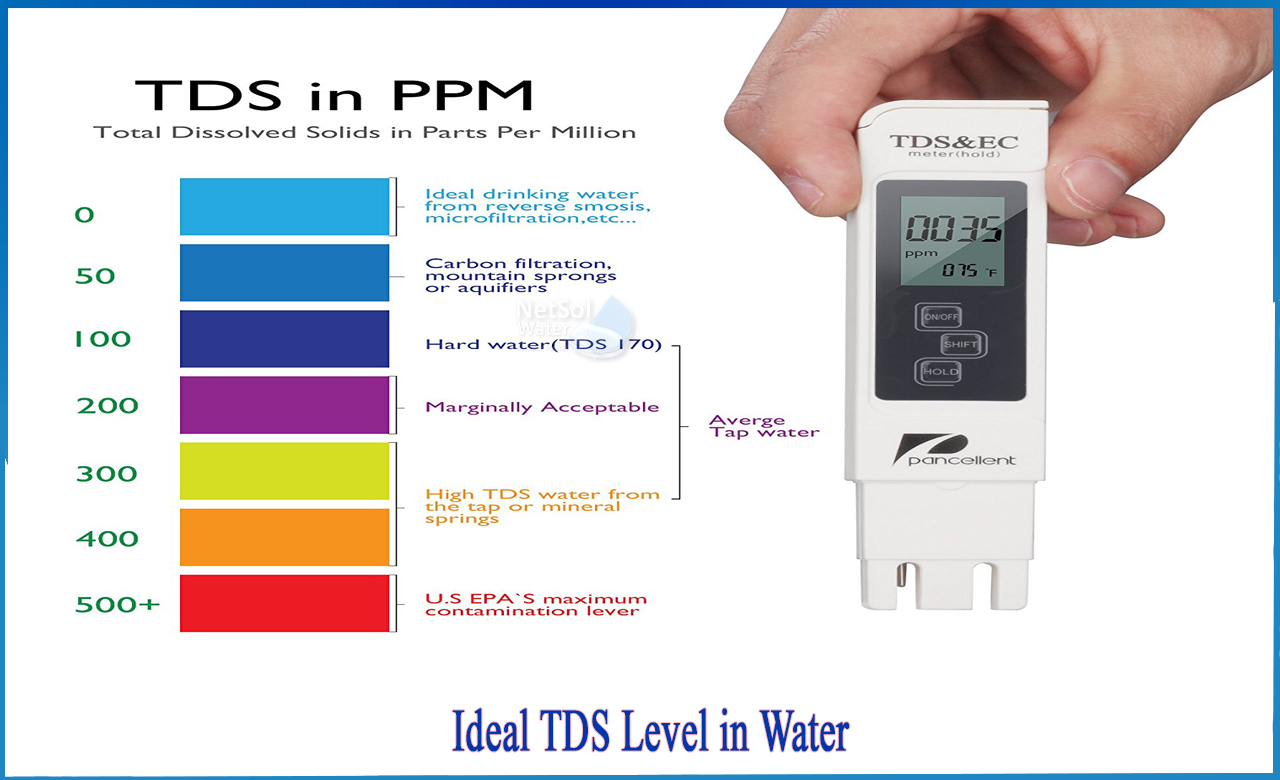
So, you’ve probably seen the letters TDS on a water filter box or maybe on a gadget your over-caffeinated friend bought online. And you thought, “Is that a new form of tax? A secret government code?” Nope. TDS stands for Total Dissolved Solids. Basically, it’s the fancy term for everything that’s crashed the water party without an invitation.
What Actually Counts as “Stuff” in Your Water?
Imagine your water is a swimming pool for microscopic party crashers. Calcium, magnesium, sodium, and even tiny bits of rock dust are all hanging out in there. These are the dissolved solids. They’re so small you can’t see them, but they’re there, doing a conga line through your tap.
Think of TDS like the background extras in a movie. You don’t notice them, but if they all disappeared, the scene would feel weird and empty. Most of these solids are harmless, and some are even healthy—like the minerals your body loves. But too many? Suddenly you’re tasting dirt or chlorine instead of water.
Must Read
The Great TDS Lie: High vs. Low
Here’s a shocking truth: High TDS doesn’t automatically mean bad water. In fact, a glass of fancy mineral water from France might have a TDS of 300, while pure rainwater sits near zero. You know what has zero TDS? Distilled water. And drinking that for a week will make you feel like a thirsty desert lizard because it’s stripped of everything.
On the flip side, low TDS water tastes flat. It’s the water version of a bland cracker. Your tongue is a drama queen; it needs a little mineral drama to feel alive. That’s why spring water tastes refreshing, while tap water from a rusty pipe tastes like a wet sock.
How Do We Measure This Invisible Mess?
You measure TDS with a goofy little gadget that looks like a thermometer from a sci-fi movie. You dip it in, and it shoots an electrical current through the water. Solid particles conduct electricity, so the more particles, the higher the number. It’s like the water is blasting “heavy metal” and the meter is checking the volume.
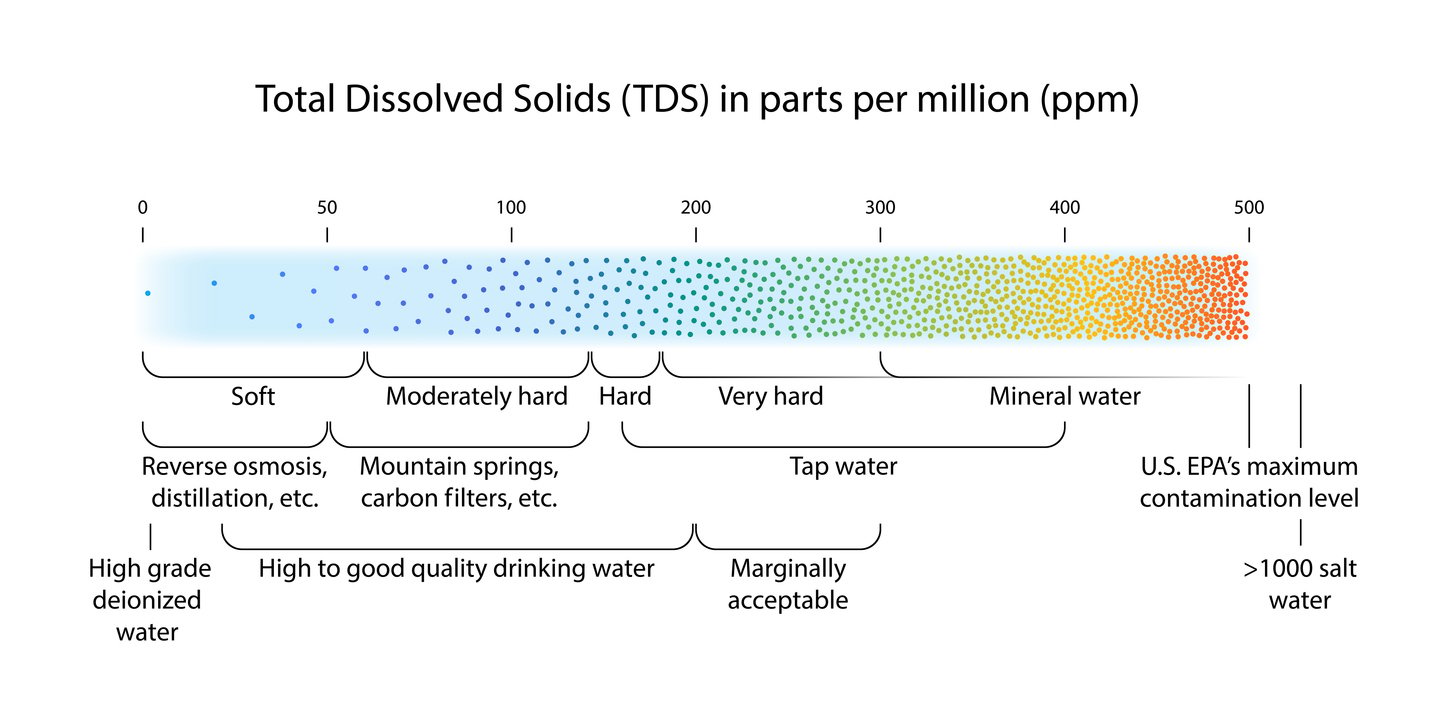 Understanding Total Dissolved Solids (TDS) in Drinking Water
But here’s the kicker: The meter can’t tell you what those solids are. It just yells, “Hey! There’s stuff in here!” So a reading of 500 could mean you have healthy calcium or, horror of horrors, toxic lead. The meter is a gossip, not a detective.
The Surprising Fact That Will Blow Your Mind
Okay, hold your water bottle. Did you know that the recommended TDS for drinking water varies wildly by country? The U.S. says under 500 mg/L is fine. But the Indian government? They allow up to 2,000 mg/L in some areas. That’s like saying, “Sure, drink this salty puddle—it’s fine!” Your kidneys might disagree.
And get this: Aquarium fish are total TDS snobs. Goldfish demand a TDS of 200, but a saltwater angelfish needs 35,000. If you swapped their water, you’d have two very dead, very expensive fish. So next time you complain about your tap water, remember: your fish cousin has way higher standards.
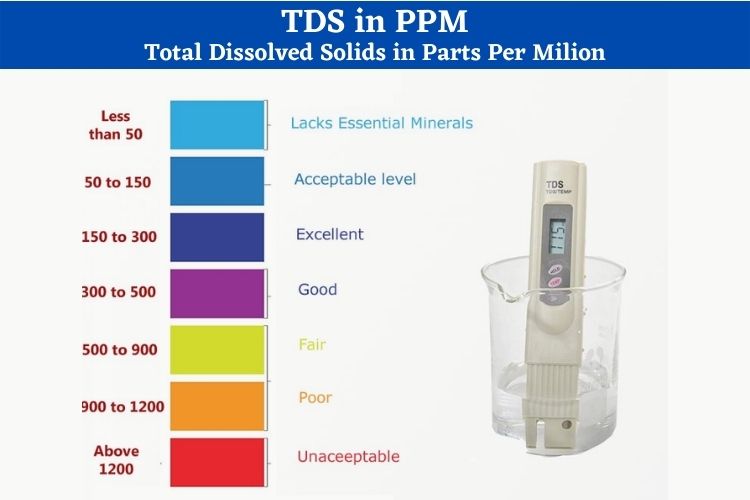 Drinkable Water Tds Range
Should You Care About TDS?
Short answer: Only if your water tastes weird or leaves white crust on your kettle. That crust? That’s calcium carbonate, and it’s the mineral version of a stubborn houseguest. High TDS water can also make your soap fail to lather, leading you to use twice as much. It’s a slippery slope to financial ruin (okay, maybe just a slightly larger soap bill).
If you want to lower TDS, you use a reverse osmosis system or a distiller. But be warned: these systems are so good they turn your water into a blank slate. You then have to add minerals back in, or you’ll spend your days complaining about how your coffee tastes like a wet shoebox.
The Final Sip of Wisdom
So, TDS is just the “stuff count” in your water. High numbers don’t mean poison, and low numbers don’t mean pure bliss. Your taste buds are the best judge. If it tastes like you’re licking a penny, get a filter. If it tastes like a mountain stream, you’re golden.
And remember: Never trust a water that brags about being “pure.” It’s probably lying and has no personality. Let your water have a little mineral funk—it’s what makes life flavorful. Now go drink something with a TDS you can be proud of.
