What Is A Well Water

Okay, let’s talk about well water. You’ve heard the term, probably imagined a rustic bucket on a rope, right? Well, hold your horses, because it’s so much more than that—and a...

Okay, let’s talk about well water. You’ve heard the term, probably imagined a rustic bucket on a rope, right? Well, hold your horses, because it’s so much more than that—and a little weird, too.
Basically, well water is groundwater that you pull straight up from the earth. Think of it as nature’s own plumbing system, just chilling underground in aquifers. It’s not piped in from some city reservoir; it’s your personal liquid treasure chest.
From Rain to Tap (With a Detour Through Dirt)
So, where does it come from? Rain falls, soaks into the ground, and filters through layers of rock and sand. By the time it reaches that deep aquifer, it’s been scrubbed cleaner than your conscience after a confession.
Must Read
That journey through the earth is what gives it that distinct, crisp taste. Some people swear it’s the best water on the planet. Others say it tastes like “minerals” and make a funny face.
Fun fact: You don’t just “find” well water. You have to drill for it. A crew comes in with a massive rig and punches a hole hundreds of feet down. It’s loud, messy, and incredibly satisfying when the water finally gushes out.
The Good, The Bad, and The Rocky
Let’s start with the good—because there’s a lot. No monthly water bill. Zilch. Nada. You pay for the electricity to pump it, but the water itself is free. That’s like finding a $20 bill in your jeans, every single month.
It’s also incredibly fresh. Since it’s stored underground in cool, dark spaces, it’s often colder and crisper than city water. Plus, no chlorine taste. You know that pool-water flavor from tap? Well water doesn’t have that.
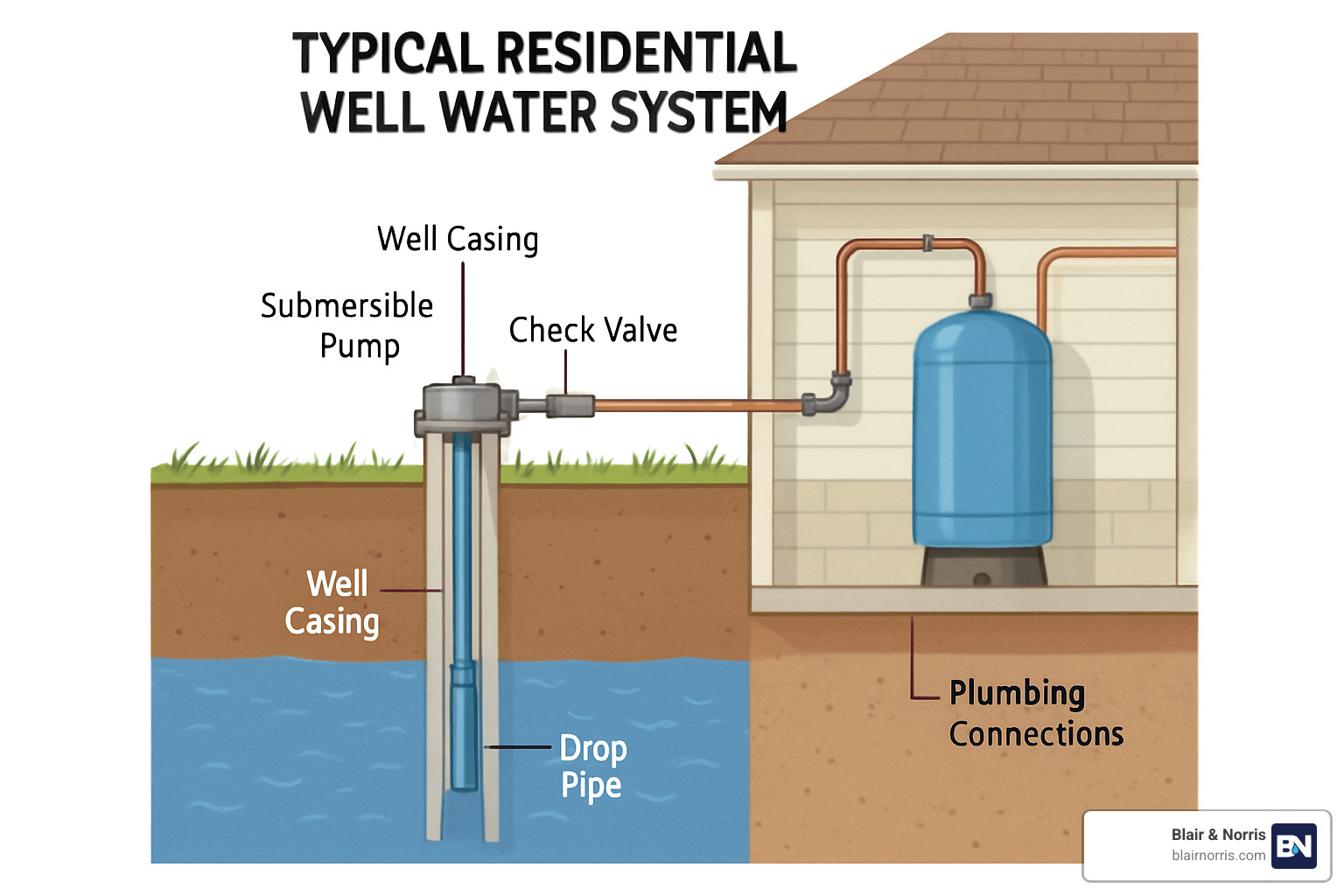 well pump setup: 10 Essential Steps for a Powerful 2025 Success
But here’s the catch: well water is unregulated. The government doesn’t test it. You are the quality control department. That means you need to test it for bacteria, nitrates, and that funky metallic taste from iron.
And, oh boy, the hard water issue. Many wells pull water loaded with calcium and magnesium. It’s not bad for you—it’s extra minerals! But it will wreck your showerheads and leave white spots on your glasses. You’ll spend Saturday afternoons scrubbing soap scum. Romantic, right?
What’s That Smell? (Rotten Eggs, Probably)
Ever visited a friend’s house and their water smelled like a sulfur spring? That’s hydrogen sulfide gas. It’s natural, but it smells like a dragon’s burp. You can fix it with a special filter, but it’s a shock the first time you shower in it.
Then there’s the sediment. Sometimes, after a heavy rain, your water might look a little… muddy. Like a beige milkshake. That’s usually temporary, but it’s a reminder that your water is literally coming from the dirt. Gross? A little. Character-building? Definitely.
 Typical Water Well Diagram
If you have a well, you also have a pump that lives in your basement or yard. And pumps break. Usually on a Sunday evening. When you’re hosting a dinner party. You will learn to love the sound of your pump kicking on. It’s the heartbeat of your home.
Is Well Water for You?
If you’re buying a house with a well, get it inspected. Don’t just sip it and trust your taste buds. Get a full water quality test. And ask about the well’s depth and the pump’s age. Otherwise, you’re buying a mystery box.
But honestly? Living with well water connects you to the land in a weird, intimate way. You become hyper-aware of rainfall, drought, and what’s happening in your own backyard. You’re a little less dependent on the grid. It feels… authentic.
Plus, you’ll develop a deep appreciation for the fact that water doesn’t just come from a pipe. It comes from a long, ancient journey through rock and time. And you’re the lucky one who gets to drink it.
So, next time you see a sign that says “Well Water Available,” smile. You know it’s a little wild, a little imperfect, and absolutely full of personality. Just like the person drinking it. Cheers to that!
