How To Make Ro Water

Let’s be honest—piping a cup of water from the tap feels like the easiest thing in the world. But then you take a sip, and it tastes like your neighbor’s swimming pool. That’s...
Let’s be honest—piping a cup of water from the tap feels like the easiest thing in the world. But then you take a sip, and it tastes like your neighbor’s swimming pool. That’s where RO water comes in, and trust me, it’s not as scary as it sounds.
RO stands for Reverse Osmosis, which is just a fancy way of saying we push water through a very picky filter. Think of it like a bouncer at a club who only lets the good molecules in and kicks the bad ones out. It’s simple, effective, and your taste buds will throw a party.
Why should you care about RO water?
Have you ever noticed a white crust on your coffee maker? That’s scale, my friend, from hard water minerals. RO water gets rid of that nonsense, so your appliances last longer and your coffee tastes like it’s from a fancy café.
Must Read
Even better, RO water strips out chlorine, lead, and other uninvited guests from your tap. I once poured a glass of tap water and it smelled like a public pool—never again after I got my RO system.
And here’s the real kicker: your plants will perk up like they’ve had a spa day. My fern, Sheila, went from “meh” to magnificent after I switched her to RO water. She’s basically the supermodel of my kitchen now.
How to make RO water at home (the easy way)
You don’t need a science degree or a lab coat. You just need a countertop RO system—they’re small, cute, and sit next to your sink like a loyal robot friend. Grab one from any home store or online for around sixty bucks.
First, fill the top tank with tap water. Most units hold about a gallon, which is perfect for a day’s drinking. Plug it in (some are battery-powered) and hit the start button.
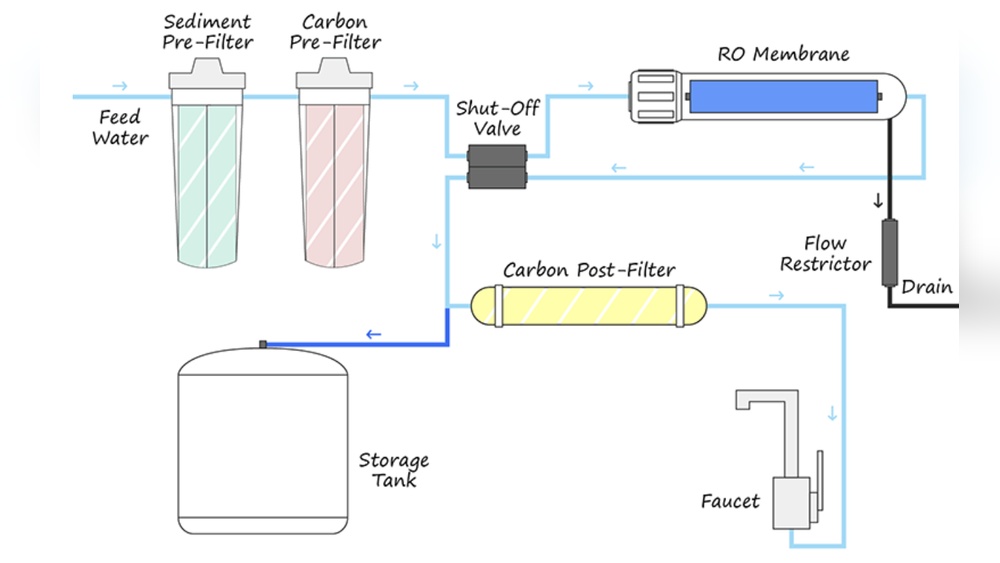
Now, here’s the magical part: the water goes through a sediment filter to catch dirt, then a carbon filter to grab chlorine taste, and finally through the RO membrane. This membrane is the hero—it has pores so tiny that only water molecules can squeeze through, leaving behind all the junk.
 Process of ro water filter system – Artofit
Wait about two to three hours, and you’ll hear a little gurgle. That’s the sound of victory. Pour yourself a glass, and I promise it’ll taste like bottled water from a spring in the Alps—except you made it in your pajamas.
A little story from my kitchen
The first time I made RO water, I was impatient. I kept opening the lid to check progress, which is like opening the oven while baking cookies—it just takes longer. So patience is your friend here.
I also learned the hard way that RO systems need love. The filters get tired after six months, and if you ignore them, the water starts tasting like a wet sock. Change the filters on schedule, and your system will sing for years.
My kids now refuse tap water. They call RO water “the good stuff” and ask for it in their sippy cups. Even the dog, Gus, won’t touch his bowl unless it’s filled from the RO tap. He’s a snob, but he’s a hydrated snob.
What to do with your RO water
Use it for coffee—seriously, it removes bitterness and makes your morning brew taste like a hug. Your tea will be clearer, too, without that weird film floating on top.
Try it for cooking pasta. The noodles won’t get that chalky residue, and your sauce will taste cleaner. I made spaghetti last week using RO water, and my wife said, “Did you add butter?” Nope—just better water.
 How To Make Reverse Osmosis Water - Property & Real Estate for Rent
Even your ice cubes will be crystal clear and tasteless (in a good way). Put one in a soda, and you won’t get that “old freezer” flavor at the end.
A few practical tips to keep you smiling
Store your RO water in a glass pitcher, not plastic. Plastic can leach a weird taste over time, and glass keeps it crisp. I have a big glass carafe in my fridge, and it looks fancy enough for guests.
If you travel, don’t panic. Most cities have water refill stations that sell RO water by the gallon. I take my empty jug to the local co-op and fill up for 25 cents—cheaper than gas for my car.
And don’t overthink the waste. RO systems do produce a little “brine” water that goes down the drain—but it’s a small price for pure, clean hydration. Some folks use that waste water to flush toilets, but honestly, I just let it go and enjoy my perfect glass of H2O.
At the end of the day, making RO water isn’t about being a health guru. It’s about enjoying your water without side notes of chlorine or hard minerals. Pour yourself a glass, sit on the porch, and feel like a hydration hero.
Go ahead—give it a try. Your taste buds, your coffee maker, and your fern named Sheila will thank you. And if something goes wrong? Just laugh, change the filter, and try again. You’ve got this.
