Best Water Filter For Iron And Manganese

Let’s be honest: most of us don’t think about what’s in our tap water until it starts looking like the murky leftovers from a zombie apocalypse. You turn on the faucet, and ou...

Let’s be honest: most of us don’t think about what’s in our tap water until it starts looking like the murky leftovers from a zombie apocalypse. You turn on the faucet, and out comes water that’s the color of weak tea or, worse, a rusty orange. Congratulations—you’ve probably got iron and manganese crashing your water party.
Why Your Water Looks Like a Science Experiment
Iron and manganese are naturally occurring minerals, but in your pipes, they act like uninvited guests who refuse to leave. The iron turns your laundry into a sad, orange-stained mess, and the manganese makes your water taste like a penny you found in a parking lot. Surprising fact: these two metals are actually essential nutrients in tiny amounts, but in your water they’re just nuisances.
The worst part? They don’t just ruin your coffee; they also clog your pipes with a gooey, bacterial biofilm called “iron bacteria.” This sludge can make your water smell like a swamp. You don’t want a swamp in your kitchen sink, trust me.
Must Read
The Great Filter Showdown: What Actually Works?
Not all filters are created equal—some are just fancy plastic tubes that give up faster than a cat in a bathtub. For iron and manganese, you need a heavy-hitting system, not a $20 pitcher. The common culprits are oxidizing filters, which use something like air, chlorine, or potassium permanganate to literally rust the metals into solids, then trap them.
1. The Air Injection Oxidizing Filter (The “Bubble Boy”)
This guy shoots compressed air into the water before it hits a special media. The air turns dissolved iron and manganese into particles you can catch. Fun fact: some models look like a mini rocket ship in your basement—totally cool, but your spouse might question your life choices. It’s great for moderate levels (under 10 ppm of iron) and doesn’t use chemicals, so you won’t taste regret.
 Amazon.com: iSpring WGB32BM Iron, Manganese Whole House Water Filter
2. The Multi-Media Filter (The “Tank of Many Flavors”)
This one uses layers of sand, garnet, and a special jelly-like media called greensand. The greensand is coated with manganese dioxide, which chemically grabs the metals. Warning: if you have high manganese, this filter will work, but it needs backwashing regularly—like giving your filter a gym session twice a week.
3. The Reverse Osmosis (RO) System (The Overachiever)
RO systems push water through a super-fine membrane that blocks almost everything—including iron and manganese. Surprising fact: an RO system can also remove fluoride, which is great if you’re into conspiracy theories, but bad if you like healthy teeth. The catch? It wastes a lot of water (think 3 gallons down the drain for every 1 you drink), and it’s slow—perfect for impatient people who want to take a nap while filling a glass.
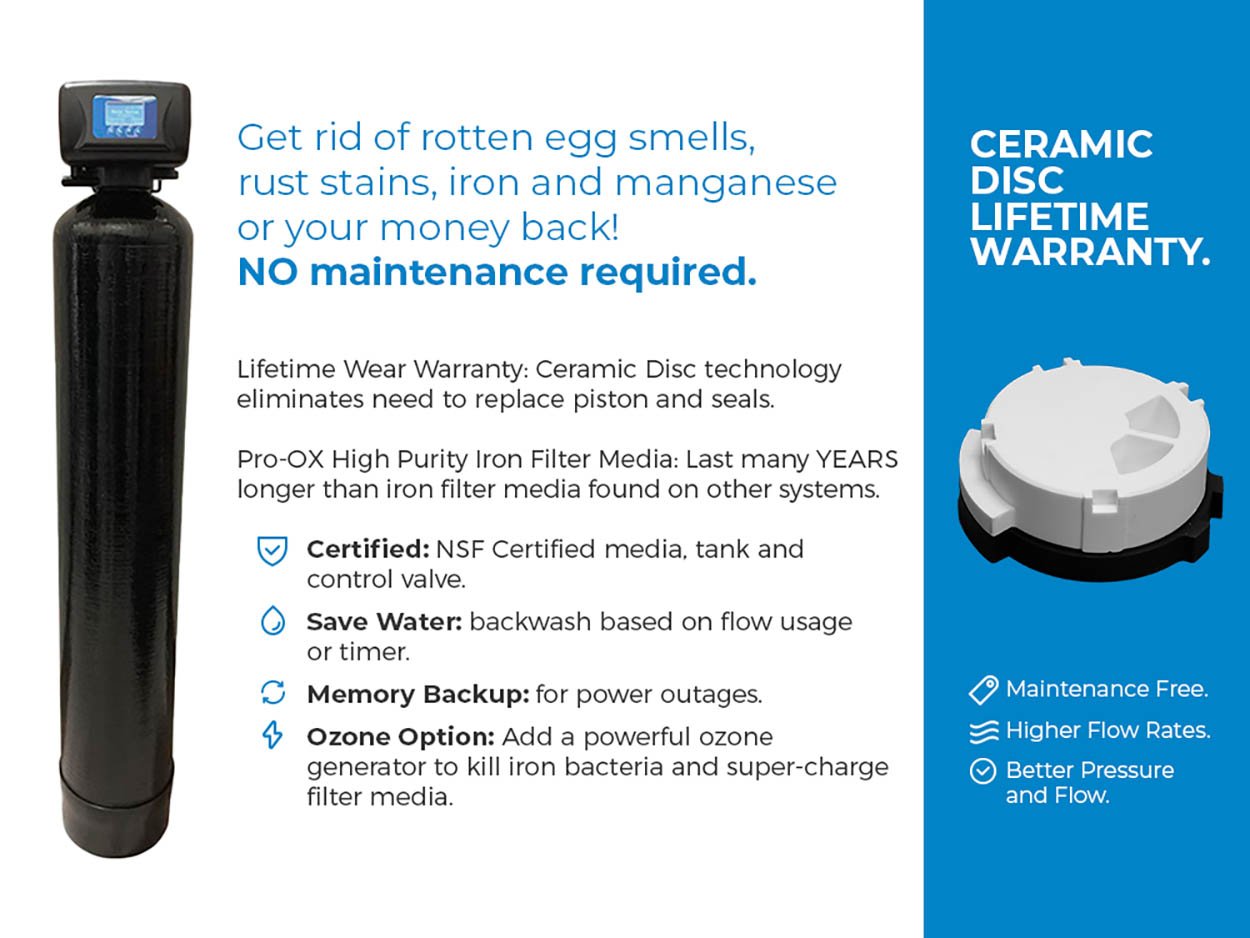 Iron and Manganese Filters for Well Water
The Real Villain: Iron Bacteria (The Slime That Stares Back)
If you have iron bacteria, a basic filter won’t cut it. These microscopic jerks live inside your pipes and create a gel that ruins everything. The only solution is chlorine injection or a UV disinfection system—basically giving your water a spa treatment followed by a sunburn. Don’t worry, it’s safe after 30 minutes of holding time. Yes, you have to wait. That’s the price of purity.
How to Choose Without Losing Your Mind
First, get a water test—not a strip from the dollar store, but a real lab test. You need to know exactly how much iron (ferrous vs. ferric) and manganese you’re dealing with. Ferrous iron is clear when fresh but turns rusty on contact with air—like a shy vampire. Ferric iron is already solid and makes water look like a mud puddle.
For low levels (under 3 ppm total), a simple catalytic carbon filter might work—they’re cheap and don’t need chemicals. For medium levels (3–10 ppm), go with the air injection or greensand filter. For crazy levels (over 10 ppm, or if you taste actual pennies), you’ll need a chemical injection system with chlorine or peroxide—like a chemistry set you’d trust your kids with (don’t).
 Pentair Pelican Iron & Manganese Well Filter Review
The Unexpected Truth About Manganese
Here’s a curveball: manganese is actually worse than iron for your pipes because it’s harder to remove. It likes to form a black, brittle crust inside your water heater. Imagine your shower head slowly turning into charcoal—that’s manganese. The best filter for high manganese (over 0.05 ppm) is a manganese greensand filter, paired with a backwash cycle that uses potassium permanganate. Yes, that name is a mouthful. No, you don’t need to memorize it.
What About Those “Whole House” Systems?
Whole-house filters are like putting a giant Brita in your basement—they treat ALL your water, from the garden hose to the toilet. For iron and manganese, you want a system with a catalytic oxidizer that lasts 10–15 years. Key tip: never buy a filter that claims to “eliminate” both metals with just carbon—that’s a lie bigger than your uncle’s fishing stories.
 Amazon.com: iSpring F3WGB32BMKS 4.5” x 20” 3-Stage Whole House Water
The Bottom Line (and the Punchline)
Look, nobody wins a beauty contest for their water filter, but you will win the battle against orange laundry and swamp-tasting coffee. If you’re on city water, a simple point-of-use RO system might be all you need. If you’re on well water, invest in a good whole-house system—it’s cheaper than replacing your plumbing later.
And remember: iron and manganese aren’t toxic at normal levels—they just make your life weirdly greasy and gross. So go ahead, treat yourself. Buy a filter that doesn’t quit. Your taste buds, your white shirts, and your sanity will thank you.
Now go drink something that doesn’t taste like a rusty nail. You’re welcome.
