Best Ro Filter Under Sink

So, you’ve decided to stop drinking what essentially comes out of a dinosaur’s bathtub. Good for you. Tap water is mostly fine, sure, but let’s be honest—it sometimes tastes l...

So, you’ve decided to stop drinking what essentially comes out of a dinosaur’s bathtub. Good for you. Tap water is mostly fine, sure, but let’s be honest—it sometimes tastes like a swimming pool that's been filtered through a gym sock. Enter the RO filter under the sink, your home’s personal water sommelier.
An RO—that’s reverse osmosis for the fancy folks—system is basically a tiny, hardworking ninja that hides under your kitchen sink. It battles invisible enemies like lead, chlorine, and the ghost of that lunch you dropped down the drain last week. I’m not saying it’s magic, but I once saw one turn a glass of swamp water into something a French chef would bottle and charge you for.
What the Heck Is Reverse Osmosis, Anyway?
Imagine you have a very picky bouncer at a club, and only the smallest, most innocent water molecules get past him. Everything else—the heavy metals, the weird floaties, the fluoride you ‘accidentally’ added—gets shown the door. That’s reverse osmosis, but with less attitude and more science.
Must Read
Fun fact: RO systems use a semi-permeable membrane with holes so tiny that a water molecule has to hold its breath to get through. Okay, that’s not true, but the membrane is 0.0001 microns wide. For context, a human hair is about 70 microns wide. So yeah, it’s super-duper picky.
And here’s the kicker: this technology wasn’t invented for your kitchen. It was originally used to desalinate ocean water on submarines. So, if it’s good enough for sailors eating canned beans in a metal tube underwater, it’s good enough for your morning coffee.
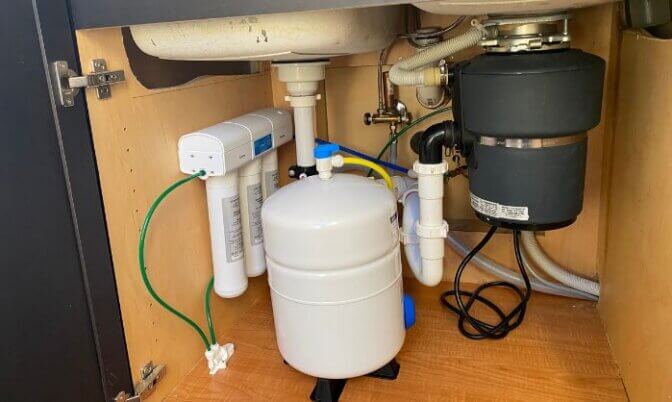 Why An Under Sink Reverse Osmosis System Is the Best
Why Bother Hiding It Under the Sink?
Because countertop filters look like spaceship landing gear and take up precious real estate. You know, that spot where you keep the garlic press you never use? The under-sink version is a stealth operator. It lives in the dark, works silently, and only reveals itself when you twist the special faucet that comes with it.
You don’t need to be a plumber to install one, either. Most models just click, twist, and pray—though the praying part is optional. Seriously, if you can assemble IKEA furniture without crying, you can install an RO filter. And if you can’t, just bribe a friend with pizza.
 Under Sink Drinking Filter System at Michiko Durbin blog
The Real Stars: What to Look For
Not all RO filters are created equal. Some are like that one friend who always forgets your birthday—technically does the job, but disappointing. You want a system with at least three stages. Think of stages like rounds in a boxing match: first the sediment filter knocks out the dirt, then the carbon filter punches chlorine in the face, and finally the RO membrane delivers the knockout punch to all the microscopic nasties.
Look for a model with a brass faucet, not plastic. Plastic faucets will eventually look like a melted candy cane after a few sunburns. Also, check the flow rate—some cheapies dribble water like a leaky faucet from a 1990s cartoon. You want a system that delivers 50 gallons per day or more, so you’re not waiting an hour for a glass of water.
Surprising fact: the best RO filters today add remineralization stages. That’s code for “we put the good stuff back in.” Because pure RO water is so empty that it might try to steal minerals from your body. No, it won’t turn you into a skeleton, but it does taste a bit flat. Remineralization adds calcium and magnesium, making it taste like you paid $6 for it at a hipster café.
:max_bytes(150000):strip_icc()/best-reverse-osmosis-systems-4586893-jay-wilde-b88c627b82da4a93827ca422b1ad9b8e.jpg) Reverse Osmosis Water Filter
Reverse Osmosis Water Filter
But Doesn’t It Waste Water?
Yes, old models waste about 4 gallons of water for every 1 gallon of clean water. That’s like buying a sweater and throwing away four sweaters just to get the one you want. But modern permeate pump systems cut that waste down to 1:1 or even less. So, unless you’re trying to reenact a drought in your kitchen, get one with a pump. You’ll save money and the planet’s dignity.
And no, you don’t have to drink all that waste water. You can use it to water your plants. If your plants die, blame the lighting, not the filter.
 5 Best Under Sink Reverse Osmosis Systems of 2025 | Best Under Sink Ro
The Final Pour
You want my best pick? The APEC Water Systems ROES-50 is a champ. It’s like the Toyota Camry of under-sink filters—boringly reliable, cheap to maintain, and will outlive your goldfish. For a fancier upgrade, the iSpring RCC7AK has that remineralization stage and makes your water taste like it fell from a mountain in Switzerland.
Remember, whether you’re a hydration hero or just someone who hates that weird metallic aftertaste, an RO filter is your plumbing’s best investment. You’ll save money on bottled water, get bragging rights at dinner parties, and finally know exactly what you’re drinking—instead of trusting the pipes that once carried your neighbor’s laundry runoff.
So go ahead, buy one. Your kidneys will throw a tiny, thankful party. And if they don’t, just add more remineralization.
