What Type Of Mixture Is Carbonated Water

You know that satisfying psst when you crack open a cold can of sparkling water? That little sound is basically the universe saying, "Welcome to the party, your taste buds are...
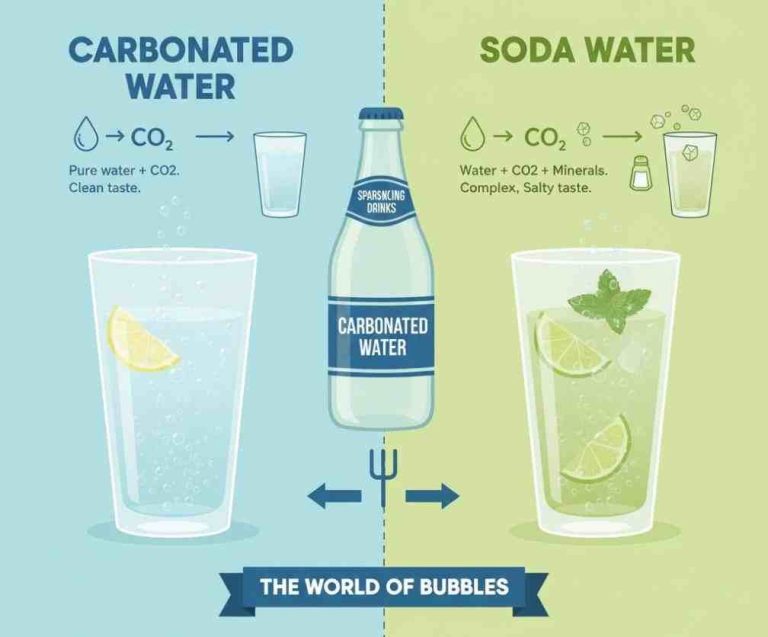
You know that satisfying psst when you crack open a cold can of sparkling water? That little sound is basically the universe saying, "Welcome to the party, your taste buds are about to get a gentle, fizzy wake-up call." But have you ever stopped to think—what is that magic, anyway? Is it a liquid gas? A rebellious water that can't sit still?
Let's get real for a second. If you’ve ever mixed a spoonful of sugar into your iced tea, you've already dabbled in the science of carbonated water. Carbonated water is a classic example of a homogeneous mixture. That’s a fancy way of saying the bubbles (which are carbon dioxide gas) are so evenly spread out that you can’t tell where the water ends and the fizz begins—until you take a sip and it tickles your nose.
The Homemade Soda Fountain that is Your Kitchen Sink
Imagine you’re at a kid’s birthday party. The punch is a glorious, chaotic mess of fruit chunks, ice cubes, and mystery juice. That’s a heterogeneous mixture—you can see everything. Now, picture a perfectly clear, still glass of water. Carbonated water is the awkward teenager of this family: it looks perfectly clear, but it’s secretly vibrating with hidden energy.
Must Read
The reason you can't see the gas is because the carbon dioxide molecules have been forced into liquid solution under pressure. It’s like convincing a shy friend to dance at a wedding—you apply a little pressure (the CO₂ tank) and suddenly they’re moving to the beat. But the moment you open the bottle, that pressure drops, and the gas starts escaping in a frantic, bubbly rush.
Wait, Isn't It Just a Liquid with Bubbles?
Technically, no. A pure liquid would be just H₂O. But carbonated water is a solution of carbon dioxide gas dissolved in water. Think of it as a long-term relationship between water and gas—they’re inseparable until a little heat or a shake sends them into a messy breakup. Ever accidentally shaken a soda bottle before opening it? You’ve witnessed the messy, fizzy divorce.
And here’s the kicker: that little bit of carbon dioxide reacts with the water to form carbonic acid. That’s what gives sparkling water that tiny, zingy tang. It’s like the water is trying to be funny, but it’s just a little sour. You know the friend who tells a joke that’s only 5% funny but you still laugh because they tried? That’s carbonic acid.
Everyday Life vs. The Lab Coat Version
If you asked a chemist, they’d say, "It’s a solution of CO₂ (g) in H₂O (l)." But in everyday life, it’s the drink you chug after a long run when plain water feels too boring. It’s the thing that makes your burps taste like champagne, which is both a blessing and a curse depending on your company.
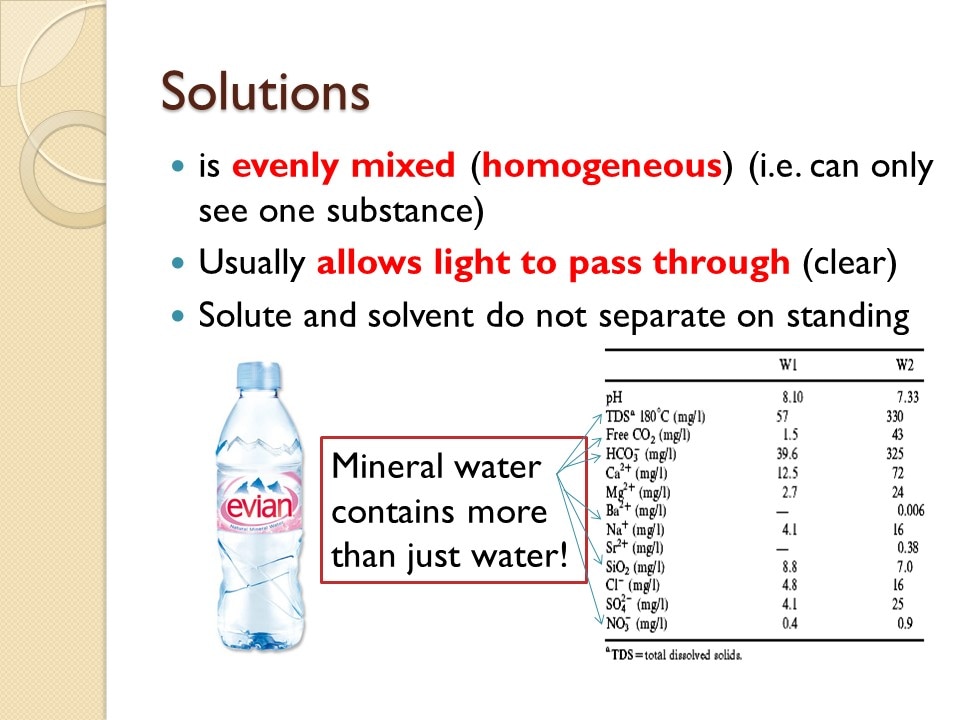 Is Carbonated Water a Mixture or Compound - HoustonkruwRush
You’ve experienced this in your own kitchen: when you let a glass of club soda sit out, it goes “flat.” That’s the gas escaping back into the air. The mixture is falling apart. It’s like a party where guests start leaving at 2 a.m.—the fun is over, and you’re left with a sad, still liquid. You can’t put the guest back in the house without a new keg of CO₂.
The "Is It a Solution?" Cheat Sheet
So, to sum it up for the real world: Carbonated water is a homogeneous mixture (specifically, a solution of gas in liquid). You can’t pick the bubbles out like raisins from a cookie. If you tried to separate them by just letting the bottle sit, you’d be waiting a long time—and you’d end up with plain water and a very disappointed mood.
Next time you sip a LaCroix or a seltzer, give it a little nod of respect. You’re not just drinking water; you’re enjoying a pressurized partnership that’s one bad seal away from a sticky disaster. And if anyone asks you what type of mixture it is, just say, "It’s the one that makes me snort when I laugh too hard." They’ll get it.
And remember: that deliciously aggressive fizz is just gas trying to find its freedom. We’re all a little like carbonated water sometimes—holding it together under pressure, but ready to burst out laughing at any moment.
