Can You Use Pool Salt For Water Softener

Let’s talk about salt. Not the fancy sea salt you sprinkle on avocado toast. I’m talking about the chunky, cheap stuff you chuck into a swimming pool. And yes, you totally wan...

Let’s talk about salt. Not the fancy sea salt you sprinkle on avocado toast. I’m talking about the chunky, cheap stuff you chuck into a swimming pool. And yes, you totally want to know: Can you dump that pool salt into your water softener? It’s the kind of question that makes your plumber sigh and your neighbor raise an eyebrow. Let’s dive in—because this is oddly fun.
The Short Answer: A Splashy "Sometimes"
Technically, pool salt can work in a water softener. It’s mostly sodium chloride, just like softener salt. But here’s the kicker: pool salt is usually much coarser. Think of it as the difference between fine sand and tiny rocks. Your softener might choke on those big chunks.
Most home softeners need salt pellets or small crystals. Pool salt is designed to dissolve slowly in a big chlorine generator. It’s like trying to use boulders to fill a sugar dispenser. It won’t end well.
Must Read
The "But Wait!" Factor
Here’s where it gets quirky. Some pool salt is pure—like, 99.9% sodium chloride. That’s actually better than some cheap softener salts! But not all pool salt is created equal. Some contains anti-caking agents (yep, pool salt clumps too). Those additives can gum up your softener’s resin beads. It’s like putting glue in your coffee maker.
Also, pool salt often has trace minerals like copper or iron. These are fine for your swim trunks. For your water softener? They’re the enemy. They stain stuff. They clog things. You’ll end up with pink slime and a very sad machine.
The Science-y Bit (But Make It Silly)
Your water softener is a picky eater. It uses ion exchange to swap calcium and magnesium (the hard stuff) for sodium (the soft stuff). Pool salt does the same chemistry trick—if it’s clean and pure. But pool salt is like a wild party animal. It brings contaminants you didn’t invite.
One study found that pool salt can contain up to 100 times more insoluble residue than softener salt. That’s the gunk that turns your brine tank into a swamp. Do you want a swamp in your basement? Didn’t think so.
A Fun Fact to Drop at BBQs
Did you know that pool salt is often solar evaporated from seawater? It’s just dried ocean water. Meanwhile, softener salt is usually mined from ancient salt beds. So one is sun-dried, the other is dinosaur-era rock. Both dissolve, but they have very different personalities.
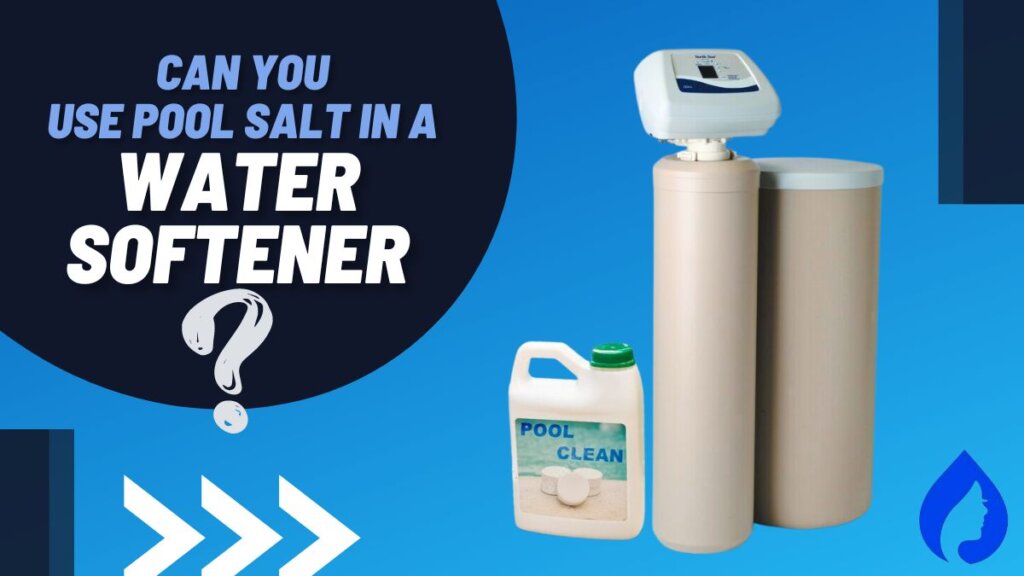 Can You Use Pool Salt In A Water Softener? (Read This First!)
Also fun: Some people use table salt in a pinch. Don’t do that either. Iodine and anti-caking agents turn your softener into a foamy science experiment. Stick to the script, folks.
The Practical Way to Test This Madness
If you’re feeling bold—and have a softener you don’t love—try one small bag of pool salt. Check the label. It must say “99.8% pure sodium chloride” with no additives. Then run a manual regeneration cycle. If your water tastes salty or smells weird? Bingo. You’ve learned a $20 lesson.
The safer bet? Buy softener salt. It’s like $6 a bag. Your warranty will thank you. Your future self won’t have to scrub a slimy brine tank with a toothbrush. Trust me on that.
The Quirky Conclusion
So, can you use pool salt for a water softener? No, but yes, but mostly no. It’s like asking if you can use ketchup to make a Bloody Mary. Technically, both are red. But one is a sad, vinegary mess.
Pool salt is for cannonballs and chlorine. Softener salt is for silky showers and happy laundry. Keep them separate. Your pipes will throw you a tiny parade. And really, isn’t that the dream?
Now go enjoy your pool—and your perfectly soft socks.
