Water Softener Backwash And Regeneration

Alright, grab your coffee—or your hard-water-stained mug if you’ve got one—and let’s talk about something your water softener has been doing at 3 AM while you’re blissfully dr...

Alright, grab your coffee—or your hard-water-stained mug if you’ve got one—and let’s talk about something your water softener has been doing at 3 AM while you’re blissfully dreaming of winning the lottery. I’m talking about backwash and regeneration. Sounds like a sci-fi episode, right? Actually, it’s your salty little machine throwing a tiny, quiet tantrum so you can have silky hair and spotless glasses.
What in the Plumbing Is This?
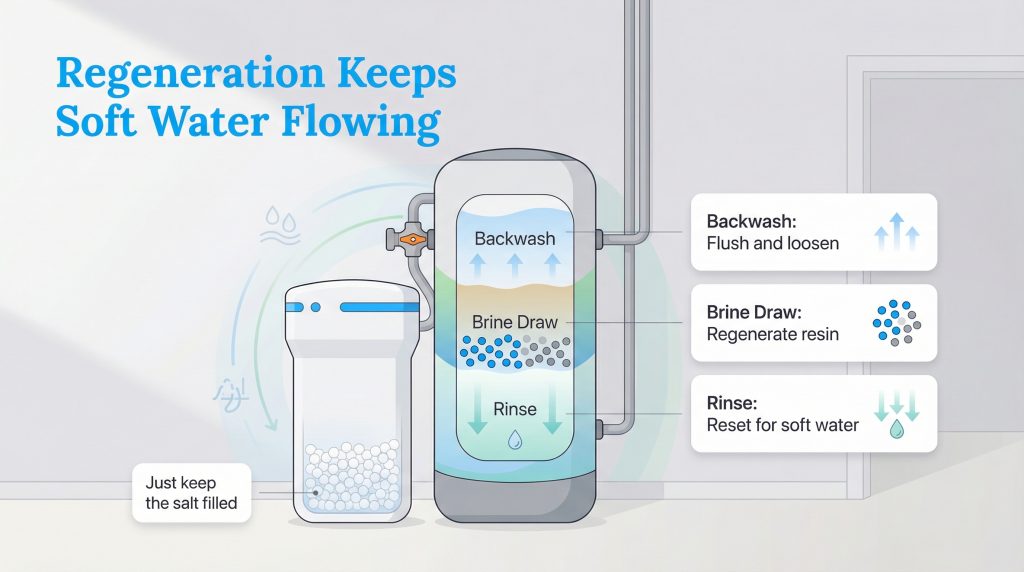
Imagine your water softener is a bouncer at a club full of calcium and magnesium ions—“hardness” that makes your soap scum cling like a desperate ex. Over time, the bouncer gets tired and his resin beads (the magic dust inside) get coated in those rowdy minerals. That’s when he needs a backwash—think of it as a power wash for his tiny, beady muscles—followed by regeneration, where he chugs a brine solution (salt water) to flush the bad guys down the drain.
Yes, your water softener literally gets drunk on salt water to cleanse itself. You’re welcome, science.
Must Read
The Stealthy Midnight Ritual
Most softeners do this in the dead of night because nobody wants to hear a gurgling, hissing monster during their Netflix binge. The process starts with backwash: water rushes backward through the tank, fluffing up the resin beads like a pillow fight in a washing machine. Then comes the salt brine, which is basically the mouthwash for the beads, swapping out calcium and magnesium for sodium ions.
Surprising fact: During a single regeneration, your softener might use up to 50 gallons of water. That’s like flushing your toilet twenty-five times in one shot—but for a good cause.
Why Should You Care? (Besides the Obvious)
If you’ve ever felt like your skin is sandpaper after a shower, or found a crusty white ring in your toilet bowl that looks like it’s planning a coup, you’ve been betrayed by hard water. Softeners fix that. But if your backwash cycle gets interrupted—say, by a power outage or a rogue sock in the brine tank—your resin beads stay dirty and your water turns into a mineral mosh pit.
Also, pro tip: never plug your softener into a GFCI outlet unless you want the regeneration to reset every time you blow-dry your hair. Yes, that’s a real thing. Trust me, I learned the hard way and spent a week wondering why my coffee tasted like a swimming pool.
The Salt Myth You Should Forgive Yourself For Believing
You might think your softener is dumping salt into your drinking water. Nope. The salt is used to clean the beads, then it’s flushed out with the hard minerals. The water you drink has only a tiny bit more sodium—about the same as a slice of white bread. Unless you’re on a doctor-mandated sodium-free diet, you’re fine.
 How Ion Exchange Water Systems Work: Your Complete Guide – Utilities
But here’s the real kicker: if you have a potassium chloride softener instead of sodium, regeneration costs about four times more. So you’re basically paying lobster prices for fancy, fragile salt. Your call.
Signs Your Backwash Is Staging a Coup
How do you know if your softener’s midnight ritual is in trouble? Watch for these clues: a sudden lack of suds in your shampoo (soap won’t lather in hard water), a faint rotten egg smell (hello, bacteria in the brine tank), or water that feels like you’re washing in Lake Erie. Also, if your softener starts making a noise like a dying cat in a blender, call someone who knows pipes.
One more weird truth: some modern softeners use a flow meter to track water usage and regenerate only when needed. The old ones just run on a timer—like your grandpa’s VCR. Upgrade if you want to save water and feel fancy.
Should You DIY the Regeneration?
Technically, you can hit the “regen” button yourself and watch the show. It’s like a lava lamp, but with brine. Warning: do this at 2 PM on a Tuesday, and your neighbors might hear a sound like your house is digesting a large meal. They’ll assume you’re brewing kombucha or summoning a demon. Either way, it’s a conversation starter.
But don’t panic if you hear odd noises. A softener that’s regenerating sounds like a gentle giant gargling marbles. That’s normal. What’s not normal is a sudden flood in your basement—which happens if the drain line gets kinked like a garden hose fought a snake.
So next time you’re enjoying that crystal-clear ice cube or a shower that doesn’t feel like you’re scrubbing with chalk, give a little nod to your grumpy, salty appliance. It’s doing the 3 AM hustle so you can live the 10 AM luxury. You’re welcome, water softener. You’re welcome.
