What Temperature Kills Bacteria In Water

Let’s be real: nobody wants to think about the tiny, invisible party crashers swimming in their drinking water. You know, the ones that can turn a peaceful sip into a frantic...

Let’s be real: nobody wants to think about the tiny, invisible party crashers swimming in their drinking water. You know, the ones that can turn a peaceful sip into a frantic Google search at 2 AM. But here’s the good news: you don’t need a chemistry degree or a fancy lab to kick them out. You just need heat—like a bouncer with a bad attitude and a boiling pot.
The Magic Number: 212°F (100°C)
Most bacteria are total wimps when it comes to heat. Bring water to a rolling boil, and you’ve basically told those microscopic freeloaders, “The party’s over.” At 212°F (100°C at sea level), the heat destroys their cell walls and denatures their proteins—imagine an egg turning from runny to solid in a hot pan. That’s what happens to bacteria. They don’t just leave; they get scrambled.
But here’s the kicker: you don’t need to boil for twenty minutes like your grandma insisted. One minute of a rolling boil is plenty for most clean tap water. If you’re at high altitude (like camping in the mountains), let it rage for three minutes, because water boils at a lower temperature up there. Think of it like a perky friend who needs a little extra time to get serious.
Must Read
When Lukewarm Just Won’t Cut It
You ever try to kill a mosquito with a gentle breeze? Same idea. Temperatures below 140°F (60°C) are basically a spa day for bacteria. They thrive, multiply, and send out invites to their friends. So when you’re washing dishes in “warm” water from the tap, you’re just giving germs a bubble bath. To actually kill them, your water needs to be hot enough to make you say, “Ow, that’s hot!”—around 160°F (71°C) for instant results.
I once thought I was being clever by setting my water heater to a “safe” temperature. Then I read that Legionella bacteria (the kind that gives you lung problems) laugh at anything below 140°F. Now I keep my heater at 140°F minimum. It’s like buying a lock that actually works—boring but crucial.
The “Boil Water” Advisory Dance
We’ve all seen the news: “Boil water advisory for your area.” Cue the panic-buying of bottled water and the awkward ritual of boiling water for coffee. The recommended standard is: bring water to a full, vigorous boil for at least one minute. That kills bacteria, viruses, and even those nasty Giardia parasites you get from questionable streams. It’s not magic—it’s just science with a side of patience.
I remember my first boil-water weekend. My apartment smelled like a steam factory. My coffee tasted like a hot, watery apology. But you know what? I didn’t get sick. And that’s the trade-off: a little faff for a lot of peace of mind.
But What About “Kill” vs. “Log Reduction”?
Here’s where it gets fun-awkward. “Kill” doesn’t always mean 100%—it usually means reducing the number to a safe level. The CDC says boiling kills 99.999% of pathogens. That’s like removing 99,999 of every 100,000 germs. Your immune system handles the leftover five. So unless you’re a bubble boy, boiled water is essentially safe.
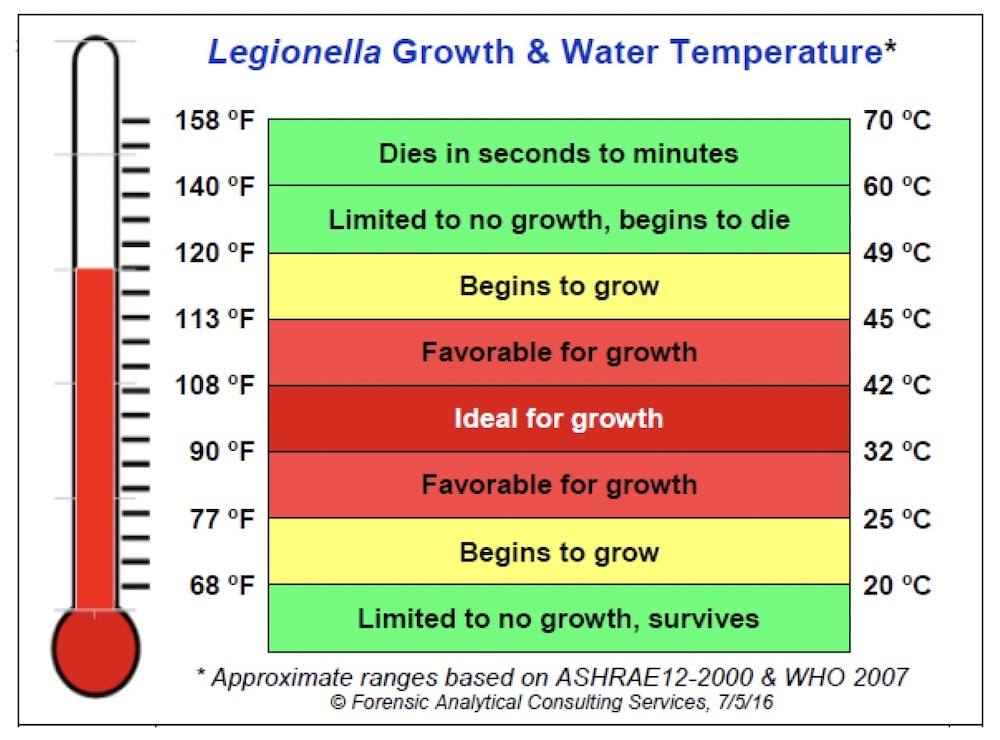 What Water Temperature Kills Legionnaires Disease at Harold Olmstead blog
And don’t fall for the “room temperature” myth. If your water sits around 68°F (20°C), you’re throwing a house party for microbes. Bacteria double every 20 minutes at that temp. That’s faster than my thoughts on Monday morning.
DIY vs. Store-Bought: Filters and Fancy Gadgets
Filters are great for gross stuff like sediment and chlorine taste, but they rarely kill bacteria. That’s why some have “UV light” or “carbon” features—but those can be finicky. If you’re relying on a Brita pitcher to save you from a boil-water advisory, you’re basically using a screen door on a submarine. Heat is still the king.
My friend spent $200 on a “military-grade” water filter. Then his dog peed in the stream. He still boiled the water. Moral of the story: you can pay for tech, but fire is your oldest, cheapest friend.
The Anecdote That Sums It All Up
Last year, I went camping and “thought” I could just drink from a clear stream. You know, the kind that looks like a fairy tale. Two hours later, my stomach sounded like a horror movie soundtrack. I ended up boiling every drop I drank for the rest of the trip. Never again. Now I bring a cheap thermometer and a pot. The water boils, I feel smug, and my gut stays quiet.
So here’s your takeaway: 212°F is your golden ticket. Boil for a minute (or three at altitude). Don’t trust lukewarm. And if you ever forget, remember my campground horror story—and the fact that bacteria don’t stand a chance against a good, old-fashioned rolling boil. Now go fill that kettle.
