Adding Minerals To Reverse Osmosis Water

You know that feeling when you take a sip of water and it just tastes empty? Like someone stole the soul right out of it. That’s reverse osmosis (RO) water for you. It’s incre...
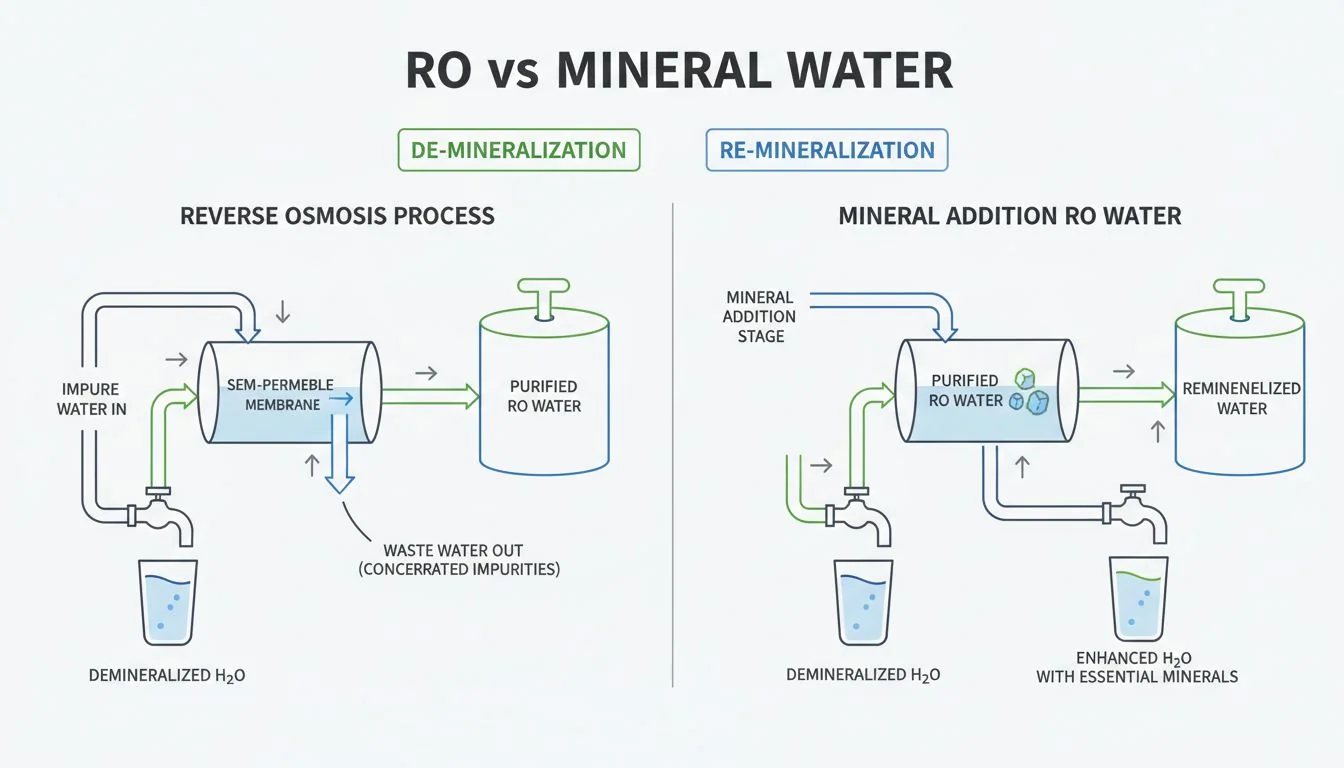
You know that feeling when you take a sip of water and it just tastes empty? Like someone stole the soul right out of it. That’s reverse osmosis (RO) water for you. It’s incredibly pure—almost too pure, if you ask your taste buds.
RO systems strip out everything, including the good stuff: calcium, magnesium, and potassium. Sure, you get a blank slate, but a blank slate can be a bit boring, right? Let’s talk about why adding those minerals back is like giving your water a little superhero cape.
Why does RO water taste so weird anyway?
Think of it this way: regular tap water is like a friendly neighborhood band—everyone’s there, doing their part. RO water is that band after the lead singer quits. It’s technically fine, but something’s missing.
Must Read
The minerals in water are what give it character. Calcium adds a smooth, creamy feel, while magnesium brings a slight sweetness. Without them, your water can taste flat or even slightly acidic. It’s like eating a salt-free potato chip—why bother?
The big payoff: flavor and health
Here’s where it gets cool. By adding a remineralization filter or a few drops of mineral solution, you transform that boring H₂O into something you actually crave. Suddenly, your morning coffee tastes rounder, not bitter. Your tea lets the floral notes shine.
And there’s a health angle too, but let’s keep it relaxed. Your body uses minerals like calcium and magnesium for nerve function and bone health. Drinking demineralized water long-term? Some studies suggest it might leach minerals from your body. Adding them back is just being kind to future you.
But isn’t tap water already mineral-rich?
You’d think so, right? But here’s the twist: tap water’s mineral content varies wildly. One town might have hard water packed with calcium, while another has only trace amounts. RO water gives you control. You become the water chef, deciding exactly what goes in.
Plus, tap water often carries contaminants—lead, chlorine, pesticides. RO removes the bad stuff, then you add back the good stuff. It’s like cleaning your room before putting your favorite posters up. Why settle for a messy wall of health risks?
The ways to add minerals (and they’re all easy)
Option one: remineralization cartridges. They attach to your RO system like a sidekick. Water flows through a bed of calcium and magnesium rocks, picking them up naturally. No effort, no fuss. It’s basically a mineral spa for your water.
Option two: mineral drops. A few drops in your glass from a little bottle. Perfect for the “I’ll decide later” crowd. Great for travel too—take your water’s personality with you.
 How to Restore Minerals in Reverse Osmosis Water - YouTube
Option three: a structured water device. These use ceramic balls or stones to add minerals and even change the water’s molecular structure. It sounds a bit “woo-woo,” but fans swear it makes water taste silkier. Hey, if it works for you, it works.
But is mineral water really all that different from RO with minerals?
Great question. Natural mineral water comes from springs, picking up minerals over centuries. RO-plus-minerals is like a custom-built house vs. a historic mansion. Both are lovely. But with RO, you know exactly what’s in there—no surprises, no weird runoff from a mountain.
It’s also cheaper in the long run. Buying fancy bottled mineral water adds up fast. A remineralization filter lasts months for a few bucks. Your wallet will thank you, and the planet will too—fewer plastic bottles.
The “fun” comparison: water is like pizza crust
Stick with me here. RO water without minerals is like store-bought pizza crust: bland, floppy, forgettable. Add minerals? That’s the wood-fired, sourdough, crispy-on-the-outside crust. It elevates everything—the sauce (coffee), the toppings (tea), the whole experience.
You wouldn’t eat plain crust and call it a meal. Why drink water that’s equally unexciting?
One last thought: listen to your body
Some people feel more hydrated with mineralized RO water. It makes sense—electrolytes help your cells actually absorb water. Ever chug a glass of plain RO water and still feel thirsty? That’s your cells saying, “Hey, where’s the taxi service?” Minerals are that taxi.
So, go ahead. Experiment. Add a pinch of sea salt to your RO water, or invest in a filter. You might just find that the best water isn’t the purest—it’s the one that tastes alive. And isn’t that worth a little curiosity?
