Whole House Water Filter For Well System

So, you’ve got a well. Fancy. You’re living the country dream, right? Fresh air, starry skies, and... water that sometimes tastes like iron and stains your sink like a crime s...

So, you’ve got a well. Fancy. You’re living the country dream, right? Fresh air, starry skies, and... water that sometimes tastes like iron and stains your sink like a crime scene? Yeah, I’ve been there.
Look, I’m not here to shame your well water. It’s fine. Mostly. But let’s be real—that “fresh from the earth” vibe gets old when your laundry looks orange and your coffee tastes like a penny. Enter the whole house water filter for well systems.
Think of it as a bouncer for your plumbing. Everything that comes out of your well has to get past this guy first. Sediment, sand, iron, sulfur—that funky “rotten egg” smell? Show’s over, pal. The filter kicks it all to the curb.
Must Read
Why your well water is a drama queen
City water is boring. It’s regulated, predictable, and frankly, a little vanilla. Well water? That’s a wild card. One day it’s clear, the next it’s a murky, metallic mess. You never know what the groundwater is feeling that morning.
Maybe you’ve got hard water that makes your skin feel like sandpaper. Or maybe you’ve got tannins that turn your water the color of weak tea. Gross, right? A whole house filter doesn’t care about its mood—it just fixes it.
Here’s the kicker: that gunk isn’t just gross. It’s wrecking your appliances. Your water heater, dishwasher, washing machine—they’re all slowly dying from sediment buildup. RIP your wallet.
What a whole house filter actually does
Imagine a filter the size of a small trash can. It sits right where your well pipe enters the house. Every drop of water—every shower, every toilet flush, every glass you drink—has to pass through it. It’s a total lockdown.
Most systems use a multistage setup. First, a sediment filter catches the big stuff: sand, dirt, rust flakes. Then a carbon filter tackles the taste and smell. Some fancy units even have a UV light to zap bacteria. Science is magical.
The best part? You don’t need a chemistry degree. Most systems are “set it and forget it.” You change a filter cartridge every few months and it just... works. Like a robot butler for your pipes.
But do you really need one?
Okay, humor me. Take a glass of your well water right now. Hold it up to the light. Is it crystal clear? No? Thought so. Now, think about all the showers you take. That water is hitting your hair and skin.
If your water smells, stains, or leaves a ring in the toilet bowl? Yeah, you need the filter. And don’t even get me started on what that does to your house’s resale value. Buyers love a clean well. Buyers hate “the weird orange shower.”
Plus, there’s the health angle. City water has chlorine to kill bugs. Your well? It’s a jungle out there. Bacteria, cysts, even pesticides from runoff can sneak in. A whole house filter with a UV light? That’s like a moat around your castle.
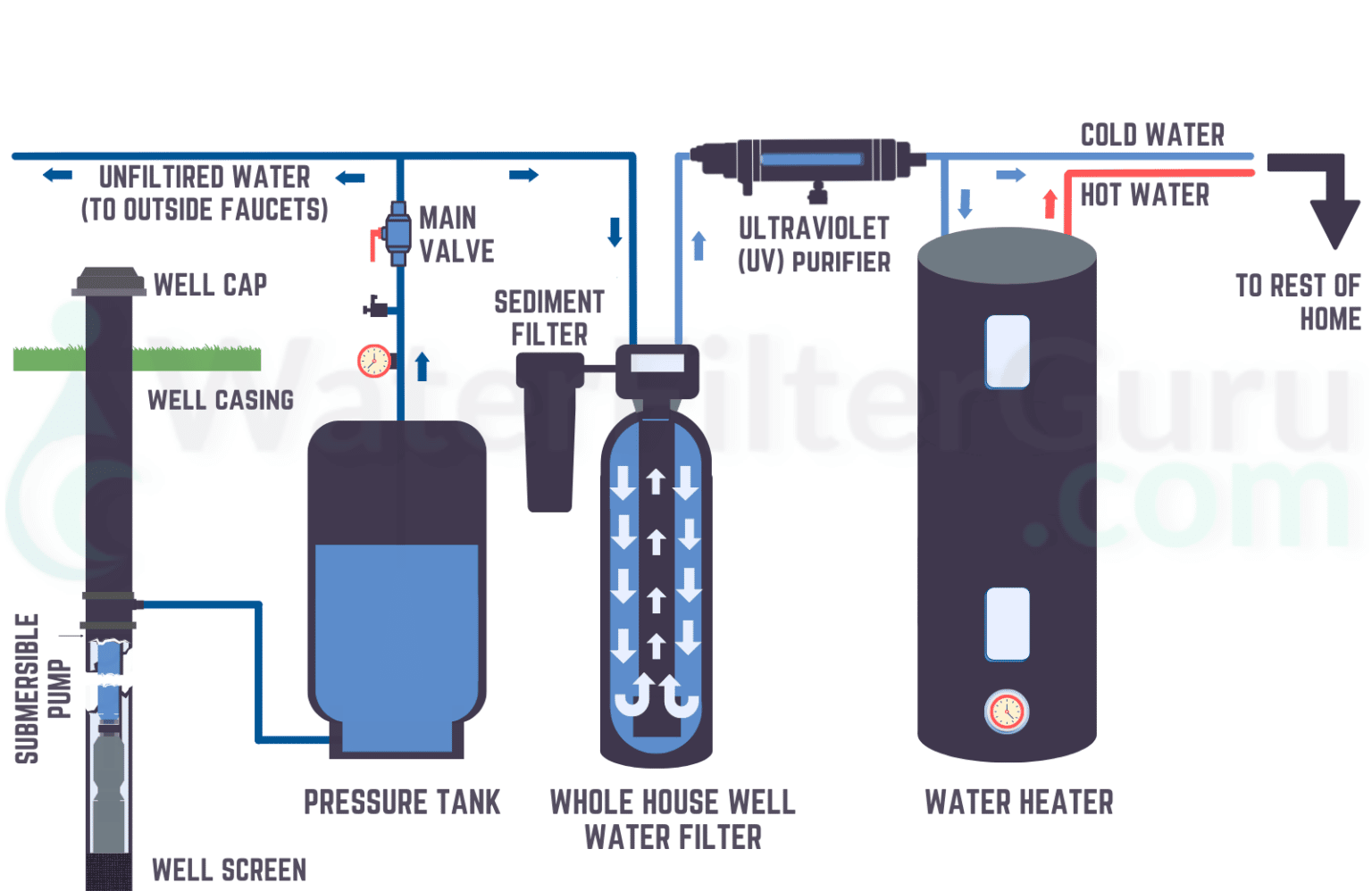 How to Install a Whole House Water Filter for Well Water
Okay, I’m sold. What do I buy?
Hold your horses. Not all filters are created equal. First, you need a water test. Stop groaning—it’s easy. You can buy a simple kit at the hardware store or send a sample to a lab. Knowledge is power, people.
The test tells you exactly what’s in your water: iron, sulfur, manganese, pH, hardness. Then you pick a system that matches. Don’t overbuy. If you just have sand, a basic sediment filter for $200 will do. If you’ve got iron bacteria, you’re looking at a $1,500 system with a chemical injector.
Here’s a pro tip: don’t go too cheap. The $50 “whole house” filters at big box stores? They’re plastic junk that cracks in a year. Spend a little more on a stainless steel housing with a good cartridge. Your future self will thank you.
The installation “adventure”
Installing one of these is a DIY job if you’re handy with PVC pipe and a wrench. You’ll need a shut-off valve, a pressure gauge, and maybe a bypass loop (so you can still use water while changing the filter). Not your thing? Hire a plumber. It’s a one-day job, and it’s worth the cash.
Just make sure you put it before your water heater. That way, the heater gets clean water and lasts longer. Boom—instant return on investment.
Word of caution: if you have a submersible pump (most wells do), don’t oversize the filter. Too much restriction can burn out your pump. Yeah, that’s a thing. Physics is rude sometimes.
The “after” feeling
Once it’s installed, turn on the tap. Watch the water come out clear. No smell. No weird taste. Your white shirts stay white. Your skin stops itching. You’ll find yourself just staring at the glass of water like a weirdo. “Is this... normal? Is this what wealthy people feel like?”
And best of all? No more orange toilet bowls. Your bathroom looks like a showroom, not a science experiment. That alone is worth the price of admission. Trust me.
So go ahead. Get the filter. Your well water isn’t bad—it’s just misunderstood. And now, with a little help, it can be the best water in the neighborhood. You’re welcome.
