Can You Put Purified Water In A Fish Tank

So, picture this: my buddy Tom, a guy who once tried to “fix” his coffee machine with a butter knife, calls me in a panic. He’d just spent thirty bucks on a fancy gallon of pu...
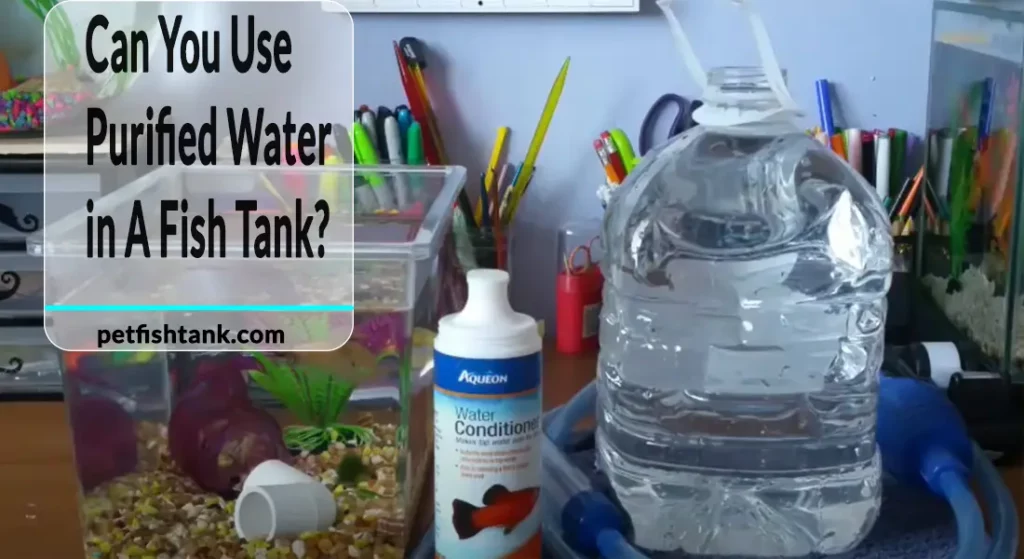
So, picture this: my buddy Tom, a guy who once tried to “fix” his coffee machine with a butter knife, calls me in a panic. He’d just spent thirty bucks on a fancy gallon of purified water and poured the whole thing into his brand new betta tank. “Right?” he said, “It says ‘pure’ on the label. Fish need pure, right?” He was so proud, bless his heart.
Here’s the kicker: I had to break it to him that his fish was now swimming in a chemically stripped desert. Purified water isn’t what it’s cracked up to be for our finned friends—at least, not on its own. Let’s dig into why that expensive bottle might be doing more harm than good.
What’s Actually in (and Not in) Purified Water?
Purified water has been processed to remove impurities—think heavy metals, chlorine, and bacteria. That sounds fantastic, right? The problem is, it also gobbles up the minerals that fish—and their beneficial bacteria—need to survive and thrive.
Must Read
We’re talking about calcium, magnesium, and potassium. These aren’t just fancy words on a sports drink label; they’re essential for your fish’s osmoregulation (fancy term for keeping water and salt balanced in their bodies). Without them, your tank water becomes too pure, and your fish can actually lose electrolytes.
Think of it like this: you wouldn’t drink distilled water for a week straight because it would leach minerals from your body. Your fish feels the same way. It’s a surprisingly hostile environment for delicate gills.
The Silent pH Swing You Didn’t See Coming
Here’s where it gets funny—and a little dangerous. Purified water has a very low “buffer capacity” (aka KH or alkalinity). That means it resists nothing when the pH decides to go rogue.
One decaying piece of food or a little fish poop, and boom—your pH can crash from 7.0 to a dangerous 5.5 in hours. Fish stress out, get sick, or worse. Stability is the secret to a happy tank, and purified water is the chaotic wild card you don’t want dealing the cards.
You test your water weekly, right? Well, with purified water, you’d better test it hourly. Not exactly the relaxing hobby you signed up for.
Can You Ever Use Purified Water?
Alright, let’s not throw the baby out with the bathwater. There are specific scenarios where purified water is your best friend. For instance, if you’re keeping sensitive discus or crystal red shrimp that need ultra-soft, low-TDS (total dissolved solids) water.
Or, if your tap water is a nightmare—like full of copper from old pipes or chlorine levels that could bleach a shirt. In that case, using purified water as a base and then remineralizing it is a smart move. You just need a product like Seachem Equilibrium or Salty Shrimp to add the good stuff back in.
But for a standard community tank with tetras, guppies, or a betta? Nah. You’re overcomplicating it. Your tap water (dechlorinated, of course) is usually the safer, cheaper, and more stable bet.
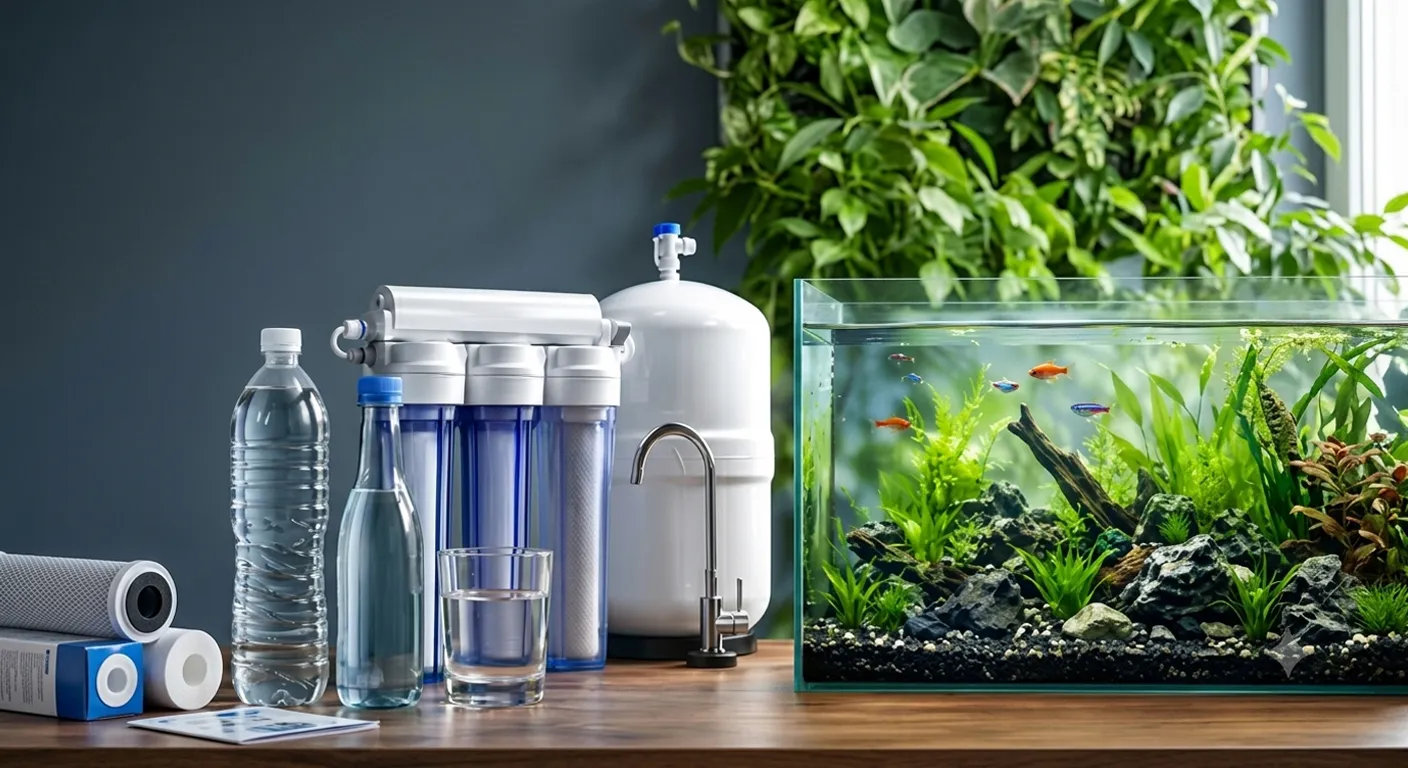 Purified, RO & Bottled Water for Fish Tanks: Which is Better - AQQA
The Cheaper, Smarter Alternative
Here’s what I told Tom: take that bottle of purified water, pour it into a water cooler for your desk. Then, fill a bucket with tap water, add a few drops of dechlorinator (like Prime or API Tap Water Conditioner), and let it sit for 15 minutes. That’s your tank water, done.
Dechlorinator doesn’t remove minerals; it neutralizes chlorine and chloramines, making it perfect for fish. It’s a fraction of the cost, and your fish will thank you by not swimming in a panic. Side note: your plants will also love the trace minerals in tap water.
Ironically, “purified” water is too clean. It’s like giving a hiker nothing but distilled water on a long trek—they’ll collapse. Fish need that natural cocktail of minerals, not a sterile void.
What About Reverse Osmosis (RO) Water?
Ah, the aquarium snob’s favorite. RO water is even more purified than bottled purified water. It’s amazing if you’re a hardcore planted tank enthusiast or breeding fancy fish. But again, you must remineralize it.
If you’re reading this and thinking, “I’ve used purified water for years and my fish are fine,” you might be lucky. Or you’re doing a big water change so often that the minerals from food are saving you. But for the average keeper, it’s risky business.
Honestly, just stick with treated tap water. It’s what 90% of successful aquarists use, and it’s free (well, except for the water bill). Save your money for a bigger tank or a cooler fish.
The Final Verdict
Can you put purified water in a fish tank? Yes, but only if you know exactly what you’re doing and you’re willing to add minerals back. Otherwise, it’s like giving your pet a bathtub filled with nothing but steam—technically water, but missing the point entirely.
So, do your fish a favor and stick with the simple stuff. A little dechlorinator, some tap water, and you’re golden. Your wallet—and your betta—will breathe a sigh of relief. And Tom? He now keeps a bottle of purified water for his houseplants. We’re still working on him.
