Dishwasher Leaves White Residue On Dishes

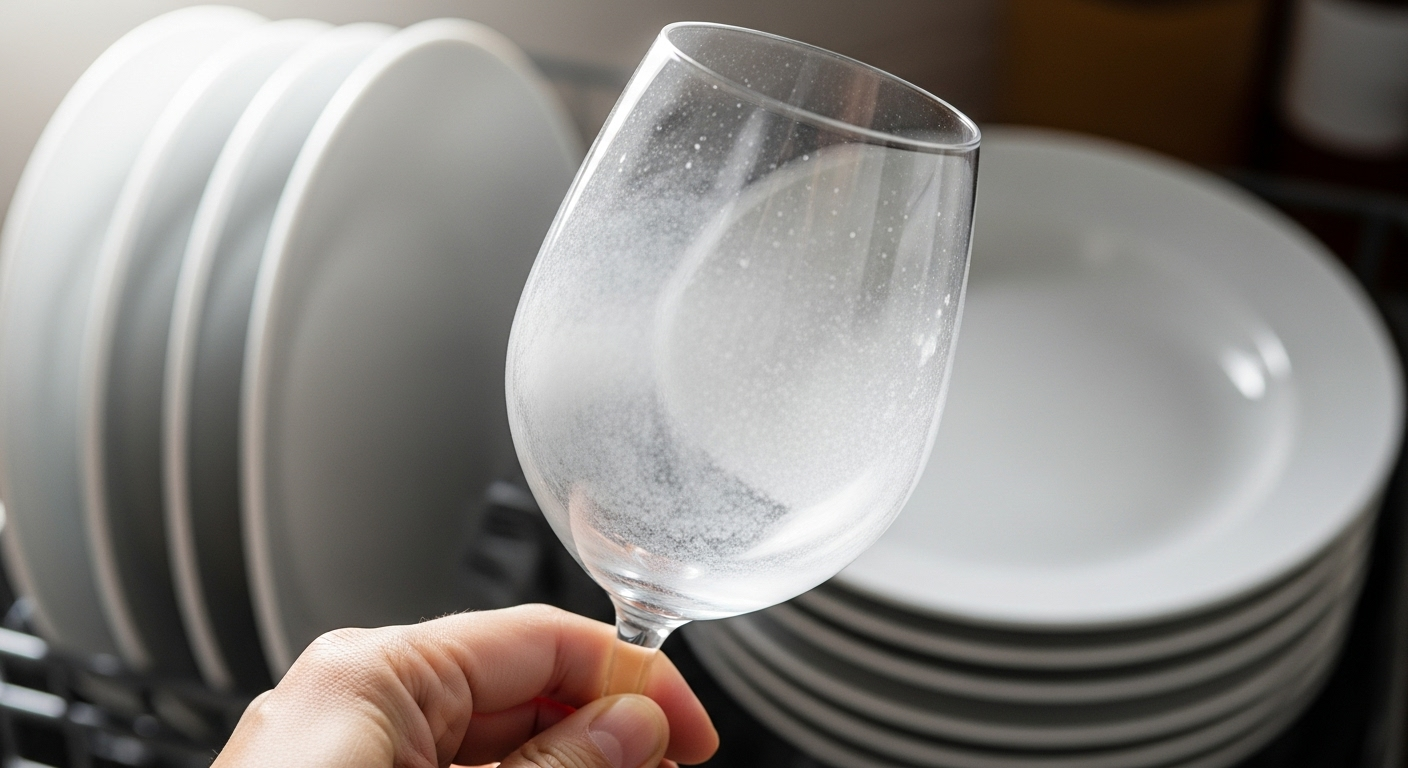
Last Tuesday, I pulled a sparkling glass from the dishwasher, held it up to the light, and nearly screamed. It looked like a ghost had sneezed all over my stemware. A chalky,...
Last Tuesday, I pulled a sparkling glass from the dishwasher, held it up to the light, and nearly screamed. It looked like a ghost had sneezed all over my stemware. A chalky, white film clung to every surface, mocking my “heavy wash” cycle. I was this close to tossing the whole machine out the window.
You know the feeling, right? That moment when your appliance betrays you, and you’re left scrubbing dishes by hand anyway? It’s a special kind of kitchen rage.
But before you declare war on your dishwasher, let’s talk about the real culprit. That white residue isn’t a ghost or a curse—it’s hard water. More specifically, it’s the minerals in your water (calcium and magnesium) that didn’t dissolve properly during the rinse cycle.
Must Read
Why do these mineral ghosts appear?
Think of your dishwasher as a tiny chemist. It needs the right balance of heat, detergent, and water softness to do its job. When the water is too hard, minerals latch onto your dishes like barnacles on a ship. The detergent can’t wash them away, so they dry into that gritty, white crust you hate.
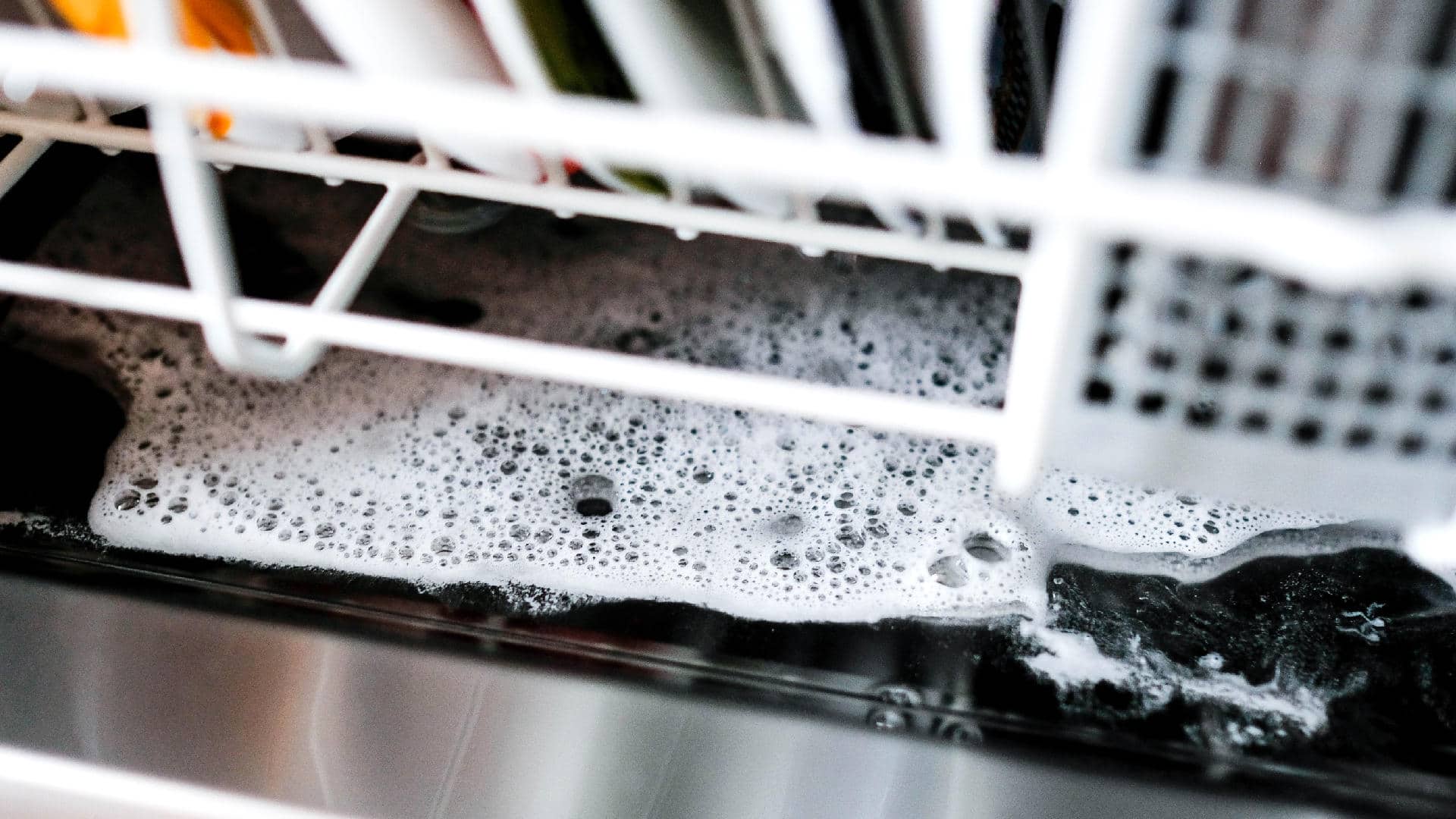
Here’s the ironic part: using too much detergent can actually make the problem worse. I know, it sounds backwards. But extra soap creates a lather that traps minerals and bakes them onto the glass. You aren’t cleaning better—you’re glazing your plates with chalk.
Check your detergent’s instructions. If you’re using a pod, stop. Pods are overkill for soft water and can leave residue. Stick with powder or gel, and use half the amount you think you need. Seriously, trust me on this one.
The rinse aid secret nobody tells you
I used to skip rinse aid because I thought it was a marketing gimmick. Big mistake. Rinse aid isn’t just for “shininess”—it’s a surfactant that breaks the surface tension of water. That means water slides off your dishes instead of clinging and leaving mineral deposits.
Fill that rinse aid compartment to the max. If your machine has a setting for it (usually labeled “rinse aid dosage”), crank it up to the highest level for hard water. Your dishes will thank you by not looking like they’ve been dusted with flour.
Oh, and while you’re at it, clean your dishwasher. Yes, the dishwasher itself gets dirty. Grease and food particles build up in the filter and spray arms, reducing water pressure. A clogged spray arm can’t rinse off minerals. Run an empty cycle with a cup of white vinegar on the top rack once a month—it’s cheap and brutal.
 Fix Dishwasher White Residue – Get Sparkling Dishes | Need a New
But what if it’s not the water?
Sometimes the residue isn’t white and powdery—it’s bluish or rainbow-tinted. That’s a different gremlin. That’s etching, where the dishwasher’s chemistry (or water temperature) is literally eating into your glassware. Etching is permanent, so don’t confuse it with residue.
If you see rainbow streaks, your water might be too soft or your detergent too aggressive. Switch to a “gentle” formula, and avoid washing fine china in the machine at all. Crystal glasses? Hand wash them, or accept they will eventually fog up.
Fix it with a cheap hack
For an immediate fix, here’s my lazy-girl method: citric acid. You can buy it in powder form at the grocery store (or online). Sprinkle a tablespoon into the bottom of the dishwasher, then run a hot cycle with no dishes. It chews through mineral deposits like Pac-Man. Do this once a week for a month, and you’ll break the cycle.
After that, switch to a dishwasher cleaner tablet every three months. I know, it feels like you’re paying the machine rent. But a clean machine makes clean dishes—it’s a non-negotiable relationship.
The final, slightly petty thought
Sometimes, despite all your efforts, the residue returns. That’s when I start blaming the water heater temperature. Your water needs to be at least 120°F (49°C) to activate the detergent properly. Go check your water heater settings—I’ll wait. (Don’t burn yourself while you’re down there.)
If you’ve done all this—adjusted detergent, filled rinse aid, cleaned the machine, checked the temp—and you still get white film, then you might need a water softener installed. That’s a bigger investment, yes. But if you’re serious about not scrubbing your coffee mugs, it’s worth it.
One last thing: do not blame yourself. Dishwashers are finicky beasts. They expect you to read their minds. For now, take a deep breath, add some rinse aid, and tell your machine who’s boss. It’s going to be okay—you’ll have squeaky-clean glasses again by dinner. I promise.
