Is Purified Water Same As Distilled Water

So you’re standing in the grocery aisle, staring at a wall of water bottles. Purified water, distilled water, spring water, alkaline water—it’s enough to make your head spin....

So you’re standing in the grocery aisle, staring at a wall of water bottles. Purified water, distilled water, spring water, alkaline water—it’s enough to make your head spin. You’ve probably wondered, are they the same thing? Let’s get into it, but don’t worry—we’ll keep it chill.
The short answer is no, purified water and distilled water are not identical. But they’re like cousins in the same family, sharing a similar goal: getting rid of the stuff you don’t want. Think of it this way: distilled water is actually a type of purified water, but not all purified water is distilled. It’s like how every square is a rectangle, but not every rectangle is a square. Confused yet? Stick with me.
What Makes Distilled Water Special?
Distilled water is basically the overachiever of the water world. It’s made by boiling water until it turns into steam, then capturing that steam and cooling it back into liquid. This process leaves behind pretty much everything—minerals, bacteria, chemicals, you name it. It’s the purest form you can get, almost like water that’s been returned to its baby state. Ever seen a cloud? That’s kind of what distillation mimics, just in a machine.
Must Read
But here’s the kicker: because it’s so pure, distilled water can taste flat or boring to some people. It’s missing the minerals that give tap or spring water that zing. You know how a perfectly clean window sometimes looks like it’s not even there? Distilled water is that window—transparent, but a little too perfect.
And Purified Water? What’s That About?
Purified water is a broader category. It means the water has been treated to remove impurities—usually down to a level of less than 10 parts per million of contaminants. Distilled water meets that standard, but so do other treatments like reverse osmosis, deionization, or carbon filtration. These methods are like different paths up the same mountain. You can use a filter pitcher at home (carbon filtration) to make purified water, but you won’t get the same results as a $300 distillation machine.
Reverse osmosis, for instance, pushes water through a super-fine membrane that catches nasty stuff like lead, chlorine, and even some viruses. It’s like a bouncer at a club—very selective. Deionization uses electric charges to yank out mineral ions, making water that’s ultra-pure in a different way. Each method has its own personality, but they all end up in the “purified” club.
Which One Should You Actually Use?
That depends on your vibe. Distilled water is the rock star for specific jobs—like filling your steam iron, car battery, or medical devices. You don’t want mineral buildup gunking up those machines. It’s also used in labs and for mixing baby formula if you’re worried about contaminants. But for everyday drinking? Most people find it a bit meh. It’s like eating plain rice—nourishing, but not exciting.
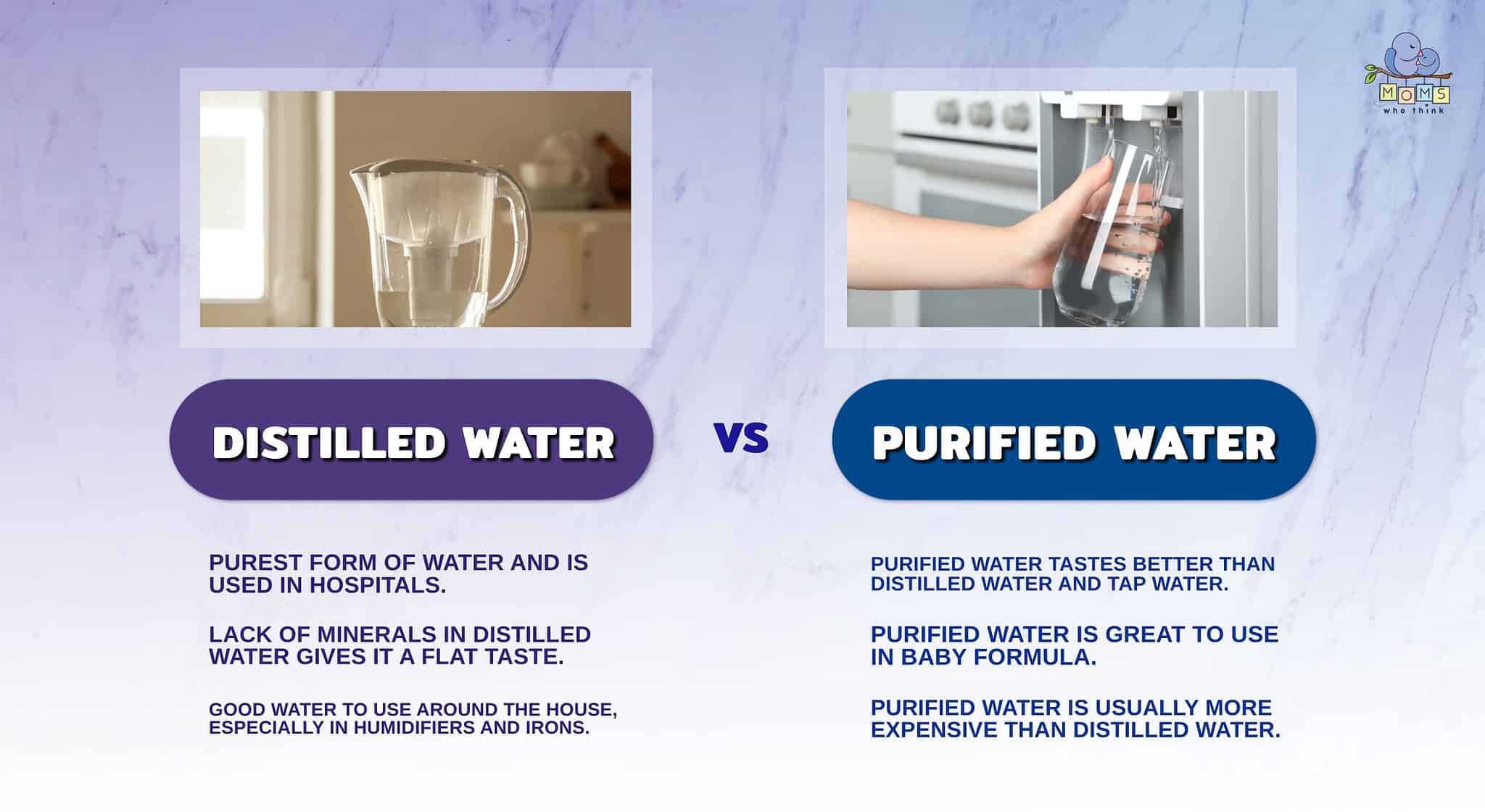 Distilled vs. Purified Water: 4 Differences & Health Benefits
Purified water, on the other hand, is your daily driver. It’s what you get from those big water jugs delivered to offices or from a Brita filter. It’s clean, safe, and still has a little mineral taste (depending on the method). Think of it as the reliable friend who shows up on time—not flashy, but always there. Plus, it’s usually cheaper and easier to make at home than distillation.
A Fun Comparison to Get You Thinking
Imagine you’re making coffee. Distilled water is like using the most filtered water you can find—your coffee will taste super clean, but some snobs say it’s too flat because there’s no mineral structure to pull flavor out. Purified water (like from reverse osmosis) is more balanced—it still has a bit of character. It’s the difference between a white canvas and one with a faint base color. Both work, but they paint differently.
Or picture a swimming pool. Distilled water is that pool so clean it reflects like a mirror, but it’s a bit sterile and lifeless. Purified water is like a well-maintained pool with just the right chemicals—still safe, but more inviting for a swim. You wouldn’t drink distilled water just for fun, but you might sip purified water all day.
So, What’s the Verdict?
In short: distilled water is a VIP subset of purified water. It goes through one specific, brutal process, while purified water can be made by gentler, more varied methods. If you need absolute purity for scientific or appliance reasons, go distilled. For everyday hydration, purified is perfect—and way less of a hassle. Curious to try it at home? Grab a contigo bottle and a filter pitcher. Or, if you’re feeling fancy, buy a little countertop distiller and impress your friends. Either way, you’re winning the water game.
So next time you see those two bottles, just smile and pick your adventure. Water isn’t just water—it’s a spectrum. Isn’t that cool?
