Can I Use Distilled Water In My Fish Tank

So, you’re staring at that jug of distilled water in your pantry, and your fish tank is looking a little low. The thought crosses your mind: Can I use this? It’s just water, r...
So, you’re staring at that jug of distilled water in your pantry, and your fish tank is looking a little low. The thought crosses your mind: Can I use this? It’s just water, right? Well, hold your horses, my friend—it’s not that simple.
Let’s be real: distilled water is too clean for your fish. Like, obsessively, sterile-clean. It’s been boiled into steam and then condensed back, stripping away every mineral and dissolved solid. Think of it as water that’s had its personality surgically removed.
Fish don’t live in a vacuum. They need minerals—calcium, magnesium, potassium—to regulate their body functions. Without them, your fish will struggle to breathe, absorb nutrients, or even keep their cells from exploding. Dramatic? Maybe. But I’ve seen it happen.
Must Read
The “Empty Canvas” Problem
Distilled water is a blank slate. A boring blank slate. It has no buffering capacity, meaning it can’t resist pH swings. One morning, your pH is a cozy 7.0; by evening, it could plummet to 5.0. Your fish will be doing the aquatic version of a panic attack.
Remember those pH shock horror stories? This is how they start. You’ll watch your betta float sideways like a confused balloon. Not cute. So, no, you can’t just pour distilled water straight into the tank. That’s a one-way ticket to Fish Funeral Town.
But wait—before you toss the jug, let me tell you the good news. Distilled water isn’t your enemy. It’s just a tool. And tools need a plan.
When Distilled Water Can Work
Here’s the secret: use distilled water for topping off evaporated water. When water evaporates from your tank, the minerals stay behind. So adding distilled water just replaces the H2O without piling on extra minerals. This keeps your water chemistry stable. Genius, right?
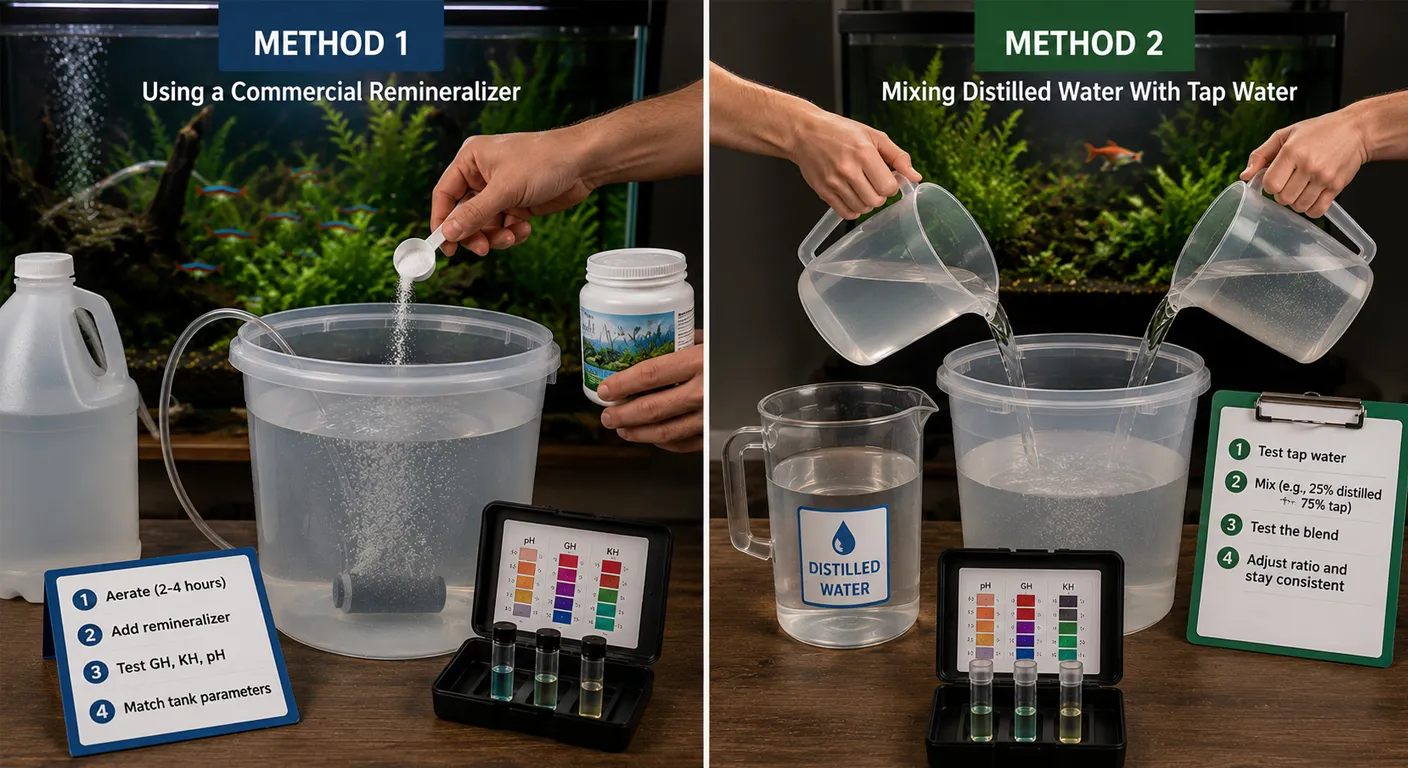
But full water changes? That’s a different story. For a big water swap, you need to remineralize the distilled water first. Grab a product like Seachem Equilibrium or a simple aquarium salt mix. Follow the instructions like you’re baking a cake—precision matters.
Some hobbyists use distilled water on purpose for sensitive species, like discus or shrimp. They create custom water with exact mineral profiles. It’s like being a water barista for your fish. Fancy, but not for beginners.
The “But My Friend Said…” Trap
I know, I know. Your buddy from the fish store swears by distilled water. He’s got a 200-gallon tank with neon tetras doing backflips. Here’s the thing: he’s probably using a reverse osmosis system or remineralizing it. He didn’t tell you that part. Classic move.
 Can You Put Distilled Water In Fish Tank | Explora Madeira
Don’t fall for the shortcut myth. Distilled water is not a “set it and forget it” solution. It requires testing—GH, KH, pH—the whole saga. If you’re not testing, you’re guessing. And guessing is how fish die.
Let’s be brutally honest: most tap water works just fine. Dechlorinate it, let it sit, done. Distilled water is for specific scenarios, like fighting high nitrates or dealing with ridiculous tap water (looking at you, Flint).
Should You Bother?
If you’re a newbie with a simple community tank—swordtails, guppies, or a single betta—please, for the love of all that is gilled, stick to treated tap water. Your fish will thrive, and you’ll save money. Distilled water costs like $1.50 a gallon. That adds up faster than aquarium hobby debt.
If you’re experienced and chasing perfect water for high-end plants or rare fish, go ahead. Just be ready to test, remineralize, and obsess. It’s a rabbit hole. Bring snacks.
And never, ever use distilled water for saltwater tanks without mixing in marine salt. That’s a whole different beast. One drop of error and your clownfish will give you the evil eye.
The Bottom Line (No Pun)
Can you use distilled water in your fish tank? Yes, but only if you know what you’re doing. Think of it like using heavy cream in your coffee—delicious in controlled doses, but terrible if you chug the whole carton.
For the rest of us lazy perfectionists: dechlorinated tap water is your best friend. Distilled water is for emergencies or fine-tuning. Keep the jug in the pantry for your iron or your coffee maker. Your fish will thank you by not floating upside down.
Now go check your water parameters. And maybe don’t use that jug for a water change tonight. You’re welcome.
