Whole House Reverse Osmosis Filter System

So, you’re thinking about a whole house reverse osmosis filter system. That’s a mouthful, right? Sounds like something a mad scientist would install in their basement. Let’s...

So, you’re thinking about a whole house reverse osmosis filter system. That’s a mouthful, right? Sounds like something a mad scientist would install in their basement.
Let’s be real: you probably just want water that doesn’t taste like a swimming pool. Or worse, like the inside of an old garden hose.
I get it. I’ve been there. Staring at a glass of tap water and wondering, “What’s actually in this thing?”
Must Read
What Even Is This Monster?
First off, a whole house system is different from that little undersink filter you see on TV. This bad boy treats every drop of water entering your home.
We’re talking showers, washing machines, bathroom sinks, and that ice maker. All of it gets the VIP treatment. It’s like putting your entire house on a fancy water diet.
Reverse osmosis (RO) is the secret sauce. It forces water through a semi-permeable membrane that’s so tight, it basically says “nope” to almost everything else.
The “Membrane” Is Basically a Bouncer
Imagine a very strict bouncer at a club. This bouncer only lets tiny, pure water molecules inside. Everything else—lead, chlorine, fluoride, pesticides, even some bacteria—gets left out in the cold.
It’s not magic, though it looks like it. It’s just science being incredibly picky. And frankly, I love that for us.
You end up with water that’s scandalously clean. Like, “are you sure this isn’t distilled?” clean.
But Wait, Isn’t That Overkill?
Maybe. Depends on what you’re trying to avoid. If you live in an area with good municipal water, you might be fine with a simple carbon filter.
But if you’re on well water, or if your town’s water report reads like a chemistry experiment gone wrong? This system is your safety blanket.
Seriously, read your local water quality report. It’ll either make you grateful or terrified. There’s no in-between.
The Shower Factor
Here’s a pro tip no one tells you: hard water wrecks your skin and hair. That dry, itchy feeling after a shower? That’s minerals building up. A whole house RO system fixes that.
Your shampoo will lather like it’s in a commercial. Your skin will stop screaming for lotion. And your hair won’t feel like straw. It’s a whole new level of bougie.
Also, your water-using appliances will thank you. No more scale buildup in your coffee maker or dishwasher. They’ll live longer, and you won’t have to descale them every month.
The Catch (Of Course There’s a Catch)
Look, nothing is perfect. Whole house RO systems are expensive. We’re talking thousands of dollars plus installation. It’s not a weekend DIY project unless you’re a plumber or a very brave person.
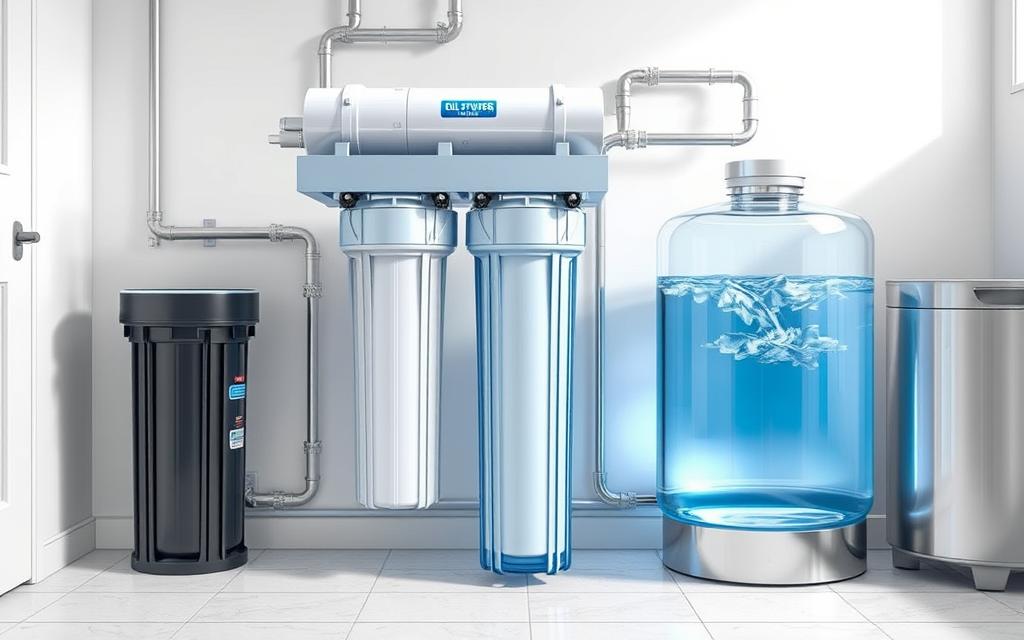 Best Whole House Reverse Osmosis Water Filter Guide
They also waste water. For every gallon of purified water, you might waste 2-4 gallons of reject water. That’s a lot of water down the drain.
Some newer models are more efficient, but it’s still a factor. You’ll need to decide if the trade-off is worth it for you.
Oh, and the tank. Most systems have a big storage tank that goes in your basement or garage. It’s not ugly, but it’s definitely there. It’s like a new roommate that doesn’t talk.
Do You Really Need This?
Honestly? Probably not. Most people are fine with a good under-sink RO or a countertop filter. Those are cheaper and easier to install.
But if you’re the type who notices the tiniest hint of chlorine in your water? If you hate buying bottled water and want the best possible shower? This is your endgame.
It’s the Rolex of water filters. You don’t need it. But once you have it, you’ll wonder how you lived without it.
Installation: Call a Professional, Unless…
Do not, I repeat, do not try to hack this together with YouTube tutorials. This isn’t changing a lightbulb. It involves your main water line, a drain connection, and tricky tubing.
One wrong move and you’ll flood your basement. And then you’ll really need purified water for your ruined carpet. Just hire a pro.
The good news? Once it’s installed, maintenance is easy. You just swap out a few pre-filters every six months or so. The main membrane can last 2-4 years.
Should You Buy One?
Ask yourself: Do you drink a ton of tap water? Do you hate buying jugs? Do you want your pots and pans to stop looking cloudy? If you answered yes to all three, start saving up.
If you just want better-tasting water for your morning coffee? Save your money. Get a $50 faucet filter. You’ll be fine.
But if you’re ready to commit to the purest water on the block? Go for it. Just know that you’re entering a world of zero-taste, zero-smell, zero-regret hydration.
Your future self—and your shiny, scale-free showerhead—will thank you. Cheers to that, my friend.
