What Type Of Water To Use In A Humidifier

Let’s be honest: you bought that humidifier because your nose felt like the Sahara Desert and your skin started auditioning for a raisin commercial. Now you’re staring at the...

Let’s be honest: you bought that humidifier because your nose felt like the Sahara Desert and your skin started auditioning for a raisin commercial. Now you’re staring at the manual, wondering if you need to drive to a sacred spring and collect holy water. Relax. The answer is simpler than you think, and it involves your kitchen tap, a little patience, and one very common mistake you’ll never make again.
The Great Tap Water Debate
You might think tap water is fine. I mean, you drink it, your dog slops it from the bowl, and it’s basically free. But here’s the kicker: tap water is full of minerals – calcium, magnesium, all that stuff that builds up like a tiny science experiment in your kettle and your lungs.
When those minerals get sprayed into the air, they settle on your furniture as a fine white dust. It’s literally the ghost of your water, haunting your nightstand. If you see that, your humidifier is basically becoming a mineral sprinkler.
Must Read
So, no, don’t use straight tap water unless you enjoy cleaning white gunk off your computer monitor. Your humidifier will cry. Then it will clog. Then it will stop working at 2 a.m. on a Tuesday. I’ve been there.
Distilled Water: The Fancy, Silent Hero
Distilled water is the pampered spa guest of the water world. It’s been boiled into steam, then turned back into liquid, leaving all the minerals behind like bad baggage. Using distilled water means zero white dust. Your humidifier will run like a dream for months without a squeak.
The only downside? It costs money. You can buy it at the grocery store in big jugs that make you look like you’re training for a hydration apocalypse. But honestly, for the peace of mind, it’s worth every penny. If you have a baby or a chronic cough, this is the only way to go.
I once used distilled water for three straight weeks and felt like a humidity god. No dust, no smell, just moist, happy air. Then I ran out and used tap water out of laziness. The next morning, my room looked like a flour mill had exploded. I learned my lesson.
Filtered Water: The Middle Ground That Sorta Works
If you have a Brita or a PUR filter, you might think, “Hey, close enough!” And you’re almost right. Filtered water is better than tap because it removes some minerals and chlorine. It’s the comfortable sweatpants of humidifier water.
But here’s the honesty check: a standard pitcher filter doesn’t remove all the minerals. You’ll still get a little dust, just less of it. It’s like ordering a salad with extra croutons – you think you’re being healthy, but you’re still defeating the purpose.
If you’re using a cool-mist humidifier and you clean it weekly, filtered water is perfectly fine. If you’re using a warm-mist or ultrasonic model, the mineral buildup will eventually make your unit sound like a dying coffee maker. Don’t say I didn’t warn you.
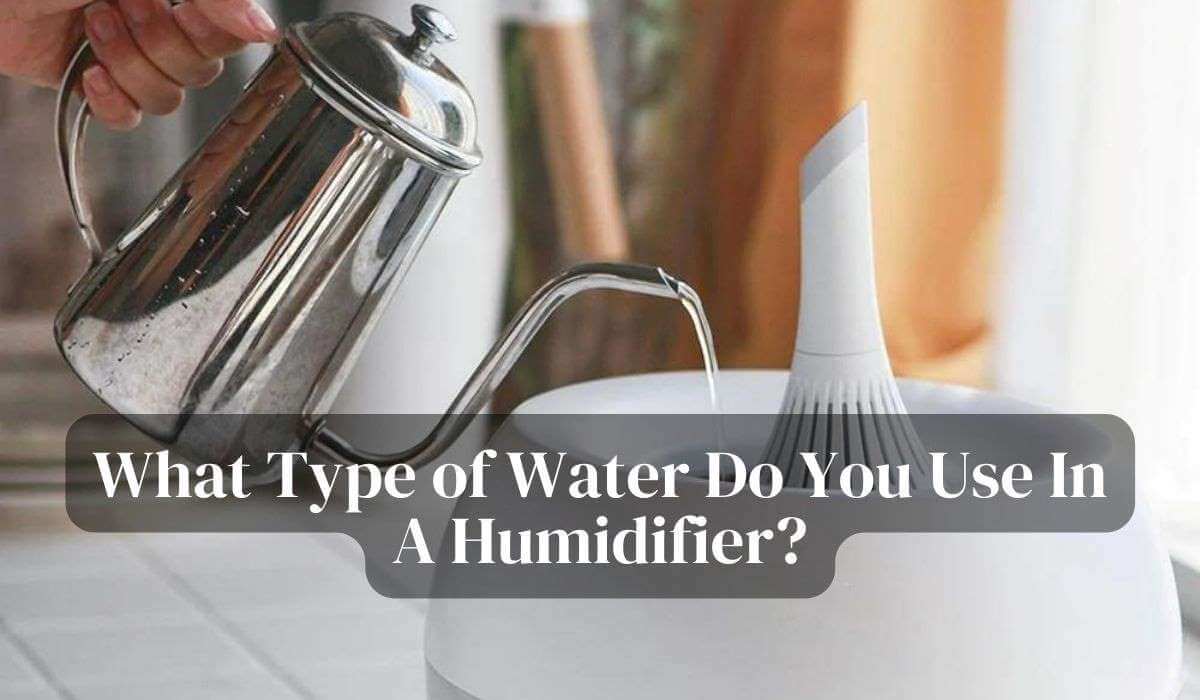 What Type Of Water Do You Use In A Humidifier?
What About Bottled Water? (Please Don’t)
Bottled spring water is literally the worst choice. Spring water is basically fancy tap water with extra minerals. It will leave a thick white film inside your humidifier faster than a teenager leaves dirty dishes in the sink. Plus, you’ll be paying $3 a bottle to create a science project.
Unless you have a death wish for your humidifier, skip the bottle. Save it for drinking or for pretending you’re on a hike.
The One Water You Should Never, Ever Use
Do not, under any circumstances, use essential oil-infused water, or water with additives like “humidifier tablets.” Those oils coat the inner mechanism like a greasy hug. Your warranty will vanish faster than a pizza at a party. Stick to pure water. Your humidifier is a machine, not a diffuser.
Also, never use hot tap water for filling. Hot tap water often contains more sediment from your pipes. You might as well be pouring in murky pond water. Just use cold, filtered or distilled.
The Real-Life Hack: Mix and Match
Here’s my secret: I keep a few gallons of distilled water on hand for my bedroom humidifier (the one I breathe with all night). For the living room unit that I only run during dry days, I use filtered water. It’s a compromise that keeps everyone happy, including my bank account.
If you’re really on a budget, you can also boil tap water and let it cool (that evaporates some minerals). But honestly, that’s a lot of work for something that wants to be lazy. I tried it once. I felt like a medieval alchemist with a kettle. Not worth it.
The Final, Moist Truth
Your humidifier doesn’t judge you. It just wants clear, low-mineral water. Give it distilled if you can, filtered if you’re sensible, and never tap if you value your sanity. The best water is the one that keeps your machine happy and your sinuses clear.
So go ahead, fill that tank. Breathe deeply. Smile knowing you’ve finally mastered a household chore that your parents probably argued about. And if you see a little white dust tomorrow? Don’t worry. We’ve all been there. Just grab a jug of distilled water and pretend you’re a hydration genius.
