Water Filtration Systems For Iron Removal

So, there I was, staring at a toilet bowl that looked like a crime scene. Not blood, but rust—a shocking, orange-brown stain that no amount of scrubbing could conquer. My whit...
So, there I was, staring at a toilet bowl that looked like a crime scene. Not blood, but rust—a shocking, orange-brown stain that no amount of scrubbing could conquer.
My white laundry had turned a sad, streaky beige, and my coffee tasted… metallic. That was my introduction to iron in well water. Not glamorous, but very real.
What’s Your Water Hiding?
If you’ve got orange stains on your sinks or that weird “rusty” smell when you shower, you’ve probably got iron. It’s super common, but it doesn’t have to ruin your plumbing—or your sanity.
The good news? There is a filtration system for every level of iron infestation. Let’s break it down before you spend a fortune on bleach.
The “Clear vs. Red” Iron Test
First, you need to know what kind of iron you’re dealing with. Ferrous iron is the sneaky one—it’s dissolved, crystal clear, and only turns rusty after it hits air (like in your toilet tank). Ferric iron is already oxidized—it looks like red flecks in your glass of water.
Most systems treat both, but some only work on one. Pro tip: fill a clear glass from the tap and let it sit for 24 hours. If it turns rusty, you’ve got ferrous iron. If it starts rusty, it’s ferric.
Must Read
The Big Three: Filters That Actually Work
1. The Boring Workhorse: Sediment Filters
These are your first line of defense—they catch the big, chunky rust bits. Think of them as a bouncer for your plumbing, stopping the “visibly rusty” particles.
They are cheap and easy to replace, but they do nothing for clear, dissolved iron. If you only have “red water”, a $30 sediment filter might be your miracle cure. If you have clear water? It won’t touch it.
2. The Real MVP: Ion Exchange (Water Softeners)
Here’s where it gets clever. A standard water softener can remove low levels of dissolved iron (up to 2 or 3 parts per million). It swaps iron ions for sodium ions—same magic it uses on calcium.
But caveat: if you have too much iron, the softener resin gets “poisoned”, and you’ll need a special cleaner. It’s a good band-aid, not a bulletproof solution.
3. The Overachiever: Oxidizing Filters (Greensand & Air Injection)
This is the heavy artillery. These systems force the dissolved iron to turn into a solid (rust) on purpose, then filter it out. Birm filters and greensand are the classics—they use a chemical reaction to oxidize the iron.
Modern systems use air injection—they suck in a bubble of air, oxidize the iron, then flush it away. They handle higher iron levels (5+ ppm) and don’t require messy salt or chemicals.
The “Iron Bacteria” Nightmare
Sometimes, your water smells like rotten eggs or has a weird slime. That’s not just iron—that’s iron bacteria. Little bugs that eat iron and leave behind a disgusting biofilm.
For these, a simple filter won’t cut it. You need a chemical feed pump (usually with chlorine) or a UV light. Yes, it’s a hassle. But it beats drinking swamp juice.
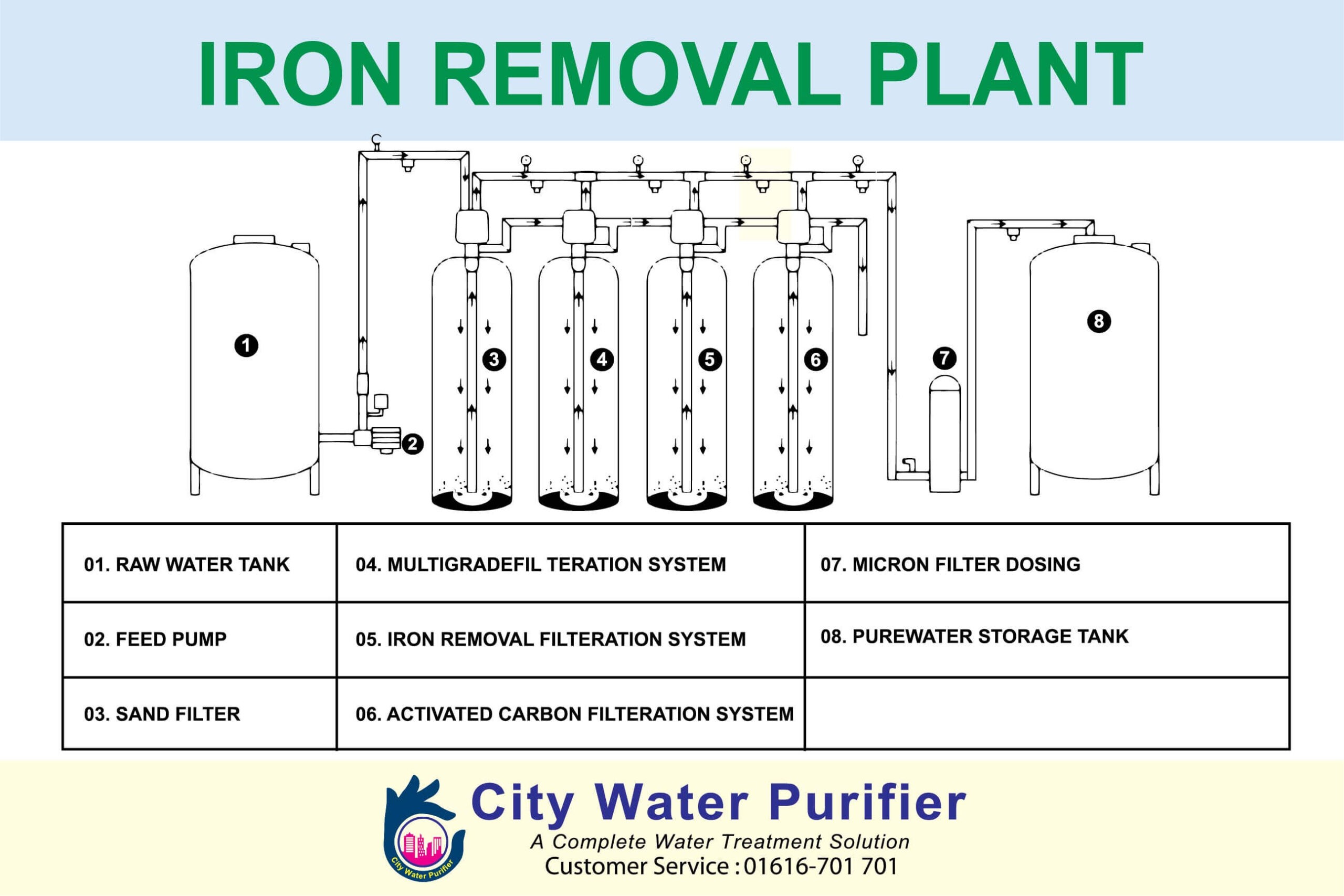
 Water Tank Filter System For Iron Removal at Raymond Mason blog
The Fool’s Gold: “Whole House” Pitchers
You’ll see ads for pitcher filters that claim to remove iron. They’re lying. Most carbon filters (Brita, etc.) do nothing for iron. They improve taste, sure, but they won’t stop your shower from turning orange.
Save your money. Iron removal requires a dedicated system, not a fancy jug in your fridge.
Size Matters: Do You Actually Need a Big System?
If you’re in a small apartment with low iron, a point-of-use filter (under the sink) may work. For a house? You need a whole house unit—one that treats water before it hits your pipes.
My advice: test your water first. Mail a sample to a lab (or buy a home test kit). Knowing your exact iron level (1 ppm vs 10 ppm) is the difference between a $300 fix and a $3,000 mistake.
The Bleak Truth: Cost and Maintenance
Here’s the irony—iron removal systems require work. Some need annual media replacement (costly). Others need salt bags lugged up from the basement every month.
Air injection systems are lower maintenance but have higher upfront costs. Softener-based systems are cheaper but use salt and resin cleaner. Pick your poison.
My Final (Slightly Annoyed) Advice
Don’t buy a system based on a sales pitch. I once met a guy who spent $4,000 on a “premium” iron filter… only to discover he had manganese instead. He needed a different media entirely.
Start with a test. Get a second opinion. And if you can, borrow a friend’s experience—ask your neighbor with the same well water what worked for them. It’s cheaper than therapy.
So, that orange toilet? It’s fixable. You just have to decide how much of your life you want to spend fighting it. Me? I went with the air injection system. My laundry is white again, my coffee tastes like coffee, and the only orange I see is in my morning juice. Worth every penny.
