Cost Of Installing Water Filtration System

So, you’re thinking about a water filtration system? Good for you! You’re one step away from ditching those plastic bottles and tasting crisp, clean, delicious water straight...
So, you’re thinking about a water filtration system? Good for you! You’re one step away from ditching those plastic bottles and tasting crisp, clean, delicious water straight from your tap. But then you see it: the price tag.
Let’s be real—the cost can feel like a splash of cold water in the face. But don’t worry, I’m here to break it down in a way that won’t make your eyes glaze over. Think of me as your water-sommelier-with-a-budget-friend.
The Big Question: What’s the Damage?
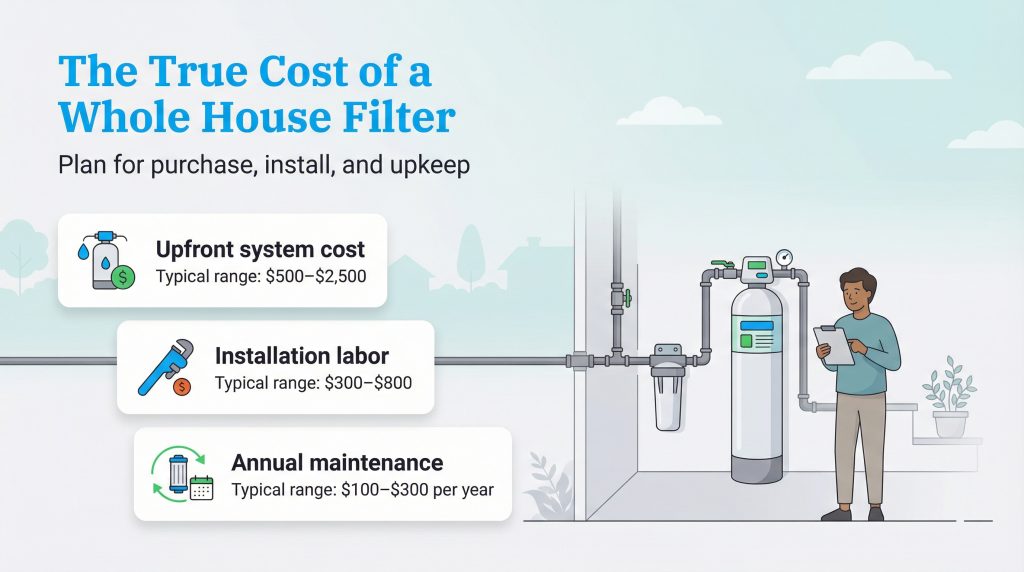
Honestly, the cost ranges from “affordable latte habit” to “maybe I should just buy a villa by a spring.” The average homeowner pays between $1,000 and $4,000 for a whole-house system, installed. That sounds scary, I know—until you realize that’s about the price of a used couch or one very fancy weekend away.
Must Read
But hey, you get clean water forever. Take that, fancy couch.
For a simple under-sink filter? You’re looking at $150 to $600 for the unit alone. Installation can add another $100 to $300, unless you’re handy with a wrench (and have zero fear of leaking).
What’s in the Price Tag, Anyway?
First up is the system itself. It’s the brains and the brawn. You’ve got activated carbon filters (budget-friendly), reverse osmosis (the fancy-pants option), and UV filters (for when you want to feel like a sci-fi hero drinking your water). Each type has a different price point, so pick your poison—er, purification style.
Then there’s installation labor. If you hire a pro (which I recommend unless you enjoy surprise indoor water features), expect to pay $150 to $500. That’s for cutting pipes, mounting things, and making sure you don’t flood your kitchen during the Super Bowl.
Don’t forget the ongoing costs. Filter replacements are like printer ink—small, but they add up. Figure $50 to $200 per year for most systems. But hey, that’s still way cheaper than bottled water, which costs about $1,200 a year if you’re a hydration fanatic.
Why You Should Pay for Clean Water (Besides Not Looking Like a Crazy Person with Bottles Everywhere)
Your tap water might already be safe, but it often tastes like a swimming pool or a rusty pipe. A filter fixes that. Plus, it reduces chlorine, lead, bacteria, and microplastics. You know, all the things that make you go, “Hmm, maybe I will just drink soda instead.”
Also, filtered water means better coffee. And better coffee means you’re a nicer person to your coworkers. It’s science.
And here’s the kicker: a whole-house system can increase your home’s value by 1-3%. So you’re not just spending money—you’re investing in a home that tastes better. Talk about a smart move.
The Hidden Costs (and How to Avoid ‘Em)
Listen, every rose has its thorn. Some systems need a permit or licensed plumber, which can add $50 to $200. Check your local codes before you start—no one wants a visit from the water police.
Also, maintenance. Some filters need annual checkups. If you skip them, your water will slowly turn back into “meh.” Set a calendar reminder and you’re golden. Or, you know, hire a teenager to do it for snacks.
 How Much Does a Whole House Water Filtration System Cost in Florida
One more sneaky cost: if you have a well, you might need a pre-filter for sediment. That’s another $100 to $300. But hey, well water has that “I live in the woods” charm, so it’s worth it.
Cheap vs. Fancy: A Speed Round
If you’re on a budget, a faucet-mounted filter costs about $30 to $60. It’s like training wheels for clean water. It works, but it’s slow and takes up space.
A countertop pitcher is even cheaper—$20 to $50. But you’ll be refilling it constantly. Great for a solo apartment, annoying for a family of five.
And the whole-house system? That’s the VIP. It filters water for every tap, shower, and toilet. Your skin gets softer, your pipes last longer, and you feel like royalty every time you wash your hands. Price? Around $1,500 to $3,500 installed. But for that, you’ll never have to say “Ew, what is that smell?” again.
The DIY Route: Save Money, Risk Your Floor
Installing it yourself can save you $100 to $400 in labor. But it’s like assembling IKEA furniture—except if you mess up, you get a wet basement instead of a crooked shelf. Be honest with your skills. If you’ve never touched a pipe, hire a pro. Your carpet will thank you.
But if you’re brave? You’ll need a drill, Teflon tape, pipe cutter, and patience. Watch a YouTube tutorial first. Actually, watch three. Then buy a fourth tutorial’s worth of confidence.
Real Numbers, Real Talk
Let’s do some quick math. A family of four spending $30 a month on bottled water is paying $360 a year. A reverse osmosis system installed for $1,200 pays for itself in about 3.3 years. After that? You’re drinking for free. Well, almost—filter replacements still cost a little. But your wallet does a happy dance.
And if you factor in health benefits (fewer plastic bottles, less chemical ingestion), you’re basically a superhero. Plus, you’ll never have to lug a 24-pack from the store again. Your back will high-five you.
The Uplifting Conclusion (I Promised)
So, here’s the bottom line: installing a water filtration system costs a bit upfront, but it’s like buying a ticket to the land of delicious, guilt-free hydration. Whether you go fancy or frugal, you’re making a choice that cares for your body, your home, and the planet.
And every time you take a sip, you’ll smile, knowing you’re saving money, and maybe—just maybe—feeling a little smug about that fancy pitcher on your counter. (I do. It’s okay. Own it.)
Go ahead, take the plunge. Your taste buds, your wallet, and your plumber’s vacation fund will all be grateful. Cheers to that perfect glass of water—cold, clean, and totally worth every penny!
