Why Is My Well Water Dirty All Of A Sudden

So, you walked over to the sink, filled your glass with a nice, cold drink of water—and instead of that crystal clear liquid you were expecting, you got something that looks l...

So, you walked over to the sink, filled your glass with a nice, cold drink of water—and instead of that crystal clear liquid you were expecting, you got something that looks like weak iced tea or, worse, mud from a puddle. Your first thought: "Did my plumbing just quit on me?" Nope. You’ve got a classic case of sudden dirty well water.
Don’t panic. And definitely don’t drink it. Let’s crack this case wide open.
Think of your well as a giant, underground straw. Most of the time, it sips clean, filtered water from deep aquifers. But every now and then, something kicks the straw. That’s when you get the brown stuff.
Must Read
Rain, Rain, Go Away
The most common culprit? Heavy rain. I’m talking about the kind of downpour that makes your neighbor’s lawn look like a lake. When the ground gets super saturated, surface water can seep down and wash dirt, silt, and clay right into your well.
It’s basically nature’s prank on your plumbing. That dirty water often looks rusty or milky, and it usually clears up on its own in a few days.
Pro tip: If it rains and your water gets dirty, check the cap on your wellhead. A cracked or loose cap is an open invitation for rainwater to party with your water supply.
Mystery of the Rusty Red
What if your water looks like it’s been dyed with rusty red or bright orange? That’s usually iron and manganese—two minerals that love to hang out in groundwater. Normally, they’re dissolved and invisible, but sudden changes in pressure or oxygen levels can make them "precipitate" (fancy word for "turn into sludge").
This often happens when your well pump kicks on aggressively, stirring up sediment that’s been sitting at the bottom like a lazy couch potato for years. It’s like shaking up a snow globe, except the snow is iron flakes.
If the red water comes with a metallic taste, you’re probably looking at a high iron content. A simple water test will confirm it.
That Smell Though
Now, what if your dirty water smells like rotten eggs? Oh, that’s a special one. That’s sulfur bacteria having a little party in your pipes. They don't hurt you, but they do make your water smell like a swamp and look like weak coffee.
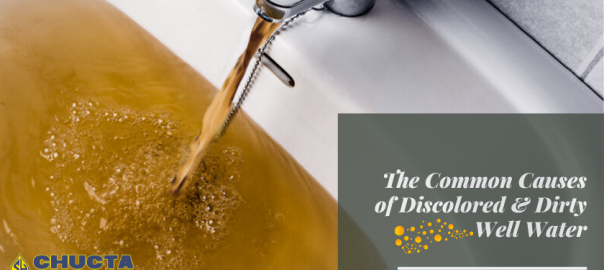 The Common Causes of Discolored & Dirty Well Water | Chucta
It’s usually a sign that your water heater has turned into a bacteria spa. The fix? Flush the water heater and maybe shock your well with chlorine.
Word of caution: Don’t panic-buy bleach and pour it down your well right now. You’ll mess up your entire system. Call a pro for this one.
Human Error (a.k.a. Oops)
Sometimes, the problem is you. And I mean that in the nicest way. Did you just have a new well pump installed? Did a neighbor dig a new foundation? Did your kids accidentally knock something into the well casing while playing “spy in the yard”?
Any construction or excavation nearby can shake up the ground and allow sediment to rush into your well. Even a landscaping project can do it. Sudden changes in the ground are like a drumroll for dirt.
So, maybe ask your neighbor if they’re building a secret bunker. You never know.
The Sneaky Leak
Here’s a fun one: your well is fine, but your pipe is not. A small crack in the pipe leading from the well to your house can suck in dirt, bugs, and all sorts of yuck. This is called a leaching point.
Your water might look clean for a few seconds, then turn brown as the dirt gets pulled in. It’s like a drinking straw with a hole in it—except the dirt is your new flavor.
 Why Would My Well Water Be Brown at Shannon Mcelroy blog
That kind of problem usually needs a professional to dig up and replace the pipe. But hey, at least you’ll have a good story for your next BBQ.
What Do You Do Now?
First, don’t drink it. Seriously. If you’re super thirsty, grab a bottle of store-bought water and give your well a moment to breathe.
Second, run your outdoor spigot for 10-20 minutes. That flushes out the sediment from the well itself. If the water clears up, you’re probably fine. If it stays dirty, you’ve got a deeper issue.
Third, get a water test. You can buy a basic kit at any hardware store for about $20. Test for bacteria, iron, and pH. It’s like a check-up for your well’s health.
If the test shows bacteria or you’re still scratching your head, call a well driller or water treatment pro. They have fancy gadgets and know exactly what to do.
The Uplifting Ending
Look, having dirty well water suddenly pop up is annoying, but it’s almost always fixable. It’s not a sign that your well is dying or that you’re doomed to drink brown water forever. It’s just a little hiccup—a funny reminder that you’re living with a direct connection to the earth’s inner mud bath.
Once you fix the problem, you’ll appreciate every clear, refreshing sip that much more. And honestly? You’ll have the best “remember when our water looked like tea” story at family dinners for years.
So take a deep breath, grab a glass of store-bought water until this blows over, and know that your well is just being dramatic. It’ll be back to its clear, clean self before you know it. Cheers to you, your well, and the wonderful, muddy, surprising world of groundwater. You’ve got this!
