Hardness Of Drinking Water Standard In Ppm

Okay, let’s talk about water. Specifically, the hardness of your drinking water. You know, that weird film on your coffee mug or the way your soap refuses to lather. It’s not...

Okay, let’s talk about water. Specifically, the hardness of your drinking water. You know, that weird film on your coffee mug or the way your soap refuses to lather.
It’s not a crisis. It’s just calcium and magnesium hanging out in your pipes. But how hard is too hard? That’s where the whole “standard in ppm” thing comes in.
And let’s be real—ppm sounds like a secret government code. It stands for “parts per million.” Basically, it’s counting how many mineral particles are in a million drops of water.
Must Read
Think of it like a mineral party. A little is fine. A lot? Your water is practically wearing a tuxedo and breaking the dance floor.
So, what’s the official “hard” number?
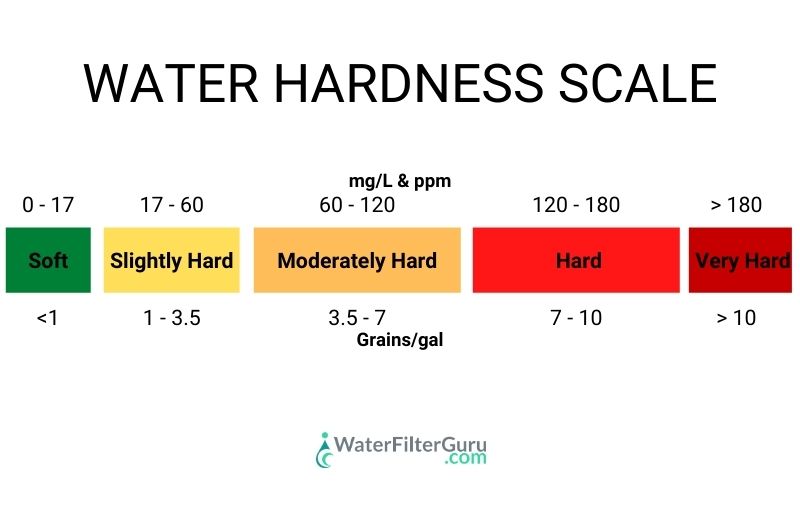
The U.S. Geological Survey (yes, they have a whole department for this) has a scale. It’s surprisingly simple, like a movie rating system for your faucet.
0 to 60 ppm is considered soft. This is basically premium, luxury water. Your soap will love you forever.
61 to 120 ppm is moderately hard. This is your standard, middle-of-the-road water. It’s the Honda Civic of H₂O.
121 to 180 ppm is hard. You’ll notice it. Your showerhead might start crying white flakes.
Over 180 ppm is very hard. We’re talking water that could double as a light mineral supplement. Your kettle is basically a rock farm.
But wait—is hard water dangerous?
Here’s the kicker: no. It’s not a health hazard. You can chug 300 ppm water all day long and your bones might even thank you.
The problem is purely annoying. Hard water wrecks your appliances, leaves spots on your glasses, and makes your hair feel like straw.
It’s like having a friend who is perfectly nice but leaves crumbs everywhere. Not dangerous. Just a little frustrating.
Who sets these numbers anyway?
The EPA doesn’t actually have a binding limit for water hardness. Shocking, right? They regulate lead, arsenic, and scary stuff.
Hardness is just a “secondary” standard. That’s government-speak for “we recommend it, but we won’t send in the SWAT team.”
 How to Reset Ninja Coffee Bar Clean Light
So your water could be 500 ppm and still technically legal. Your dishwasher might file a complaint, but the law doesn’t care.
How do you know your ppm without a lab coat?
You can buy a cheap test strip online. Or you can look for the signs: soap scum, hard-to-rinse dishes, and that annoying white crust on your faucet.
If you live in the American Southwest or the Midwest, you’re probably in the “hard” club. Congrats? Your water has character.
If you’re in the Pacific Northwest or New England, you’re drinking basically soft rain. You are the water elite.
So, what do you do about it?
You have options. A water softener is the nuclear option—it swaps calcium for sodium. Suddenly your water feels like a cloud.
Or you can just embrace the hardness. Buy a descaler for your coffee maker. Use more soap. Call it “rustic water.”
But honestly? Unless your ppm is over 300, you’re probably fine. It’s not like your water is going to walk up to you and punch you in the face.
It’s just a little crunchy. And honestly, a little crunch never hurt anybody. Except your espresso machine.
The final verdict?
The ideal ppm for most people is between 30 and 60. That’s the sweet spot. But life is messy, and so is your tap water.
Don’t obsess over the number. If your water tastes fine and doesn’t leave your skin feeling like sandpaper, you’re winning.
And if you are obsessing? Buy a test kit. Spend $10. Then you can officially say, “My water is 200 ppm, and I am dealing with it.”
Now go drink a glass of water. Hard, soft, or somewhere in between—you’ll survive. Just don’t forget to clean your kettle.
