Reverse Osmosis Membrane Pore Size Microns

So, you’re here to talk about reverse osmosis membrane pore size. Specifically, the microns part. You know, the teeny-tiny measurements that sound like they belong in a sci-fi...
So, you’re here to talk about reverse osmosis membrane pore size. Specifically, the microns part. You know, the teeny-tiny measurements that sound like they belong in a sci-fi movie. I love this stuff, but let’s be real—it can feel like trying to measure a grain of sand with a ruler you don’t own.
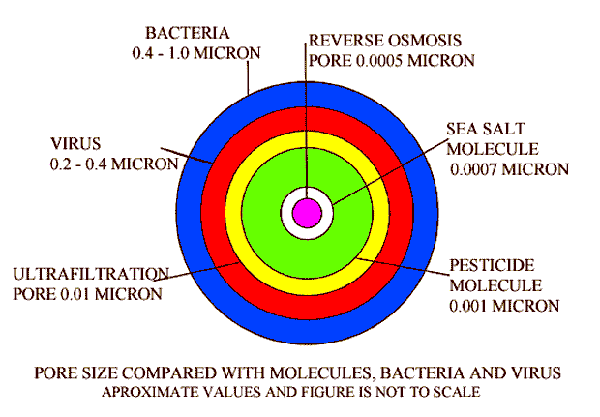
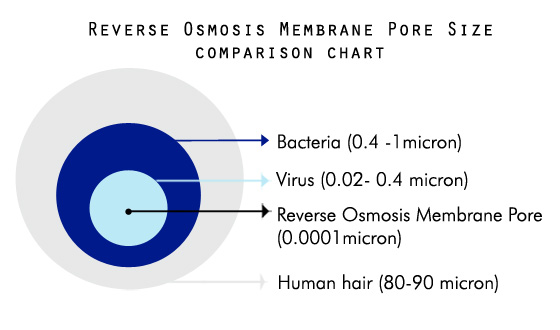
First things first: reverse osmosis isn’t just fancy plumbing. It’s a water bully. It pushes water through a membrane so tight that almost nothing else gets through. The pore size? We’re talking about 0.0001 microns. Yes, that’s a decimal followed by three zeros. It’s smaller than a virus. It’s smaller than most bacteria. It’s basically the size of a water molecule’s ego.
Why does that matter? Because your tap water isn’t just H2O. It’s a soup of minerals, pesticides, and—let’s be honest—a little bit of what the guy upstream flushed. RO membranes catch all that nonsense like a bouncer at a club. “Sorry, lead. You’re not on the guest list.”
Must Read
Let’s Talk Scale (Because It’s Wild)
Picture a human hair. It’s about 70 microns thick. Now, divide that by 700,000. That’s your RO membrane pore. It’s so small that water molecules have to line up single-file to get through. I’m not exaggerating—I promise. Hydrogen and oxygen atoms hold hands and whisper, “Okay, your turn.”
Compare that to a microfiltration membrane, which is around 0.1 to 10 microns. That catches sand and silt. It’s like a window screen for water. Reverse osmosis is a different beast. It catches dissolved salts, heavy metals, and even that weird taste from chlorine. It’s the bouncer with the muscle memory of a dozen chemistry degrees.
Here’s the funny part: pore size isn’t everything. RO works partly by size exclusion (physical blocking) and partly by diffusion (the bad stuff gets repelled by the membrane’s charge). So even if a molecule is smaller than that 0.0001 micron gap, it might still get kicked out. Science is basically magic with a budget.
What Gets Through? (Spoiler: Almost Nothing)
Water. That’s the main thing. Pure, delicious H2O. Some dissolved gases—like oxygen and carbon dioxide—sneak through because they’re tiny and moody. That’s why RO water can taste a little flat at first. It’s not the membrane’s fault; it’s the gas playing hide-and-seek.
But things like sodium, fluoride, and arsenic? Blocked. Stopped. Rejected. The membrane doesn’t care if you want those minerals for your teeth. It’s just doing its job. You can always add minerals back in if you miss them. Or, you know, eat a salad. Your call.
Love that your water has no lead? Thank the 0.0001 micron pores. Hate that your water is basically distilled and tastes like nothing? Blame the same pores. It’s a trade-off, like having a super-clean house but missing the dust-bunny art exhibits.
 Teknologi Reverse Osmosis ~ PT DELTA PURO INDONESIA
Why “Microns” Might Be a Marketing Trick
Here’s where I get a little spicy. Some companies throw around “0.0001 micron” like it’s the only stat. But RO membranes aren’t perfect sieves. They have defects. They degrade over time. Also, pore size is an average. A few bigger pores might let a bit of salt through. That’s why we measure rejection rates (like 99% salt rejection) instead of just microns.
So when you see an ad screaming “0.0001 micron! Buy now!”, take a breath. It’s true, but it’s not the whole story. Like saying a Ferrari can go 200 mph—impressive, but you still need to change the oil. The membrane needs pressure, flow, and regular maintenance to keep those ultra-pores working.
You want to know the real secret? RO membranes are delicate divas. They hate chlorine. They hate hard water. They hate being dried out. Treat them right, and they’ll filter like a champ for 2 to 3 years. Neglect them, and those 0.0001 micron pores might as well be open doors.
Let’s Bring This Home (to Your Kitchen)
If you’re shopping for an RO system, don’t get obsessed with the micron number. It’s always going to be around 0.0001. That’s the industry standard. Focus on the membrane material (thin-film composite is king), the flow rate (how fast you get that glorious water), and whether it comes with a remineralization filter if you hate the flat taste.
And please, ignore the hype about “pore size down to 0.00001 microns.” That’s nonsense. Physics doesn’t allow water to flow through something that small without breaking a sweat. It’s like promising a straw can suck a bowling ball. Don’t fall for it.
So, next time you drink RO water, give a little nod to that 0.0001 micron membrane. It’s working harder than your Wi-Fi router, and it doesn’t even complain. Except, you know, when it clogs. Then it whines. But we forgive it. Just like we forgive ourselves for Googling “micron” three times and still forgetting.
Now go hydrate. And remember: your tap water has better security than most bank vaults. Enjoy the peace of mind—and the lack of weird aftertaste.
