Distilled Water Deionized Water Difference

Let’s be real: most of us don’t spend our weekends pondering the molecular structure of the water we drink. But then you fill your iron with tap water, and it starts sputterin...
Let’s be real: most of us don’t spend our weekends pondering the molecular structure of the water we drink. But then you fill your iron with tap water, and it starts sputtering like a grumpy old man, leaving white crust all over your favorite shirt. Suddenly, you’re in the aisle at the store, staring at two bottles labeled “Distilled” and “Deionized,” feeling like you’ve stumbled into a secret club you never asked to join.
It’s a classic water war, but not the kind where you argue about sparkling vs. still. This is about the real nerdy stuff: purity and chemistry. And I promise, it’s way less boring than it sounds, and a lot more relatable when you connect it to your coffee maker and your car’s battery.
The Tale of Two Waters: Distilled is the Quiet Kettle
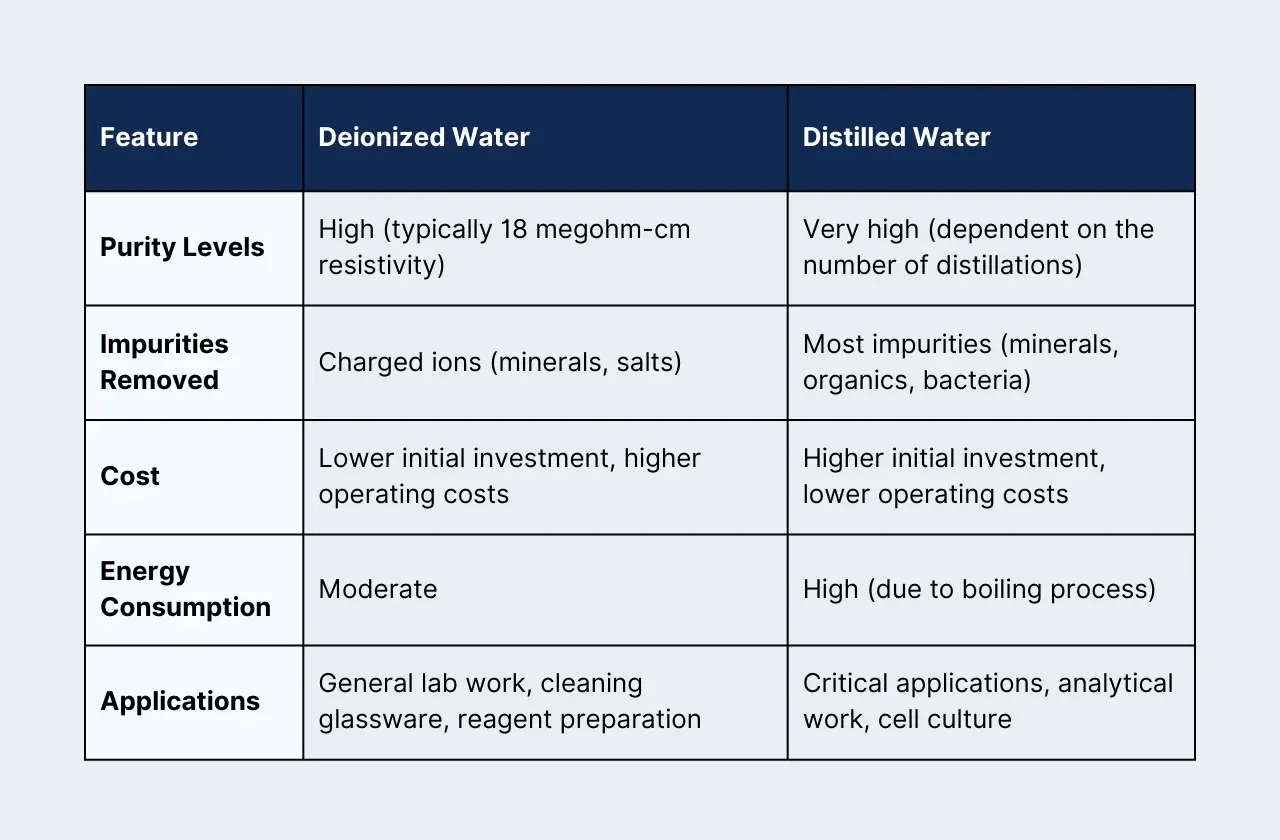
Imagine distilled water as that friend who hates parties. You know the one: they boil everything down, let the steam rise, and refuse to take any impurities with them. That’s exactly what distillation does: they boil the water, catch the steam, and re-condense it.
Must Read
Think of it like making a really, really good chicken broth, but instead of keeping the flavor, you’re throwing all the flavor away. All the minerals, the salts, the weird stuff your tap water picked up on its journey—gone. You’re left with the purest, most boring water possible.
It’s so pure that if you drink it, some people say it tastes “flat” or “dead.” Honestly? It’s the water that broke up with flavor entirely. It’s the water equivalent of a plain rice cake. Not bad, just… aggressively neutral.
Deionized Water: The Aggressive Magnet
Now, deionized water is a whole different beast. It’s not a quiet kettle; it’s a bouncer at a super-exclusive club. It uses special resins that act like magnets for charged particles (the “ions” in the name).
It grabs all the positively charged minerals (like the calcium in hard water) and the negatively charged ones (like chlorides) and literally pulls them out. It doesn’t boil anything—it just snatches the bad guys right out of the water stream.
This makes it incredibly “thirsty.” Deionized water will try to dissolve you if you give it a chance. It’s like that overly energetic person at the gym who wants to absorb everyone’s energy. It will pull minerals right out of metal pipes, which is why you don’t drink it straight for a long time.
How This Hits Home: Your Kettle, Your Car, Your Hair
The real “aha” moment comes when you apply this to your everyday life. Start with your kitchen kettle. If you have hard tap water, that white crust is calcium carbonate. Distilled water won’t create that crust because it has no minerals. It’s the lazy water that leaves no trace.
But deionized water? It’s too effective. If you put it in a metal, it might start stealing bits of the metal to satisfy its ionic hunger. That’s why you usually use distilled in your steam iron—it’s safe, predictable, and just leaves clean steam.
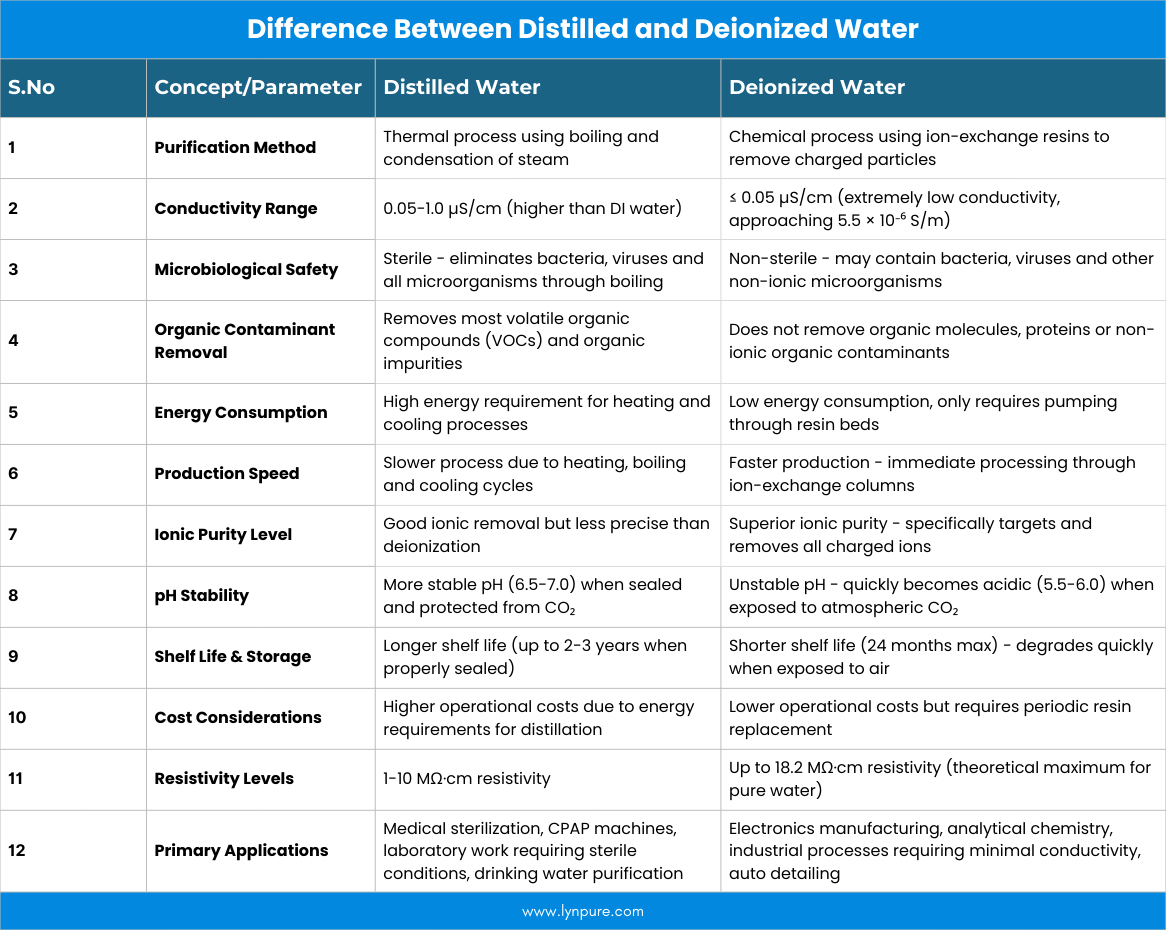 Distilled Water vs Deionized Water | Key Differences
Ever had that high-end coffee shop where the espresso tastes amazing? Chances are they use a specific blend of filtered or deionized water. The water needs to be pure enough not to mess with the coffee’s flavor, but not so pure that it tastes empty. It’s a Goldilocks situation—just right.
Why Your Car Battery and Fish Tank Care Deeply
Here’s the part that made me nod like a bobblehead: car batteries. Your battery is a little chemical factory. Tap water has minerals that can short-circuit it. Distilled water is safe because it’s just H2O. Deionized water is also safe, but it’s like rocket fuel for labs—overkill for your sedan.
And fish tanks? Oh boy. If you have a sensitive fish (like a discus or a shrimp), you want water that is consistent. Deionized water lets you rebuild the water chemistry from scratch, adding back exactly what you need. Distilled works too, but it’s less flexible.
This is where the funny thing happens: water that’s too pure can actually kill a fish if you don’t re-mineralize it. Same for humans, if you drank only deionized water for months, you’d start leeching minerals from your own cells. Your body is basically a big bag of salt water, and pure water is your enemy.
The Simple Decision: How to Choose
For your daily coffee, your iron, or your humidifier? Distilled. It’s cheap, easy, and safe. It’s the water equivalent of a rental car.
For your laboratory, your contact lens cleaning, or your aquarium where you want to be a mad scientist? Deionized. It’s the water equivalent of a race car—powerful, but requires careful handling.
And honestly? Most of the time, you can just use filtered tap water and call it a day. Your iron might get a tiny bit of scale, but your sense of humor will thank you for not overthinking it. Water is water, until it starts stealing your minerals. Then it’s a whole different story.
