How Long For A Water Softener To Regenerate

So, you just installed a water softener, or maybe you’ve had one for a while. You hear that sudden whoosh and a low hum in the middle of the night. What’s the deal? Why is it...

So, you just installed a water softener, or maybe you’ve had one for a while. You hear that sudden whoosh and a low hum in the middle of the night. What’s the deal? Why is it taking so long?
What Even Is Regeneration? (And Why Should You Care?)
Think of your water softener like a tiny, magical car wash for your home’s water. It uses special resin beads to trap all the hard minerals—calcium and magnesium—that make your dishes spotty and your hair feel like straw.
But those beads can only hold so much. Once they’re full of gunk, they need a deep clean to get back to work. That deep clean is called regeneration, and it’s basically a reboot for your softener.
Must Read
It’s not a quick glass of water; it’s more like taking a long, luxurious spa bath for the machine. And the time it takes is surprisingly cool once you understand it.
So, How Long Are We Talking?
For most modern water softeners, regeneration takes between 60 and 90 minutes. That’s about the length of a movie, minus the popcorn. Some faster models can zip through in 45 minutes, while older or larger units might take up to two hours.
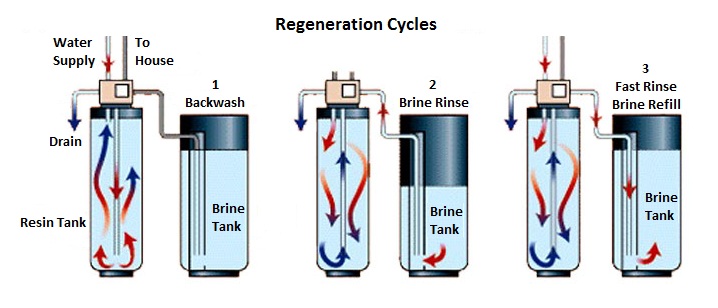
Why the variation? It’s not because your machine is lazy. It’s because regeneration isn’t just one step—it’s a whole dance routine. And the dance has four key moves: backwash, brine draw, brine rinse, and final rinse.
If you’ve ever wondered why it runs at 2 AM, it’s so you don’t notice. Like a secret ninja, it waits until everyone is asleep to do its job.
Move 1: The Backwash (15–20 Minutes)
First, the softener flips the switch and sends water backwards through the tank. This fluffs up the resin beads and kicks loose any dirt or rust that’s built up. It’s like shaking out a dusty rug before you wash it.
Rhetorical question: Who knew scrubbing water could be so dramatic?
Move 2: The Brine Draw (30–50 Minutes)
This is the star of the show. Your softener pulls salty water from a separate brine tank through the resin. The salt ions kick the hard minerals off the beads, like a bouncer kicking out rowdy guests at a club. This takes the longest because the salt needs time to really scrub every bead.
Imagine trying to clean every single marble in a jar—yeah, that’s a slow job.
Move 3: The Brine Rinse (10–15 Minutes)
After the big clean, you don’t want salty water sitting around. The softener flushes out the leftover brine and the released minerals down the drain. It’s a quick rinse, like swishing water in your mouth after brushing your teeth.
Move 4: The Final Rinse and Refill (10–15 Minutes)
Last step: the softener gives the resin a fresh mic drop of clean water. It also refills the brine tank with new salt, prepping for the next cycle. Done. The machine goes quiet until it’s time to regenerate again.
 How Long Does it Take for a Morton Water Softener to Recharge? (Brief
So, total time? Usually one to two hours. But here’s the cool part: you don’t have to wait around.
Why This Timing Is Actually Genius
Most softeners regenerate based on water usage, not on a fixed clock. Some smart models even learn your habits and schedule the process for when you’re least likely to use water. That means you rarely run out of soft water during your morning shower.
If you do use water during regeneration, the bypass valve kicks in, giving you hard water temporarily. Not a disaster, just a gentle reminder that your softener is busy being a hero.
Ever tried to vacuum while someone’s showering? Same principle—you just wait a bit.
What Can Change the Time?
Size matters here. A twin-tank system can regenerate in 30 minutes because one tank works while the other cleans. But for single-tank units, bigger capacity means longer cycles—up to two hours for a 64,000-grain model.
Water pressure and temperature also play roles. Higher pressure speeds things up; cold water slows them down. Think of it like pouring honey vs. water—temperature is a big deal.
Rhetorical question: Why is everything in life always faster when you’re in a hurry?
The Chill Takeaway
So, next time you hear that softener humming at 3 AM, don’t stress. Give it an hour to work its magic. It’s not broken; it’s just regenerating—a slow, steady process that keeps your water silky and your appliances happy.
And honestly, isn’t it nice to know that while you sleep, invisible beads are getting scrubbed by salt, so your morning coffee tastes perfect? That’s pretty cool if you ask me.
Now go enjoy a spot-free shower. You’ve earned it.
