Water Conditioner For Tankless Water Heater

Okay, let's talk about your tankless water heater. It’s that sleek, wall-hung miracle that gives you endless hot showers. But guess what? It has a secret enemy: hard water. Th...
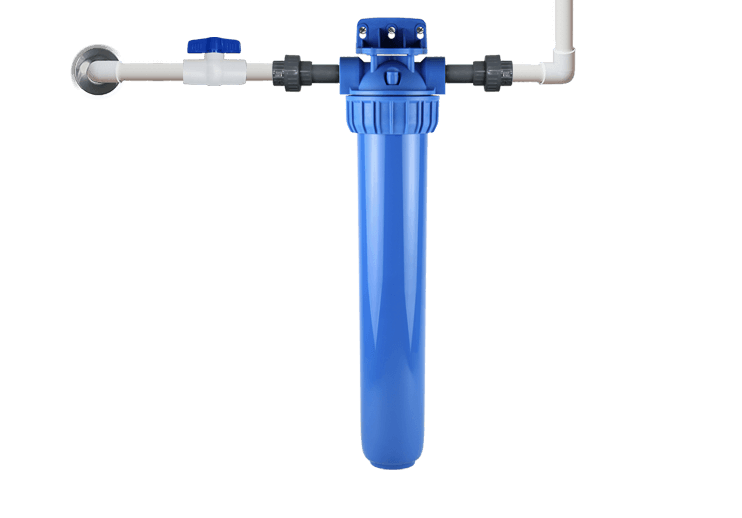
Okay, let's talk about your tankless water heater. It’s that sleek, wall-hung miracle that gives you endless hot showers. But guess what? It has a secret enemy: hard water. That’s right, the very water that’s supposed to be refreshing can slowly murder your expensive appliance.
You might think a water conditioner is just a fancy filter. Nope. Think of it as a bodyguard for your tankless heater. It stops scale—that nasty white limestone crust—from building up inside. Without it, your heater works harder, uses more gas, and eventually cries uncle.
The Drama of Limescale
Picture this: your tankless heater has a tiny heat exchanger. It’s like the engine of a race car. Now, imagine pouring cement through that engine. That’s what limescale does.
Must Read
Scale is a terrible conductor of heat. So your heater has to burn more energy to warm your water. Your utility bill goes up, and your shower just gets warmer… slower. It’s a slow, sad, expensive decline.
Here’s a quirky fact: pure water never conducts electricity. But the minerals in hard water? They turn your heater into a tiny battery. That mineral gunk can actually cause electrolysis, eating away at metal parts. Evil, right?
Enter the Water Conditioner
A water conditioner isn’t a water softener. Big difference. A softener yanks out minerals with salt. A conditioner uses magnets, electric fields, or catalytic media to change how the minerals behave. It’s like convincing bullies to become nice.
Instead of forming rock-hard scale, the conditioned minerals turn into a fine, non-sticky dust. It floats right through your heater and out your faucet. Your tankless heater never even knows the hard stuff was there. Sneaky and brilliant.
Some conditioners use a trick called Template-Assisted Crystallization (TAC). Don’t let the big name scare you. It just creates tiny, harmless crystals that can’t stick to anything. Your water gets treated, but you don’t drink salt. Win-win.
Why Your Tankless Heater Will Thank You
Imagine never having to descale your heater again. That’s a huge, messy job where you pump vinegar through the system. A conditioner makes that chore almost vanish. Your heater stays clean like a whistle.
Also, take a look at your heater’s warranty. Many manufacturers void the warranty if you don’t have a water treatment device. So a conditioner isn’t just nice—it’s a legal loophole for your wallet. Spend a little now, save a lot later.
Fun fact: tankless heaters are more efficient than traditional tanks by about 30%. But with scale, that efficiency drops by 50% or more. A conditioner keeps your heater operating at peak performance for years. It’s like giving your car premium gas every day.
The “No Electricity” Magic
Here’s my favorite weird part: some conditioners need zero power. That’s right—no batteries, no plug. They use a strong neodymium magnet or a vortex chamber to do the job. Pure physics sorcery.
No electricity means no running costs. It also means it can’t break. These things are basically indestructible rocks in a tube. You install it once, and it chugs along for a decade. Set it and forget it.
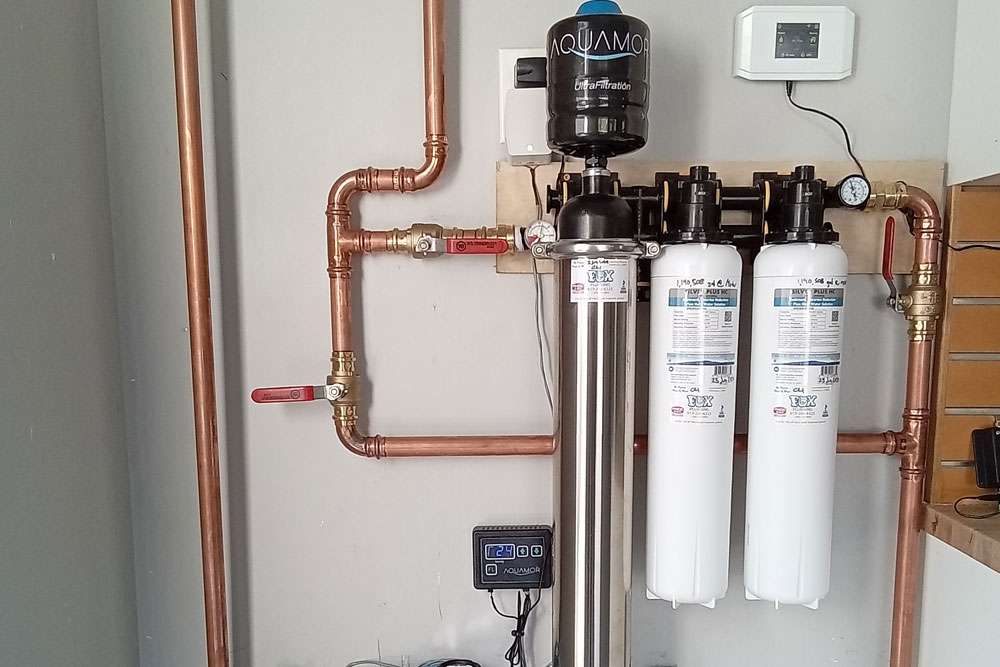 7 Best Tankless Water Heaters For Large Homes In 2025 - Western Rooter
And because it’s non-electric, it doesn’t care if you have a power outage. Your water is conditioned during storms, blackouts, or zombie apocalypses. That’s reliability with a capital R.
But Does It Make Your Water Taste Weird?
Great question. No. A conditioner doesn’t change the mineral content—just the shape. You still get the same mineral taste (if any). Your coffee won’t taste like a chemistry experiment.
In fact, many people say conditioned water feels “slipperier” on the skin. That’s because the minerals can’t bond to your soap or shampoo. You use less soap, and your hair feels softer. It’s basically a spa trick.
One odd side effect: you might notice fewer spots on your glasses. Conditioned water leaves less residue. Your glassware will look like it came from a fancy hotel. Who knew a heater accessory could make you look fancy?
The Real-World Test
I once watched a plumber compare two tankless heaters. One was six months old with no conditioner. The other was three years old with a conditioner. The first one was choked with white scale. The second looked brand new. It was like comparing a dirty sock to a silk scarf.
Another fun bit: the conditioned version had a higher flow rate. Because nothings blocking the pipes, water moves faster. Your shower pressure actually improves. That’s a bonus you can feel immediately.
And here’s the kicker: tankless heaters are designed to handle incoming water temperature. But scale acts like a blanket. So the heater overheats to compensate. A conditioner prevents that, extending the heater’s lifespan by years. Over a decade, that’s hundreds of dollars saved.
Is It Worth the Hype?
Honestly? Yes, absolutely. If you have hard water (and 85% of American homes do), a conditioner is like renter’s insurance for your heater. It’s cheap, simple, and it works.
The catch? Not all conditioners are created equal. Get one that matches your water flow rate. Too small, and it does nothing. Too big, and it’s overkill. Read reviews, or ask a plumber who isn’t trying to sell you a softener.
One last quirky fact: some conditioners are rated for “whole house use.” They can protect your coffee maker, ice maker, and washing machine too. So you’re not just saving your heater—you’re saving all your thirsty appliances. A tiny device with a big, heroic job.
Now go check your water hardness. Your tankless heater is waiting for its bodyguard. You’ve got this.
