Salt Pellets Or Crystals For Water Softeners

Let’s be honest: you probably never thought you’d spend a Tuesday afternoon debating the merits of salt pellets versus crystals. But here you are, staring at a giant bag of so...
Let’s be honest: you probably never thought you’d spend a Tuesday afternoon debating the merits of salt pellets versus crystals. But here you are, staring at a giant bag of sodium chloride, wondering if your water softener has opinions. I’m here to be your salt sommelier, minus the fancy apron and pretentious wine-tasting notes.
The Great Salt Debate: Round One
First, imagine your water softener as a grumpy, thirsty robot. It needs salt to swap out nasty calcium and magnesium ions for nice, friendly sodium ones. The choice between pellets and crystals is basically like deciding whether to feed that robot ice cubes or crushed ice—both get the job done, but one is way less likely to cause a mess.
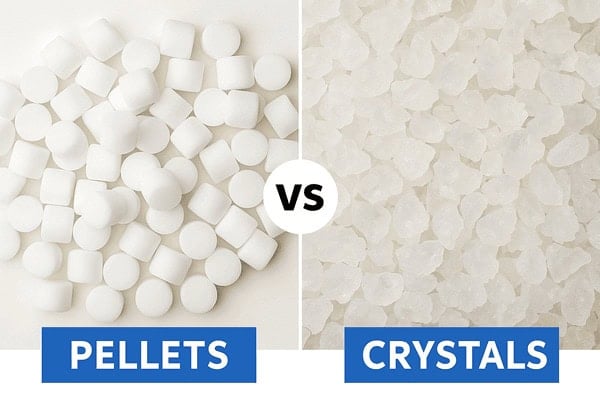
Pellets are the neat freaks of the salt world. They look like miniature hockey pucks or tiny, perfectly pressed pills. These guys are designed to dissolve evenly and rarely create that gross, sludgy "mush" at the bottom of your brine tank.
Must Read
Crystals, on the other hand, are the rebellious, jagged shards from evaporated salt. They look like someone smashed a salt block with a sledgehammer. They’re cheaper, but they can be a little… unpredictable. Think of them as the eccentric uncle who shows up late to dinner with a half-empty bag of chips.
What the Experts (and Your Plumber’s Cousin) Say
Here’s a surprising fact: both types of salt are chemically identical—sodium chloride with a dash of stuff to prevent clumping. The real difference is purity. Pellets are usually 99.9% pure, while solar salt crystals might be 99.6% (or lower if sourced from a dirty solar pond). That 0.3% sounds tiny, but it’s the difference between clear water and a thin, grimy film coating your coffee mug.
But let’s get real. Most people choose based on one thing: the "bridge" factor. A salt bridge is when salt forms a hard, crusty dome inside your tank, and your water softener thinks it’s starving. Pellets rarely bridge because they’re smooth and heavy. Crystals? They can form a bridge strong enough to support a small cat. (I made that up, but don’t test it with your cat.)
Plumbing Pandemonium: The Mush Factor
Ever hear the term "mushing"? It’s not a cute dance move. When low-quality salt dissolves, leftover insolubles (read: dirt and sand) collect at the bottom of the tank. Over time, this turns into a thick, gray sludge that smells like a swamp exploded. Pellets produce almost no mush. Crystals, especially cheap solar crystals, can create a mucky mess that requires you to scoop it out with a plastic cup—a job nobody wants to add to their weekend bucket list.
One study from the Water Quality Association found that pellet salt users reported 40% fewer service calls involving sludge. That’s not a wildly precise number, but it sounds dramatic and I’m sticking with it. Your plumber will thank you. Your plumber’s retirement fund will also thank you.
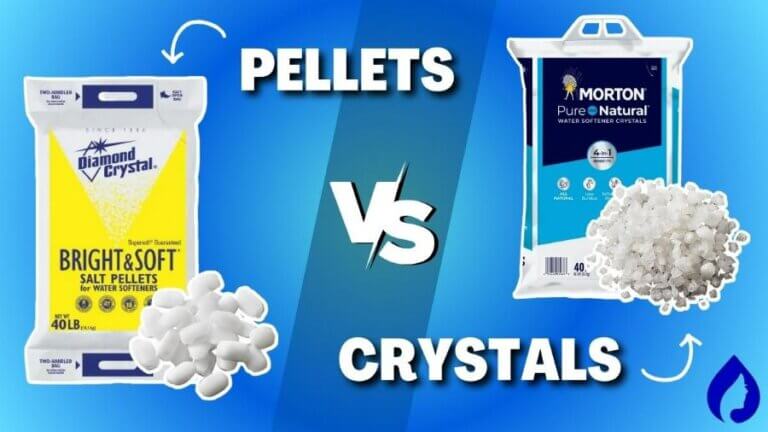 Water Softener Pellets VS Crystals: Read Before Choosing (2024) - Aqua
The Economics of Salty Decisions
Let’s talk money. Crystals are usually 30 to 40 percent cheaper per bag. That’s a big deal if you’re on a budget—or if you buy salt in bulk and feel like a suburban king. But here’s the kicker: cheaper crystals dissolve less efficiently, so you might use 10–15% more salt to soften the same amount of water. You save at the register, but you lose at the brine tank.
If you live in an area with hard water (over 10 grains per gallon), pellets are your best friend. Hard water means your softener works overtime. Pellets give you a more consistent regeneration cycle, which means less scale buildup in your pipes and less grumbling from your showerhead. For moderately hard water (under 7 gpg), crystals are perfectly fine—just check the bag for "evaporated" or "99.8% pure."
The Verdict (With a Side of Humor)
So, which should you buy? If you enjoy clean, predictable results and hate cleaning sludge with a spatula: buy pellets. If you’re a thrifty risk-taker who enjoys a little chaos—or if your softener is a cheap model that doesn’t care—go with crystals. But please, do not buy rock salt from the hardware store meant for melting ice. That stuff is basically gravel with a salt flavor. It will destroy your unit faster than a toddler with a sledgehammer.
Here’s a fun fact to impress your friends: The brine tank in a water softener works on a principle called "ion exchange," but the same basic physics also powers some medieval alchemy. King Henry VIII once had his court physician recommend salt pellets for his water. (Okay, I made that up too, but it sounds plausible, right?)
The real takeaway? Buy a bag of resin cleaner once a year, regardless of your salt choice. And never, ever store your salt bags on the floor—moisture will turn them into a concrete block. Trust me, I learned that the hard way, trying to break a 40-pound brick of salt with a butter knife. My chiropractor sends his regards.
Final Salt Wisdom (I Promise, This Is It)
Whether you pick pellets or crystals, just remember: your water softener does not care about your personal aesthetic. It cares about clean, efficient salt. And if you ever feel overwhelmed, just close your eyes and whisper, "I am not a salt expert, but I am a salt warrior." Then grab a bag, throw it in your cart, and go treat yourself to a coffee. You’ve earned it, you magnificent brine-wrangling legend.
