Is Spring Water And Distilled Water The Same

So, you’re standing in the water aisle, staring at two bottles. One says “Spring Water,” the other says “Distilled Water.” They both look like, well, water. But are they the s...
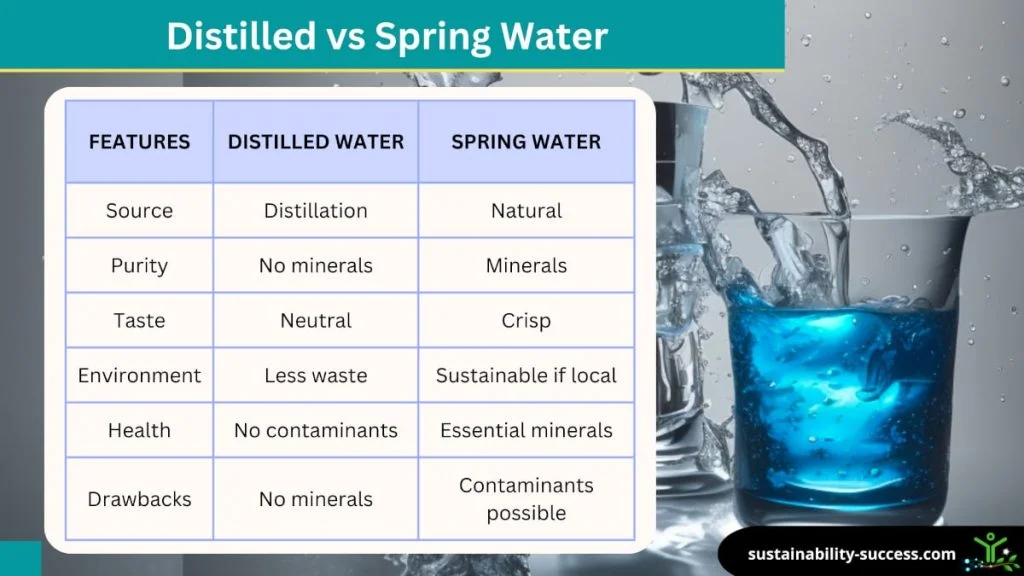
So, you’re standing in the water aisle, staring at two bottles. One says “Spring Water,” the other says “Distilled Water.” They both look like, well, water. But are they the same? Absolutely not, and confusing them is like confusing a spa day with a hospital visit—both involve water, but one is way more fun.
Spring Water: The Glamorous Party Guest
Spring water is basically nature’s celebrity. It comes from an underground source—think of it as water that took a scenic route through rocks and minerals. It picks up calcium, magnesium, and potassium along the way, like a tourist collecting fridge magnets. You’re paying extra for those minerals, and your taste buds love the celebrity treatment.
Here’s the kicker: spring water is not sterile. It’s alive with natural bacteria—harmless, usually, but alive. That’s why the FDA lets it be labeled “spring” only if it comes straight from a protected underground source. The water gets filtered a bit, but it keeps its mineral soul intact. Think of it as a rustic farm-to-table water, complete with a dirt-stained apron and a smug smile.
Must Read
Distilled Water: The Obsessive-Compulsive Cleaner
Now, distilled water is a whole other animal. It’s not born; it’s manufactured. The process is straight out of a mad scientist’s playbook: boil the water until it turns into steam, then catch that steam and condense it back into liquid. In doing so, you leave behind everything—minerals, bacteria, pesticides, your coffee grounds, your hopes and dreams. The result? Water so pure it’s practically naked.
Distilled water is so empty it’s desperate. It will try to steal minerals from anything it touches—including your pipes, your kettle, and your stomach. That’s why you should never drink it exclusively for long periods. Seriously, people have given themselves heart arrhythmias and bone problems from a strict distilled water diet. Your body needs those minerals, and distilled water is like a clingy friend who skips out on the bill and steals your snacks.
The Great Taste Test (And Why Distilled Water Sucks)
Ever notice that distilled water tastes… flat? That’s because your tongue is used to tasting minerals. Spring water gives your taste buds a little party, while distilled water is the guy who stands in the corner and asks, “Is this alcohol-free?” Your brain registers flatness as a lack of flavor, which is why distillers often add air back into the water to make it less weird. But let’s be real: it still tastes like someone apologized for water.
Spring water, on the other hand, can taste completely different depending on where it’s from. A spring in Fiji gives you silky, silica-rich sips, while a spring in your local mountain range might taste like you licked a clean rock. It’s the terroir of water, and it’s why people pay $6 for a glass of it at fancy restaurants. Distilled water doesn’t have terroir—it has a conference room and a dull PowerPoint presentation.
Surprising Facts That Will Make You Look Smart at Parties
Here’s a doozy: all the water on Earth was once distilled. The sun evaporates seawater, leaves the salt behind, and it rains fresh water down. That’s nature’s distillation, baby. But commercial distillation is different—it over-boils everything, killing even the good stuff. So nature’s rain water is actually closer to spring water than distilled, because it picks up particles on the way down. Perfect irony: we drink spring water to feel natural, but we boil water to feel in control.
 7 Key Differences Between Distilled Water and Spring Water | H2GO Water
Another shocker: distilled water can pull toxins out of your body—but also good minerals. That’s why some hippies swear by “distilled water detoxes” while nutritionists scream into their pillows. The truth is, your kidneys are perfectly good at filtering without a side of stripped-down H2O. Drinking distilled water is like hiring a personal trainer who only does push-ups on your couch.
When to Use Each Without Looking Like a Fool
Distilled water has a heroic purpose: appliances. Use it in your iron, your humidifier, your car battery, or your CPAP machine. Why? Because without minerals, it can’t leave white scale deposits. If you use spring water in a steam iron, you’ll get crusty, mineral-plugged nightmares within a week. Your iron will look like a prehistoric coral reef.
Spring water is for drinking and cooking. Want the best-tasting tea? Start with spring water. Baking bread? Spring water’s minerals feed the yeast. Making soup? Don’t even think about using distilled—it will leach flavor from your vegetables. Your soup will taste like a math textbook. Spring water makes food sing; distilled water makes it hum quietly through a closed door.
So, Are They the Same?
Nope. They’re as different as a moon landing and a picnic. Spring water is nature’s gift, full of minerals and flavor. Distilled water is science’s meticulous child, pure but lonely. The only thing they share is the chemical formula H₂O, and the fact that both will keep you alive—but only one will make you want to stay that way.
Next time you’re at the water aisle, grab a spring water for sipping. Get distilled for the iron. And whatever you do, don’t accidentally swap them. Your CPAP machine does not want a taste of the Scottish highlands. Trust me on this one. I learned the hard way.
