Water Well Drilling Cost Per Foot East Texas

If you live in East Texas, you know the drill—literally. You’ve probably stared at a water bill and thought, “I could buy a small fishing boat for this much money every month....
If you live in East Texas, you know the drill—literally. You’ve probably stared at a water bill and thought, “I could buy a small fishing boat for this much money every month.” That’s when the idea of drilling your own well starts to sound like a brilliant, rebellious act of self-reliance.
But then comes the question that makes your wallet whimper: “What’s the water well drilling cost per foot in East Texas?” It’s like asking how much a mechanic charges to fix your “check engine” light—the answer is rarely simple, and always involves more zeros than you hoped for.
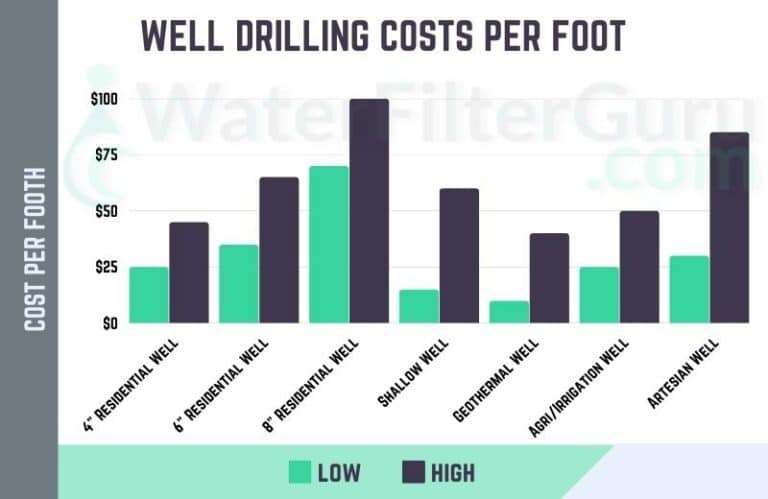
Let me break it down in a way that won’t make you need a drink of that same expensive tap water. In East Texas, the average cost to drill a well hovers between $25 and $60 per foot. Yes, that’s a range wider than a bass boat in a lake fog.
Must Read
Why the price is like a dice roll at the county fair
First, you have geology—the dirt and rock under your backyard. East Texas has this lovely mix of sandy loam, clay, and limestone that’s as predictable as your uncle’s deer hunting stories. Sometimes you hit soft sand (cheap drilling), sometimes you hit rock that laughs at the drill bit (expensive cussing).
A friend of mine near Tyler paid $28 per foot because his ground was mostly old riverbed gravel. Another guy in Nacogdoches is still paying off his $55 per foot nightmare after his rig hit a limestone ledge that resembled a parking lot from a dinosaur’s night out.
The depth matters, too. Most wells in East Texas run between 100 and 400 feet. That’s like digging to the bottom of a swimming pool versus digging to the bottom of a Walmart parking lot—one feels like a chore, the other feels like a career.
The hidden costs that sneak up like a sudden downpour
Here’s where the “per foot” price can trick you faster than a greased pig at a county fair. The drilling cost is just the headline; the real story includes the casing, the pump, and the pressure tank. Think of it as buying a car but then realizing you need tires, an engine, and a steering wheel separately.
For example, a 200-foot well at $35 per foot is $7,000—but add $2,000 for PVC casing, $1,500 for a decent submersible pump, and another $500 for a pressure tank. Your total is suddenly closer to $11,000, which is roughly the same amount you’d spend on a used truck that smells faintly of wet dog and optimism.
Permits and water testing add another couple hundred bucks. It’s like paying for a ticket to the rodeo and then realizing you have to pay extra to sit in the shade.
Why East Texas is the “Goldilocks” of well drilling
Compared to other parts of Texas, East Texas is actually cheap to drill. Out in West Texas, you’re drilling through solid caliche and hardpan, and prices can hit $60 to $80 per foot faster than a tumbleweed caught in a dust storm. Down south near the coast, you’re dealing with sand and saltwater intrusion, which makes your well taste like a bad brunch.
![How Much Does It Cost to Drill a Well? [2025 Data] - Get A Site Plan](https://getasiteplan.com/wp-content/uploads/2024/12/water-well-system-installation-price-per-diameter-of-casing-pipes.jpg) How Much Does It Cost to Drill a Well? [2025 Data] - Get A Site Plan
How Much Does It Cost to Drill a Well? [2025 Data] - Get A Site Plan
East Texas? We have that sweet spot of decent water tables and relatively forgiving dirt. It’s like the gentle, no-drama friend who always shows up with a casserole. Sure, the water might have a touch of iron that turns your white socks orange, but that’s just character.
My neighbor Bobby drilled his well three years ago for $32 per foot, and now he uses his savings from the water bill to buy new fishing lures every month. He says his well water tastes “like freedom with a hint of minerals.” I think it tastes like tap water, but he’s happier than a tick on a hound dog.
The math that finally makes you nod
Let’s do the quick math that makes you smile. Say your monthly city water bill is $100. A $10,000 well (drilled and set up) pays for itself in about 8 years. After that, your water is basically free—except for the electricity to run the pump, which costs about the same as running one ceiling fan all day.
And here’s the thing: if you’re on a well, you never have to worry about the city shutting off your water because of a broken main, or a drought, or a pipe that bursts because it’s Tuesday. You become the captain of your own water supply, like a tiny, muddy navy with one ship.
Plus, you get to tell people, “I’m on well water,” with the same pride as saying “I raise my own chickens.” It’s a conversation starter at barbecues. “How deep is your well?” becomes the new “Nice truck, what year is it?”
The final word (and a warning about wells and ego)
If you’re serious about drilling, call at least three local well drillers and get quotes. Ask them about the average depth in your county and what kind of rock they expect. A good driller will tell you honestly, “Might be easy, might be a cuss-fest.”
Don’t sign a contract that just says “per foot.” Make sure it includes a guaranteed depth, a casing plan, and a pump installation. Otherwise, you’ll end up with a hole in the ground that costs more than your first car and provides only mud—which, if you’re creative, you could sell as “artisanal East Texas clay.”
In the end, drilling a well in East Texas is like buying a pair of boots: it’s expensive upfront, but once you break it in, you wonder how you lived without it. And when your lawn is green and your water bill is a memory, you’ll sit on your porch, sip that mineral-tasting freedom, and smile like you just won the lottery—even if your wallet is still recovering from the per-foot math.
