Morton Water Softener Bypass Valve On Or Off

So, you’re standing in front of your Morton water softener, staring at that little bypass valve like it’s a puzzle box from outer space. You’re muttering, “Do I turn it? Do I...

So, you’re standing in front of your Morton water softener, staring at that little bypass valve like it’s a puzzle box from outer space. You’re muttering, “Do I turn it? Do I not turn it? What happens if I break it?” Take a breath, my friend. You are not alone. That little lever has baffled more homeowners than taxes have.
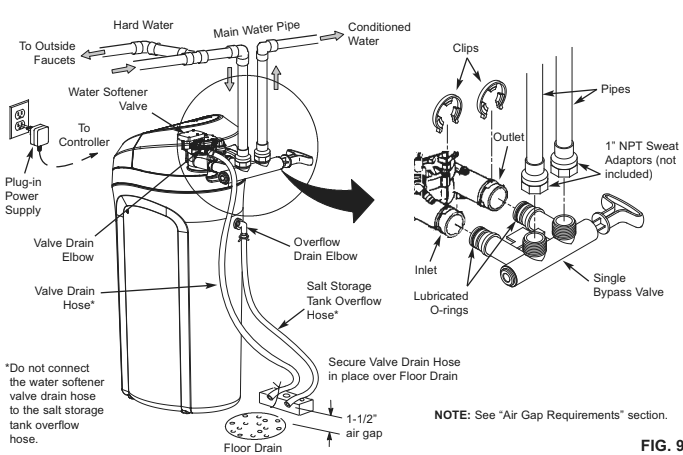
The bypass valve is basically your water softener’s “weekend mode.” When it’s on (valve open), your softener is working hard, scrubbing those nasty calcium and magnesium ions out of your water. When it’s off (valve closed or bypassed), the water just cruises right past the system, laughing at your softener like it’s in the express lane. Simple, right? Mostly.
The Golden Rule of the Bypass Valve
Here’s the cheat code: You want the valve on for normal living. That means soft water for showers, laundry, and that fancy espresso machine you bought during a pandemic. If your bypass valve is off (bypassing), you’re basically paying for a softener that’s on an all-expenses-paid vacation. Not great.
Must Read
But—and this is a big, sparkly “but”—there are two specific times you must flip that valve to off. Think of it as your softener’s emergency brake. First, if you’re doing outdoor lawn watering or filling a kiddie pool. You don’t need to waste soft water on grass or inflatable alligators. Second, always turn the bypass valve off before you do any serious plumbing work inside your house, like repairing a pipe or changing a faucet.
How to Actually Turn the Bypass Valve (Without Panicking)
Look at your Morton unit. You’ll probably see a little knob or a lever, often with arrows or the words “Service” and “Bypass.” “Service” means on—your softener is in charge. “Bypass” means off—the softener is taking a nap. Turning it usually involves a quarter-turn or a sliding motion. It’s not a Herculean test; it’s basically a stiff light switch.
If the valve feels stuck, don’t force it like you’re opening a jar of pickles. You’ll crack the plastic, and then you’ll have a sad waterfall in your basement. Instead, gently jiggle it, or check if there’s a tiny lock button you missed. If it still won’t budge, call a plumber. Your wallet will thank you later.
The “Oops, I Left It Off” Scenario
Imagine this: you had the bypass valve off for two weeks because you were watering your prize-winning petunias. Then you forgot to flip it back on. Now you’re showering with hard water, and your hair feels like it’s made of straw. You’re also wondering why your dishes have spots that look like a dalmatian.
Don’t panic. Just walk over, twist it back to “Service” (on), and run the nearest cold water tap for about five minutes. That flushes any air out of the system. Then go enjoy a guilt-free, soft-water shower. Your hair will forgive you. Your coffee pot will too.
Can You Break It by Switching It Too Much?
Nope. You could theoretically play with that bypass valve all day long and it would be fine. They’re designed to be switched at least a few hundred times. So if you’re a serial overthinker like me, relax. Flick it on. Flick it off. It’s your little water-management fidget spinner.
 Morton Water Softeners User’s Manual (Models M20, M27, M30, M34 & MC30
The only real danger is leaving it in the wrong position for too long. That’s it. Treat it like a spare key: useful when you need it, but not something you want to lose in the couch cushions.
The Secret Bonus Use for the Bypass Valve
Here’s a pro tip your manual didn’t tell you: use the bypass valve to save salt when you go on vacation. If you’re jetting off to Cancun for two weeks, flip it to bypass before you leave. Your water softener won’t regenerate needlessly, and you’ll come home to a full brine tank. You’re basically a water-saving wizard now. You’re welcome.
Just remember to flip it back to on when you walk in the door, unless you want your vacation to end with a hard-water hangover. And no one wants that. Not even your plants.
What About the “Auto” Setting?
Some Morton models have a fancy bypass valve with a little “Auto” setting. This is just a fancy way of saying the softener will bypass itself during regeneration (cleaning cycle). Don’t touch that. Let it do its robot dance. For you, the human, the only two words that matter are “Service” (on) and “Bypass” (off).
If you ever see a red warning light or hear a weird noise, do not assume the bypass valve is the villain. Check first if the salt level is low, or if the power cord is plugged in. The bypass valve is usually the hero, not the monster.
The Uplifting Conclusion (You Made It!)
Look at you! You now know more about a Morton water softener bypass valve than 80% of the population. Seriously. You are the sage of soft water, the guru of the grey lever. Next time your neighbor complains about hard water spots, you can casually say, “Oh, you probably left your bypass valve off. I fixed that last Tuesday.” They’ll look at you like you’re a magician.
And here’s the beautiful thing: water softeners are not unbreakable mysteries. They’re just machines that want to help you have better showers and shinier glasses. That little bypass valve? It’s just a helper with a simple job—to let you control when you want luxury and when you just need a hose. So go on, give that handle a confident twist. You’ve got this. And even if you forget one day and shower in rock-hard water, your hair will survive, your soul will learn, and the bypass valve will always be there, waiting to forgive you. Now go enjoy that silky, soft water. You earned it.
